
Mini PC Power Adapter OEM: How to Specify and Source Custom Supplies for Mini PCs and Industrial Computers
Published: September 2026
Reading time: 8 min
Audience: mini PC brands, industrial computer OEMs, and procurement teams sourcing external power adapters for mini PCs, thin clients and edge computers
By Han — Paiyi Power, an OEM/ODM power adapter manufacturer building custom and modified-standard supplies from 5W to 240W, from 200 pcs per model.
Last updated: 9 September 2026.
Contents
Direct answer: what power adapter does a mini PC need?
A mini PC has no internal power supply — the external adapter is its PSU, and it must deliver the CPU’s sustained and burst loads inside a thermally tight, often fanless system. In practice that means 19V or 20V DC barrels from 60W to 140W (USB-C PD at 100–140W is entering fast), continuous rating at real ambient temperature rather than a peak number, low output noise for the small motherboard, and certification per destination market. For brands, the adapter is also a brandable spare-part SKU — which is why most mini PC programs land on a modified-standard ODM adapter, re-cut from a certified platform with the output, connector, cable and labelling the machine needs, from 200 pcs per model.
Why mini PCs stress external adapters
A mini PC concentrates a desktop-class CPU, memory, storage and I/O into a chassis the size of a sandwich — with the entire power conversion pushed outside. Three consequences for the adapter:
- Sustained load, not spikes: unlike a laptop, a mini PC often runs at its power limit for hours (digital signage, edge AI, light industrial control). The adapter works near its rating continuously.
- Thermal coupling: adapter waste heat and chassis heat share the same desk air; a hot adapter next to a fanless mini PC raises both their temperatures.
- It is the PSU: every rail the motherboard needs is derived from the adapter’s single output, so ripple and transient behaviour feed the whole board directly.
This is the same pattern we describe for AI PC power supply OEM programs — the adapter is a component of the product, with the reliability expectations that come with that role.
The voltage landscape: 19V, 20V and USB-C PD
The installed mini PC world runs on 19V and 20V DC barrels (typically 4.5–7 A), inherited from notebook power architectures. Newer and compact designs are moving to USB-C PD at 100–140 W, which consolidates the SKU, simplifies spare parts and uses a cable every buyer already owns. Industrial minis frequently stay at 12V or 24V to align with factory rails. The choice is architectural: barrel designs are cheap and locking-friendly; PD designs future-proof the port and shift the cable requirement to an e-marked 5A lead, as explained in our PD 3.2 vs 3.1 guide.
Sizing for sustained loads, not bench numbers
Modern CPUs run a low sustained power limit with short turbo bursts above it. Size the adapter for the sum of sustained draws plus the largest burst, then apply 30–50% headroom — the same sizing discipline as our industrial sensor guide. Two mini-PC specifics: add the external drive and display chains if the machine powers them, and verify the adapter’s transient response so a turbo burst does not dip the rail and force a reboot. The failure signature is easy to recognise: the machine reboots under compile, render or AI workloads, never at idle.
Thermal coupling and derating
Ask for the derating curve and place the adapter the way your customer will: a 120W adapter bolted to the back of a monitor arm or hidden behind a desk runs warmer than a bench unit. A supply that holds full power to 40°C ambient is a different product from one that folds back at 30°C, whatever the label says. Fanless mini PCs make this stricter: their chassis has no moving air, so every watt the adapter wastes ends up as desk-level heat near the machine’s own intake.
Connectors, cables and voltage drop
For barrel designs, specify a locking connector — mini PCs sit under desks and behind monitors where cables get pulled — plus strain relief rated for real pull forces. For PD designs, put the e-marked cable rating in the BOM. Long cable runs to wall-mounted or VESA-mounted machines drop voltage; remote sense or a locally regulated second rail is the fix, as described in our industrial sensor power guide.
Efficiency and the fanless heat budget
Efficiency rules apply to external supplies in nearly every market — DOE Level VI in the US, CoC Tier 2 and ErP in the EU. Beyond compliance, efficiency is a thermal feature in this category: at 140W, each percentage point of efficiency is roughly 1.4W of heat the mini PC’s room does not have to carry. High-efficiency platforms also run the adapter itself cooler, which stretches capacitor life and the derating margin.
Reliability for 24/7 industrial minis
Industrial mini PCs run unattended around the clock. For those programs specify: electrolytic capacitor life at your real operating temperature (it sets the practical life of the supply), 100% burn-in before shipment so infant failures stay at the factory, and a change-control commitment so a component swap does not silently alter the certified design. The reliability questions to ask are the same ones in our medical power supply guide — minus the patient-isolation requirements.
Certification by market
Base layer: IEC/EN 62368-1 + EMC (CE for the EU, FCC for the US), factory-held. Each destination market adds its own layer — UKCA, PSE, KC, RCM, INMETRO, BIS, SII — with per-model lead times, as laid out in power adapter certification by country. Plan those files in parallel with tooling rather than after production.
Modified-standard or full custom?
Mini PC programs almost always start as modified-standard ODM: a certified platform re-cut to your output, connector, cable, label and plug type — no tooling, MOQ from 200 pcs per model, 5–6 weeks to first production. Full custom earns its cost only for unusual envelopes, multi-rail outputs or a proprietary connector strategy. The three models are compared in OEM vs ODM vs private label, and the contract terms that protect the program are in our OEM agreement guide.
Mini PC power adapter specification table
| Parameter | Typical for a 100–140W mini PC | Note |
|---|---|---|
| Output | 19V/20V DC, 90–140W (or PD 100–140W) | Match the board’s input window, not the CPU TDP |
| Ripple & noise | ≤1% of output at full load | Measured at the end of the cable |
| Continuous rating | Full power at 40°C ambient, curve stated | Countersign the derating curve, not the peak number |
| Efficiency | DOE VI / CoC Tier 2 at 115V and 230V | Every point of efficiency is desk heat saved |
| Connector | Locking barrel or USB-C PD with e-marked cable | Retention is a reliability feature |
| Protections | OVP, OCP, OTP, SCP with defined recovery | Recovery behaviour is where cheap designs fail |
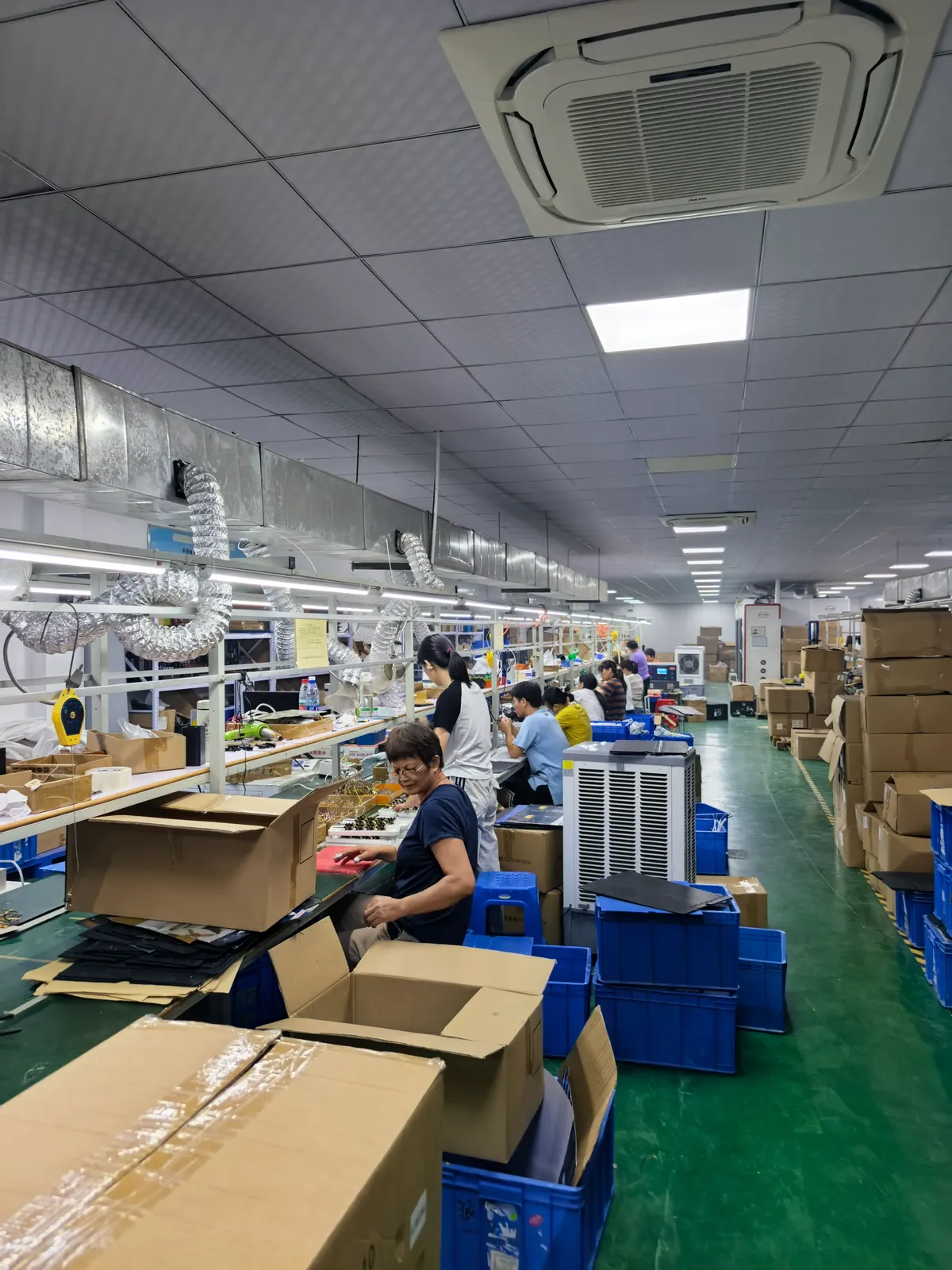
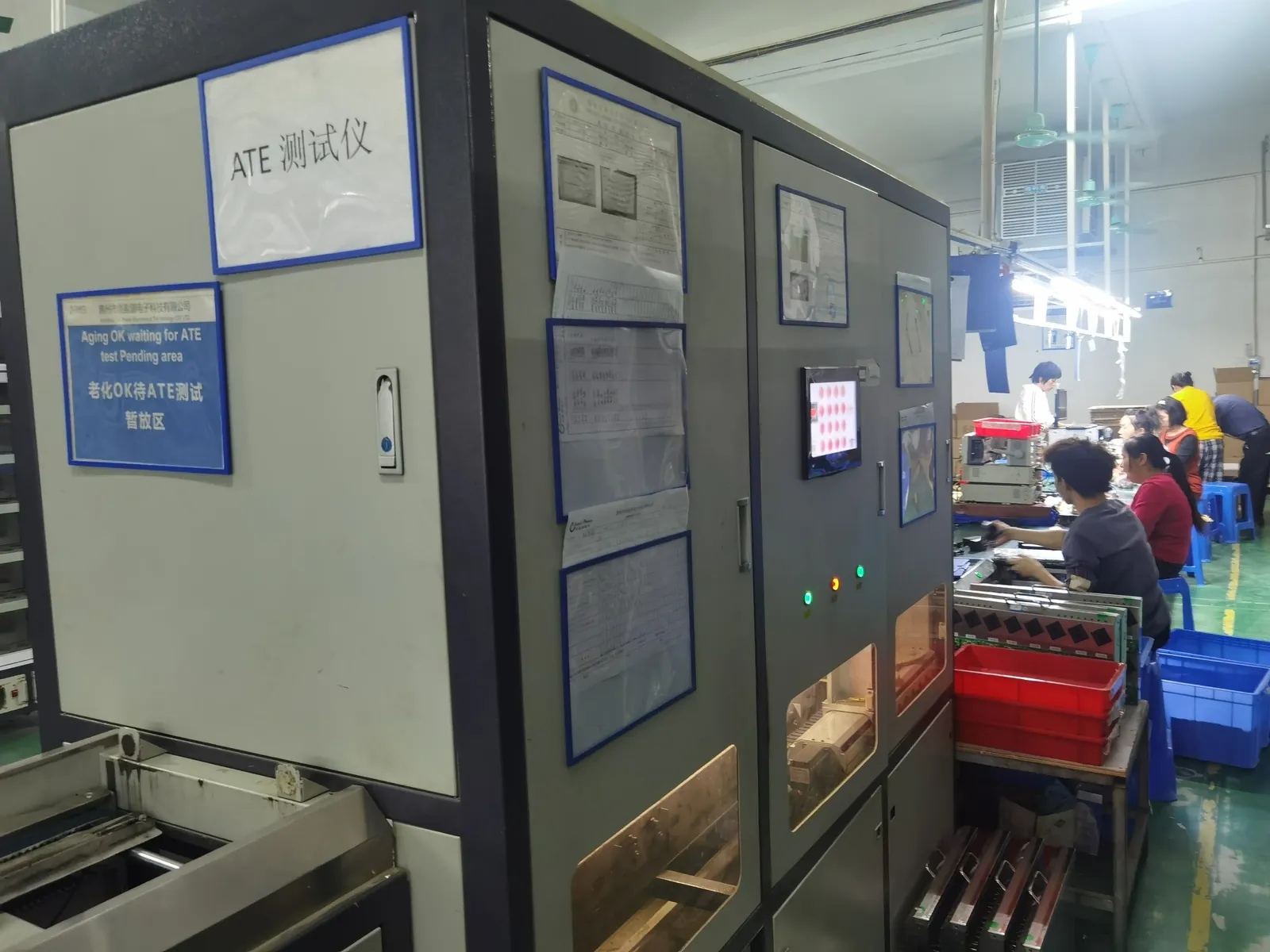
| Reliability | 100% ATE + burn-in before shipment | Infant failures stay in the factory |
Frequently asked questions
What voltage do mini PCs use?
19V and 20V DC dominate the consumer and commercial mini PC market, with 12V/24V common in industrial variants and USB-C PD 100–140W entering through newer designs. Match the adapter to the board’s input window, not the CPU’s TDP.
Can I power a mini PC over USB-C PD?
Yes, if the board supports a PD sink at the required wattage. Above 100W you need an EPR-capable source and a 240W e-marked cable — the cable rules in our PD guide apply unchanged.
Why does my mini PC throttle or reboot with the bundled adapter?
The adapter is undersized for burst loads or derating in a warm spot. Turbo bursts push past the sustained rating, the rail dips, and the board resets. Size for sustained-plus-burst with 30–50% headroom and check transient recovery.
Do mini PC adapters need locking connectors?
Strongly recommended for machines mounted under desks or behind displays. A pulled cable mid-write is a support ticket; a locking barrel or tethered PD cable is the fix.
What is the difference between a mini PC adapter and a laptop charger?
Electrical ratings overlap, but mini PCs run sustained loads for far longer — so continuous rating, derating and component life matter more than peak numbers. Industrial minis add 24/7 operation and wider ambients.
Can one adapter SKU cover several mini PC models?
Yes — that is exactly what a modified-standard program is for. Fix one output rating and connector across a generation of boards, and one certified spare-part SKU serves the whole line.
What MOQ and lead time apply?
From 200 pcs per model, 5–6 weeks to first production after sample approval at Paiyi Power. Every unit is ATE-tested, burned in and inspected before packing.
Do industrial mini PCs need different adapters?
Wider ambient range, 24/7 duty, screw-lock connectors and stronger input immunity are the usual deltas. Consumer-grade adapters fail in industrial cabinets in ways that look like random unit failures.
Sources
- IEC — 62368-1 safety and 61000-6 series EMC standards
- USB-IF — USB Power Delivery specifications
- U.S. DOE — External Power Supply efficiency (Level VI)
Related on this blog: AI PC power supply OEM, OEM vs ODM vs private label, power adapter certification by country.