Water Purifier Power Supply OEM: 24V Adapters, IP67 Sealing and RO Booster Pump Sizing
Published: September 2026
Reading time: 10 min
Audience: water purifier, RO system and water treatment brands, appliance OEMs, and procurement teams specifying the DC supply that drives a booster pump under a wet cabinet
By Han — Paiyi Power, an OEM/ODM power supply manufacturer building external supplies and sealed adapters from 5W to 240W, from 200 pcs per model.
Last updated: 21 September 2026.
Contents
Direct answer: what does an RO purifier power supply need?
A reverse osmosis purifier power supply is an external 24V DC adapter, commonly 36W to 120W, that drives a booster pump and a control valve. The two requirements that separate a suitable adapter from an unsuitable one are the peak current it handles at pump start-up and its sealing — because it sits inside a wet cabinet rather than on a dry desk.
It is a modest power supply in a demanding place. The pump is a motor, the environment is wet, the users never see the adapter, and a marginal unit produces failure symptoms that get blamed on the pump, the membrane or the water pressure.
This article covers the electrical and environmental requirements together, because in this category they cannot be separated. For the same motor-load logic in a different application see linear actuator power supplies.
Why RO needs electricity and gravity filters do not
The first question to settle is whether your product needs a supply at all, because the answer splits the market.
- Gravity and simple carbon filters need no power. They work on water pressure and gravity, so there is no electrical requirement and no supply to specify.
- Reverse osmosis needs a pump. Pushing water through a semi-permeable membrane requires pressure that mains supply alone cannot reliably provide, so an RO system uses a booster pump driven by a DC adapter.
- That single component creates the whole electrical problem: a motor load, a supply, a connector, and a cable that runs into a cabinet that gets wet.
- Purifiers with refrigeration or heating add more, but those loads are usually mains-driven inside the appliance rather than fed from the DC adapter.
So the DC supply exists because of the pump. Everything downstream — sizing, sealing, connector choice — follows from that.
Sizing by membrane capacity
The industry sizes these adapters against membrane capacity rather than against a load table, which makes the specification unusually straightforward.
| System class | Adapter commonly used | Note |
|---|---|---|
| Small domestic systems | 24V at around 1.5A to 2A | Single pump, modest flow |
| Mid-size systems | 24V at around 2.5A to 4A | Higher flow, more frequent pump cycling |
| Large domestic and light commercial | 24V at around 5A, or 36V at around 3.3A | Higher pressure, longer pump runs |
| High-capacity systems | 24V at around 10A, or 36V at around 6.7A | Outside a small adapter class; check the connector rating |
Indicative pairings used in the industry; the governing requirement is the pump’s own rating, and it should be confirmed against the pump datasheet.
Two practical notes. First, a larger adapter is not automatically better — it has to match the pump and the control board, and an oversized unit can sit far from its efficient operating point. Second, and more importantly, going up a size is a legitimate response to pump start-up peaks, and it is the fix that most often resolves a marginal installation.
Waterproofing: the adapter sits in a wet place
This is the defining environmental requirement, and it is what makes this category different from every other appliance adapter.
- The mounting location is wet by definition. Under a sink, inside a cabinet with the pressure tank, surrounded by tubing and joints. Leaks happen, and condensation is routine.
- Sealed construction is the norm. Adapters for this application are commonly built to IP66 or IP67 rather than to a basic indoor rating, with sealed cable entries and no exposed vents.
- Sealing changes the thermal design. A sealed enclosure cannot use convection, so the thermal path has to be designed rather than inherited — which is the main engineering cost of the sealing requirement.
- Water and electricity together change the fault case. The supply must remain safe with water present, which brings back isolation and leakage as first-order requirements rather than formalities.
The practical specification line is an ingress protection rating with the test basis stated, plus a sealed output cable rather than a plug-in connector that can be left loose.
Isolation and leakage when water and mains meet
Isolation in a purifier adapter is not a medical-grade requirement, but it is a real one, and it is specified in the market.
- Isolation voltage is a stated specification. Adapters in this category commonly declare a defined isolation level between input and output — around 3 kV is a typical published figure.
- Reinforced or double insulation is the construction. The output is separated from mains by more than a single layer, which is what makes the wet-environment fault case survivable.
- Leakage and creepage matter more than usual. With moisture present, surface tracking becomes a genuine failure mode, so creepage distances and the coating or potting scheme are part of the design.
- Earthing is not the answer. Many installations are on unearthed sockets or on a circuit shared with other appliances, so the protection has to come from the construction rather than from a reliable earth.
For a brand, the useful question to a supplier is what isolation level and construction the adapter provides, and whether that is stated in the documentation rather than implied by the certification.
The pump symptom that means the adapter is marginal
This category has a distinctive failure signature, and knowing it is useful for both specification and support.
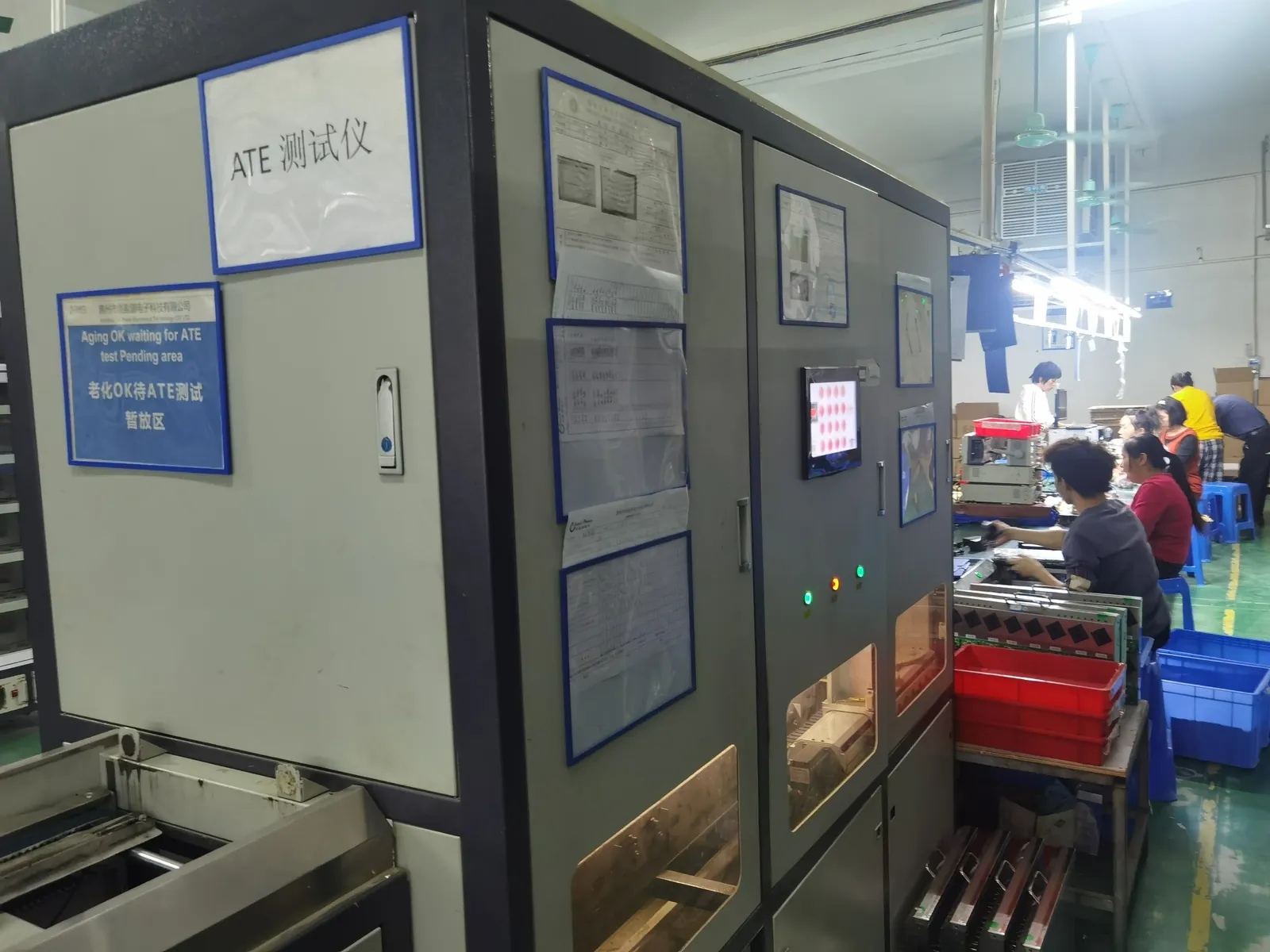
- The symptom. The pump starts and stops after a couple of seconds, or the indicator blinks a few times and the machine shuts down. The user reports a broken purifier.
- What is actually happening. The pump’s start-up current pulls the rail down, the control board sees an out-of-range supply or a current limit, and it aborts the cycle.
- Why it is intermittent. Start-up peak varies with water pressure, temperature and how long the pump has been idle, so the same unit works sometimes and not others.
- Why it gets misdiagnosed. The pump, the membrane and the incoming water pressure are all plausible causes, and all are more visible than the adapter hidden in the cabinet.
- The measurement that settles it. Watch the supply voltage at the pump during start-up. If it drops by more than roughly a volt, or fluctuates sharply while the current jumps around, the adapter is the problem rather than the pump.
For a brand, this is the reason to specify peak capability rather than only a nominal current — the difference does not show up in normal operation, only at the moment of starting.
The second load: the valve and control board
The pump is the load everyone remembers, but it is not the only one on the rail.
- Solenoid valves. Inlet and flush valves draw a short, sharp current when they switch, in the same way a relay coil does.
- The control board. A small steady load that has to stay within regulation while the pump cycles, and it is the component that suffers first when the rail sags.
- Indicators and sensors. Small loads individually, but part of the same budget, and some purifiers add a display that draws more than expected.
- Combined timing. The worst case is not the pump alone; it is the pump starting while a valve is energised and the board is drawing its own current.
Sizing on the pump alone is therefore the common mistake. The requirement is the sum of everything on the rail at the worst simultaneous moment.
UV treatment needs its own driver
Many purifiers add UV treatment, and it belongs to a different electrical discipline.
- A UV lamp is not a DC load. It needs a ballast or driver that provides the ignition voltage and then regulates the running current, which is a power electronics problem in its own right.
- It should not be fed from the pump’s rail. Mixing a high-voltage ignition stage with the pump supply invites interference with the control board and with the sensing.
- Lamp life and behaviour matter commercially. The driver determines whether the lamp strikes reliably at low temperature and how it behaves at end of life, which the user experiences as a warning indicator or an unexpected replacement.
- Be explicit about the boundary. A DC adapter supplier and a lamp driver supplier are different partners, and a specification that mixes them will take longer to answer.
If your product includes UV, list it as a separate electrical sub-system rather than as another load on the adapter.
The connector: jack or terminal block
The output connection is small, cheap, and a recurring source of field problems in a wet cabinet.
- Barrel jacks. A common choice, with defined sizes and a specified polarity. Convenient to assemble, but a loose barrel in a damp environment is a corrosion point.
- Terminal blocks. Multi-pin latching connectors are also widely used, with a defined pinout and a more positive connection. They suit a sealed cable and a fixed installation better.
- Polarity must be stated and printed. A reversed output damages the board, and in a cabinet nobody sees the marking until something fails.
- Strain relief and cable routing matter more than usual. The cable runs past water tubing and gets moved when the filter is changed, so a sealed entry and an adequate bend radius are functional requirements.
For a fixed, wet, rarely-accessed installation, the more positive connection is usually the better engineering choice even at slightly higher cost.
Brazil: a mainstream household product
Point-of-use water treatment is not a niche category in every market, and Brazil is the clearest example of that.
- A mainstream appliance rather than a premium one. Household filters and purifiers are common across income levels, which means the volumes are large and the cost pressure is real.
- The electrical requirement follows the national pattern. Any adapter sold into Brazil needs a plug to the Brazilian standard and an input that covers the two grid voltages in use, at 60 Hz — the same requirements described in importing power supplies into Brazil.
- Certification is per model. Compulsory certification applies to power supplies, and the certificate is held by a Brazilian legal entity — which is a commercial decision about who controls the market as much as a technical one.
- Service is an issue. When the adapter is hidden in a cabinet and fails, the callout costs more than the part, so reliability is worth more here than the unit price suggests.
For a brand selling into Brazil, the practical conclusion is that a properly specified, sealed adapter is a service-cost decision rather than only a compliance one.
Heat, humidity and condensation under a sink
The cabinet under a sink is a hostile place for electronics, and the specification should reflect it.
- Condensation, not flooding, is the usual problem. A sealed enclosure still breathes slightly as it cycles, and moisture condenses on the coldest internal surface. Potting removes the air volume that makes this possible.
- Humidity is high and persistent. Unlike a splash, sustained humidity attacks creepage surfaces and any uncoated metal over months.
- Temperature cycling. Water use cycles the cabinet temperature, and the adapter cycles with it, which is a fatigue mechanism for solder joints and connectors as much as for insulation.
- Potting is the usual answer. Encapsulating the electronics removes the condensing air volume and adds mechanical robustness for the cable, which is the majority of the failure modes in one step.
A sealed, potted adapter with a properly sealed cable entry is the standard answer in this category; anything less is a temporary solution.
Certification and market access
The certification picture is ordinary, but the details matter because the product is water-adjacent.
- Safety. The adapter is a mains-connected product governed by the general safety standard for such equipment, with the added emphasis on insulation and creepage that the wet environment demands.
- Ingress protection. Where a rating is claimed, it should be tested and declared — an unstated rating is not a rating.
- EMC. The adapter sits beside a control board that reads sensors, so emissions and immunity both matter for functional behaviour rather than only for compliance.
- Efficiency and standby. External power supplies are subject to efficiency and no-load requirements in major markets, and a purifier sits plugged in permanently, so standby is an operating cost.
- Regional marks. CE and CB for Europe and international schemes, plus the country-specific requirements for each market, including the Brazilian position above.
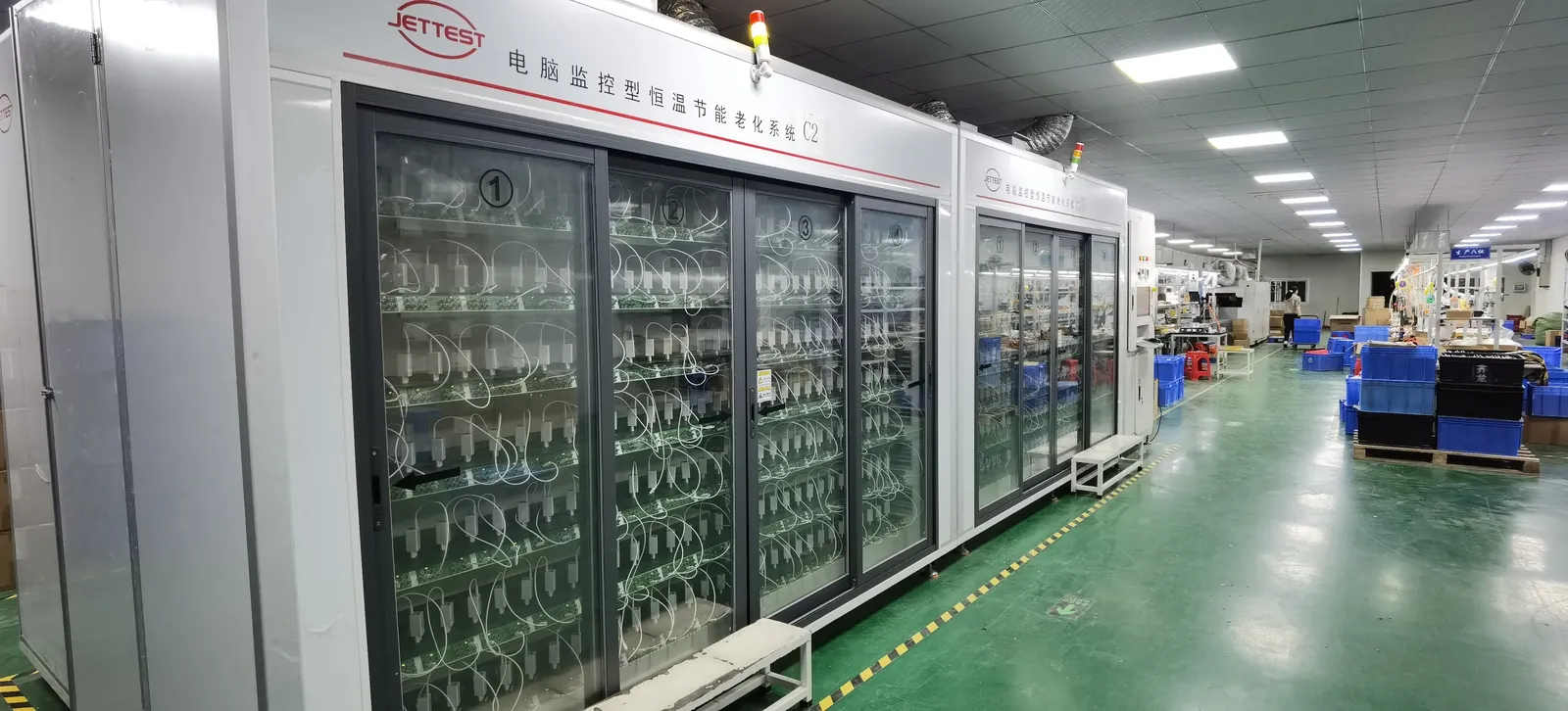
Our position is consistent across the range: we build to the applicable safety and power specifications, and the certificates we hold are CE, CB, FCC and ISO 9001. We do not claim approvals we do not hold for every model, and the product-level filing belongs to the brand.
What to put in the RFQ
These lines are what a supplier needs in order to design something that survives the cabinet rather than only the bench.
- The pump’s rating — voltage, running current and start-up peak — plus the membrane capacity class.
- The other loads on the rail — valves, board and display — and the worst simultaneous combination.
- The ingress protection rating required, and whether potting is expected.
- Isolation level and construction required, stated as a number.
- The connector by type, pinout, polarity and current rating, and whether it must latch.
- The mounting position and the temperature and humidity it will see.
- Whether UV treatment is present, so it is specified as a separate sub-system.
- Target markets and certification, including which plug and which grid voltages.
- Service expectations — how long the unit must last in the field, and what a callout costs.
Our sample evaluation checklist and the OEM agreement guide cover how to hold these points through production.
Water purifier power supply OEM specification table
| Parameter | Typical for RO purifier adapters | Note |
|---|---|---|
| Output | 24V DC, commonly 1.5A to 5A; 36V on higher-capacity systems | Paired to the pump rather than to the appliance |
| Start-up peak | Well above running current, every time the pump starts | The requirement behind most marginal installations |
| Ingress protection | Commonly IP66 or IP67, with a sealed cable entry | The defining requirement of this category |
| Isolation | A defined isolation level, commonly around 3 kV | Reinforced or double insulation construction |
| Internal protection | Potting or coating to remove the condensing air volume | The usual answer for a wet cabinet |
| Connector | Sealed barrel jack or latching multi-pin terminal | Specify pinout, polarity and current rating |
| Other loads | Solenoid valves, control board, display | Size on the worst simultaneous combination |
| UV sub-system | Separate ballast or driver, not fed from the pump rail | A different product and a different supplier |
| Standby | Low no-load consumption, since the unit stays plugged in | An operating cost rather than a formality |
| Regional | Plug standard and dual-voltage input per market | In Brazil, the national plug and 127/220V at 60 Hz |
Frequently asked questions
Does a water purifier need a power supply?
Only if it uses a pump. Gravity and simple carbon filters need no electricity, while reverse osmosis systems need a booster pump to push water through the membrane, and that pump runs from a DC adapter. Refrigerated or heated purifiers add mains-driven loads inside the appliance.
What power adapter does an RO system need?
A 24V DC adapter, most commonly between 1.5A and 5A depending on the system’s capacity, with 36V used on larger systems. The adapter is paired to the pump rather than to the appliance, so the pump’s rating is the governing figure.
Why do purifier adapters need to be waterproof?
Because the mounting position is wet by definition — under a sink, inside a cabinet with tubing and joints. Adapters in this category are commonly built to IP66 or IP67 with sealed cable entries, and sealing changes the thermal design because a sealed enclosure cannot use convection.
Why does the pump start and stop after a couple of seconds?
Usually because the adapter is marginal and the pump’s start-up current pulls the rail down. The control board sees an out-of-range supply or a current limit and aborts the cycle. It is intermittent because the start-up peak varies with pressure, temperature and idle time.
How do I tell whether it is the adapter or the pump?
Watch the supply voltage at the pump during start-up. If it drops by more than roughly a volt, or fluctuates sharply while the current jumps, the adapter is the problem. The pump, the membrane and the inlet pressure all look more likely than an adapter hidden in a cabinet, which is why this gets misdiagnosed.
Is a bigger adapter always better?
No — it has to match the pump and the control board, and an oversized unit can sit far from its efficient operating point. That said, moving up a size is a legitimate response to start-up peaks and is the fix that most often resolves a marginal installation.
How much isolation does a purifier adapter need?
Adapters in this category commonly declare around 3 kV of input-to-output isolation with reinforced or double insulation. With moisture present, creepage and surface tracking become real failure modes, so the construction matters as much as the declared figure.
Can a UV lamp run from the same adapter?
No — a UV lamp needs its own ballast or driver that provides ignition voltage and then regulates running current. Mixing that high-voltage stage with the pump supply invites interference with the control board and the sensing, so treat UV as a separate electrical sub-system.
What MOQ and lead time apply for purifier power supplies?
From 200 pcs per model at Paiyi Power, with samples in about a week and first production 5–6 weeks after sample approval. We build external supplies from 5W to 240W including sealed and potted constructions, and we can supply the peak-current and sealing data your specification needs. See importing power supplies into Brazil for the certification and plug side.
Sources
- IEC — 62368-1 safety for mains-connected power supplies
- IEC — 60529 ingress protection ratings
- UL — safety certification for power supplies and appliance components
- INMETRO — compulsory certification for power supplies in Brazil
- U.S. DOE — External Power Supply efficiency and no-load consumption requirements
Related on this blog: linear actuator power supply OEM, importing power supplies into Brazil, why power adapters fail, outdoor power supply OEM: IP65 vs IP67.