Custom Power Supply Manufacturer: The Essential 7-Step Guide
Published: September 2026
Reading time: 14 min
Audience: Procurement leads, brand owners and hardware startups who need a custom power supply manufacturer to take a product from a one-line spec to a consistent, certified, high-volume build — and who want to know exactly which questions separate a real OEM from a trading desk.
By Han — Paiyi Power, a Huizhou-based custom power supply manufacturer and GaN OEM/ODM building modified-standard and fully custom units from 5W to 240W, designed to the USB PD 3.2 specification (with SPR AVS) at MOQ 200 pcs per model.
Last updated: 28 September 2026.
Contents
Direct answer: what a custom power supply manufacturer should deliver
A competent custom power supply manufacturer takes you through five staged gates: a written spec intake, a topology decision, a prototype that proves the electrical and thermal design, a pilot run that validates the process, and a mass-production system that holds the prototype’s performance unit after unit. The deliverable is not a drawing — it is a repeatable build with documented test limits, certified safety marks, and a change-control path so the 10,000th unit matches the first. If a supplier jumps from your one-line brief straight to a quote with no prototype gate, they are reselling a reference design, not engineering a custom power supply. The checklist below makes those five gates measurable.
When you actually need a custom power supply
Not every product justifies a custom power supply. If a standard 65W adapter or a 12V brick off the shelf meets your voltage, current, form factor and certs, buy it and save the NRE. You need a custom power supply manufacturer when the geometry, thermal envelope, output rail, or regulatory target is unique enough that no catalog unit fits — a non-standard voltage, a sealed enclosure with no airflow, a medical isolation level, or a 140W USB-C brick that must also feed a 16V motor. The table below turns that judgment into a default call. Use it before you brief a factory, because over-customizing wastes budget and under-customizing ships a liability.
| Your situation | Best route | Why |
|---|---|---|
| Standard voltage, open airflow, catalog certs | Off-the-shelf adapter | Cheapest, fastest, no NRE |
| Known platform, custom enclosure/cable/rail | Modified-standard (ODM) | 80% of custom needs, lower tooling |
| Sealed box, no airflow, non-standard rail | Fully custom build | Thermal and electrical envelope are unique |
| Medical isolation or high-power USB-C | Fully custom + cert plan | Isolation level and PD stack need engineering |
The honest framing for a procurement lead is: a custom power supply manufacturer earns its fee only when the derivative of your spec — cost, risk, certs — beats a modified-standard unit. Many programs sit between the two: a modified-standard platform (our own 65W–140W GaN architecture) with a custom enclosure, cable, or output rail closes 80% of custom requests without a full redesign. A good OEM tells you that up front instead of quoting a from-scratch build you did not need. The custom-vs-modified decision is the first thing a trustworthy custom power supply manufacturer should volunteer.
The spec inputs a good custom power supply manufacturer asks for
A real custom power supply manufacturer opens the conversation with a spec sheet, not a price. The inputs that decide the design are the input range, the output rail (voltage, current, ripple, regulation), the thermal budget (ambient, enclosure, airflow), the mechanical envelope, the expected lifetime, and the target safety marks. Hand a factory only “100W power supply” and you will get a unit that meets the wattage and fails everything else. The second table lists the parameters a competent partner requests before quoting, and why each one moves the design. Treat any supplier who quotes from less as a reseller who will discover your constraints after tooling is paid.
| Parameter | What to provide | Why it moves the design |
|---|---|---|
| Input range | 90–264V AC, 50/60Hz (or DC input) | Sets PFC, creepage, and surge rating |
| Output rail | V, A, ripple (mV), regulation (%) | Sets topology, magnetics, control loop |
| Thermal budget | Ambient, enclosure, airflow, max case T | Sets derating and component grades |
| Mechanical envelope | L/W/H, mount, connector, cable | Sets layout and heatsinking |
| Safety marks | CE/CB/FCC/RoHS/ErP, plus market | Sets isolation, components, paperwork |
| Lifetime / MTBF | Years, duty cycle, warranty | Sets capacitor grade and margin |
Topology and architecture: picking the right platform
The topology is the skeleton of a custom power supply, and the choice drives cost, efficiency and size. Below roughly 75W a flyback converter is cheapest and good enough. From 75W up, power-factor correction (PFC) is required in most markets, so the build becomes a PFC front end feeding a resonant or forward stage. Above 100W, an LLC resonant stage with synchronous rectification is the norm for efficiency. A custom power supply manufacturer should name the topology in the proposal and explain why — not hide behind “high efficiency.” The topology decision is where your thermal and EMC fate is set; a vague answer here predicts a vague product later.
For GaN programs the switch choice shifts again: gallium nitride lets the same topology run at a higher frequency, so the magnetics shrink. That is why a 140W GaN brick can be half the size of a silicon one — but only if the layout, EMC and thermal are engineered for the faster switching. A custom power supply manufacturer that owns the GaN platform tunes the gate drive and snubbers; one that dropped in a reference design fights ringing it cannot fix. Ask which stage is PFC, which is DC-DC, and what switches — those three answers tell you whether you are buying engineering or a bill of materials someone else drew.
From spec to prototype: what the first build proves
The prototype is the moment a custom power supply stops being a slide deck. A proper first build proves four things: the electricals meet the rail and ripple targets, the enclosure stays under its thermal limit at max load, the unit passes conducted EMC pre-screen, and the safety isolation distances are correct on the actual board (not the schematic). Any one of those failing means a redesign before volume. A custom power supply manufacturer should hand you the prototype report with measured curves, not a photo of a golden sample. If the report shows only “passed,” ask for the raw data — a partner confident in the build shows the margin, not just the verdict.
Budget the prototype phase as a gate, not a formality. A useful prototype acceptance splits into hard limits (ripple, regulation, efficiency, case temperature) and soft limits (noise, startup overshoot) you negotiate. Write both into the RFQ so the factory cannot pass a unit that is “close enough.” The prototype is also where you lock the bill of materials: once tooling is cut, component substitution without requalification is the silent killer of consistency. A disciplined custom power supply manufacturer freezes the BOM at prototype sign-off and routes any change through the control path below.
Thermal design in custom power supplies
Thermal design decides whether a custom power supply survives its enclosure or throttles after five minutes. The work is not “add a bigger heatsink” — it is a simulation of the hot spots, a layout that keeps the switches and rectifiers cool, and a derating curve that tells you how much current the unit delivers as ambient rises. At 140W in a sealed brick the case can sit near its limit, so the margin is thin. A custom power supply manufacturer should show you the case-temperature curve under sustained max draw and the derating behaviour when one output is loaded. A supplier who only shows a golden-sample number is hiding the thermal truth.
Thermal and efficiency are the same problem seen twice. Every watt lost as heat is a watt the enclosure must shed, so a more efficient topology directly buys thermal margin. That is why GaN matters beyond size: less switching loss means less heat to move. When you brief a custom power supply manufacturer, name the max ambient and the no-airflow case explicitly, then reject the design if sustained load pushes the case past the agreed limit. Thermal acceptance belongs in the pilot-run criteria, not in a footnote, because it is the failure mode field returns are made of.
Safety and EMC: the marks that travel with the build
The safety marks a custom power supply manufacturer holds are what let your product clear customs and sit on a retail shelf. For most B2B programs those are CE, CB (IECEE), FCC, RoHS and ErP, plus market-specific marks the buyer funds. The governing safety standard for this class is IEC 62368-1, covering isolation, creepage, clearance and fault protection. EMC — conducted and radiated emissions — is the other half; a compact GaN brick radiates more, so the filter and layout matter. A factory that designs to IEC 62368-1 from the first schematic passes audit; one that bolts compliance on at the end fails it. Ask for the compliance approach by name, not a badge.
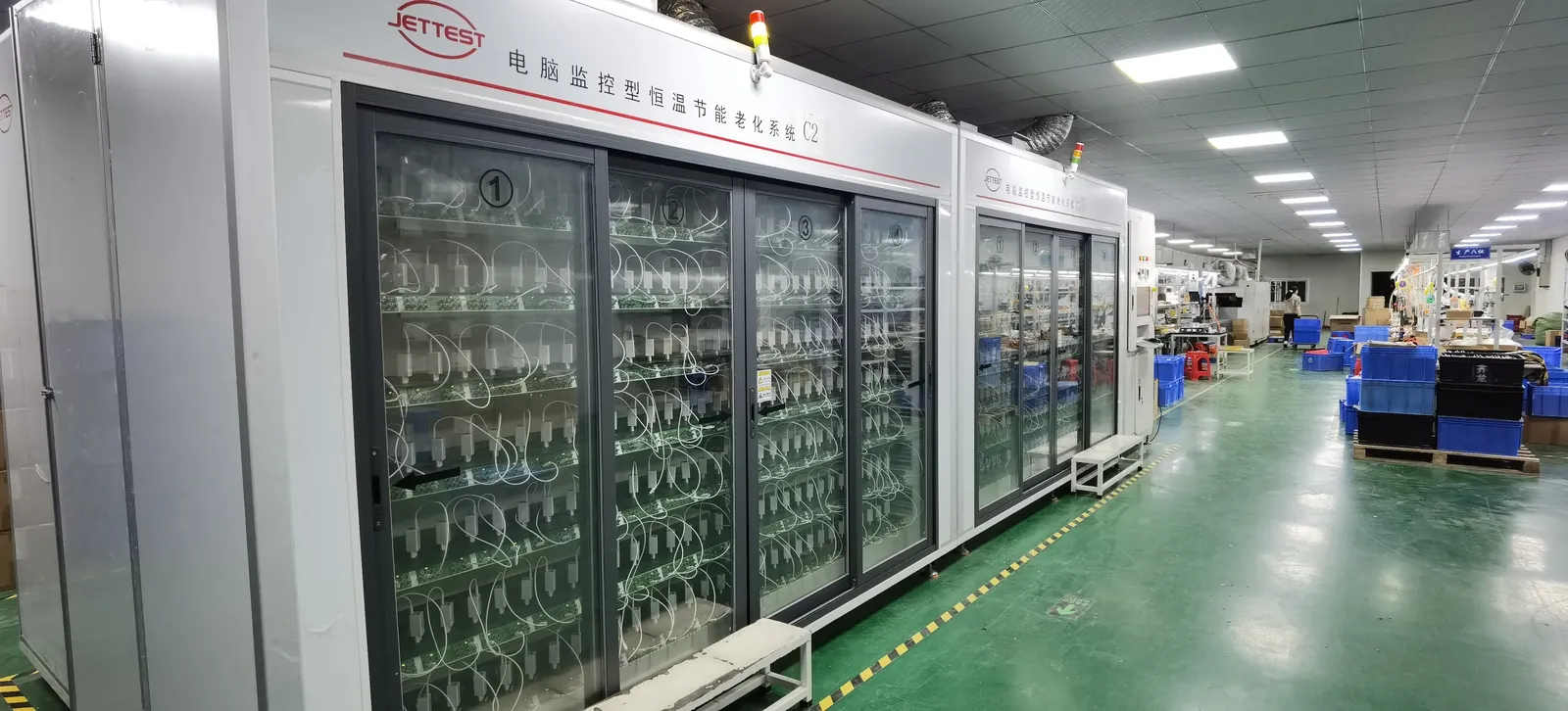
Be precise about what “certified” means. A custom power supply manufacturer can hold CE/CB/FCC/RoHS/ErP and ISO 9001 as standard; UL/ETL/UKCA and others are buyer-funded and factory-supported, because the cert cost is per-SKU and per-market. What you should never accept is a vague “certified” claim with no certificate PDF. Request the actual CB or CE paperwork tied to the exact model, not a family certificate that covers a different watt class. A competent OEM shows the certificate without being asked, because the paperwork is part of the build, not an afterthought.
The pilot run: first-article and process validation
Between the prototype and the full order sits the pilot run — typically a few hundred units built on the real line, with the real operators, to prove the process is repeatable, not just that one good sample exists. A custom power supply manufacturer uses the pilot to set the production test limits (the ATE pass/fail bands) and to catch assembly drift before it scales. The gate criteria are stricter than the prototype’s: every measurement must fall inside the band across the whole pilot lot, not just on a hero unit. If the pilot shows a 5% spread on ripple, the line is not ready.
The pilot run is also where you validate incoming quality. Because SMT is partnered, the pilot proves the incoming inspection catches a bad batch of boards before they reach assembly. A custom power supply manufacturer that treats the pilot as a sales demo — shipping you glossy units and skipping the lot statistics — is hiding process variation. Insist on the pilot report: mean, spread, and failures per test, per station. That report is the contract for what “consistent” means at volume, and it is the document you reopen if the 10,000th unit drifts.
Mass-production consistency: holding the line at volume
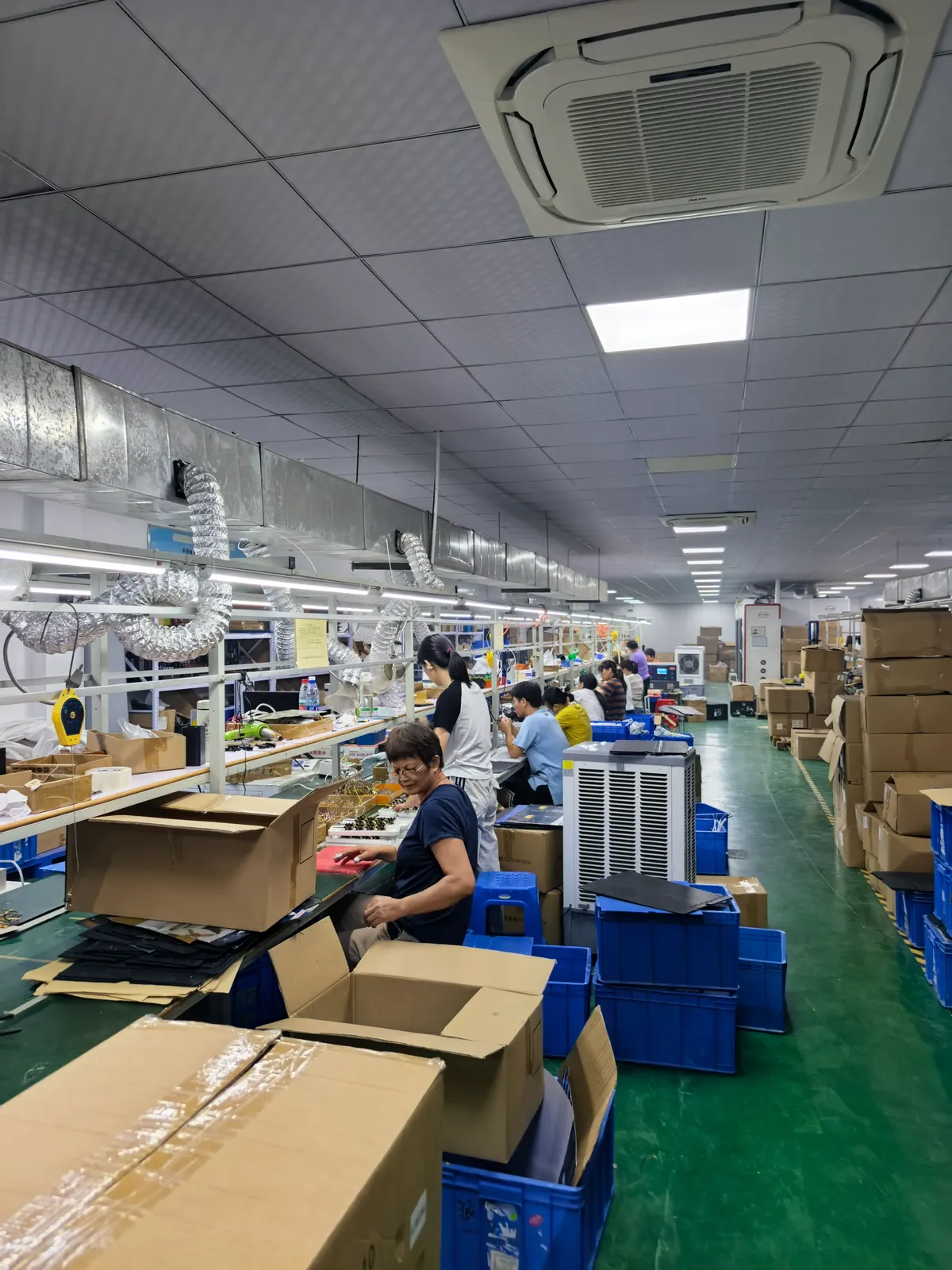
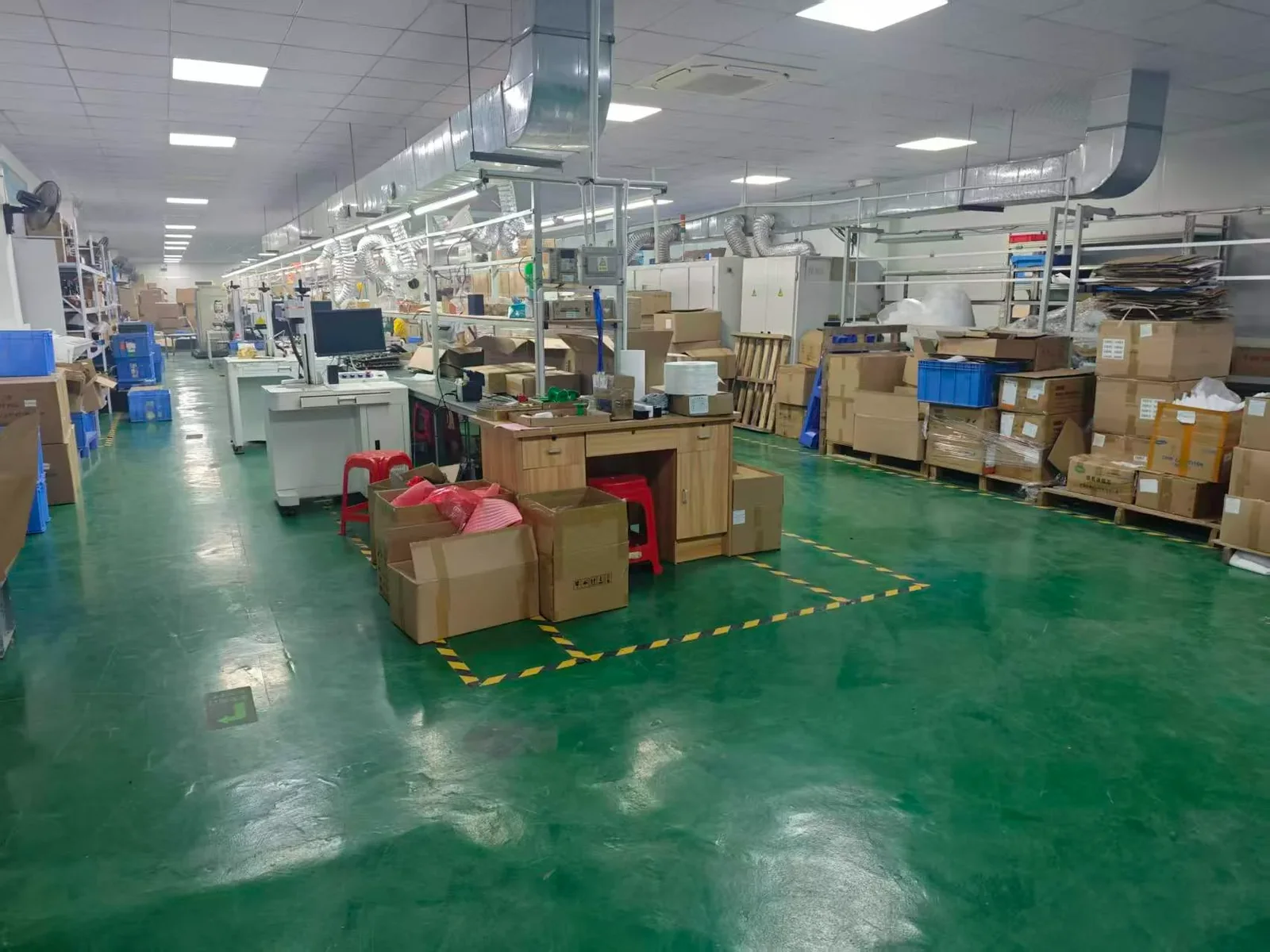
Consistency is the difference between a custom power supply manufacturer and a prototype shop. At volume, the risks are component lot variation, operator drift, and test-band creep — none visible on a hero sample. The controls that hold the line are a frozen BOM, calibrated ATE with fixed limits, statistical sampling on the safety-critical checks, and a burn-in step that stresses early-life failures out before shipping. A factory that “inspects by eye” cannot hold a 150,000-unit monthly run; one that owns the line with 100% functional test and documented limits can. Consistency is engineered, then measured, never assumed.
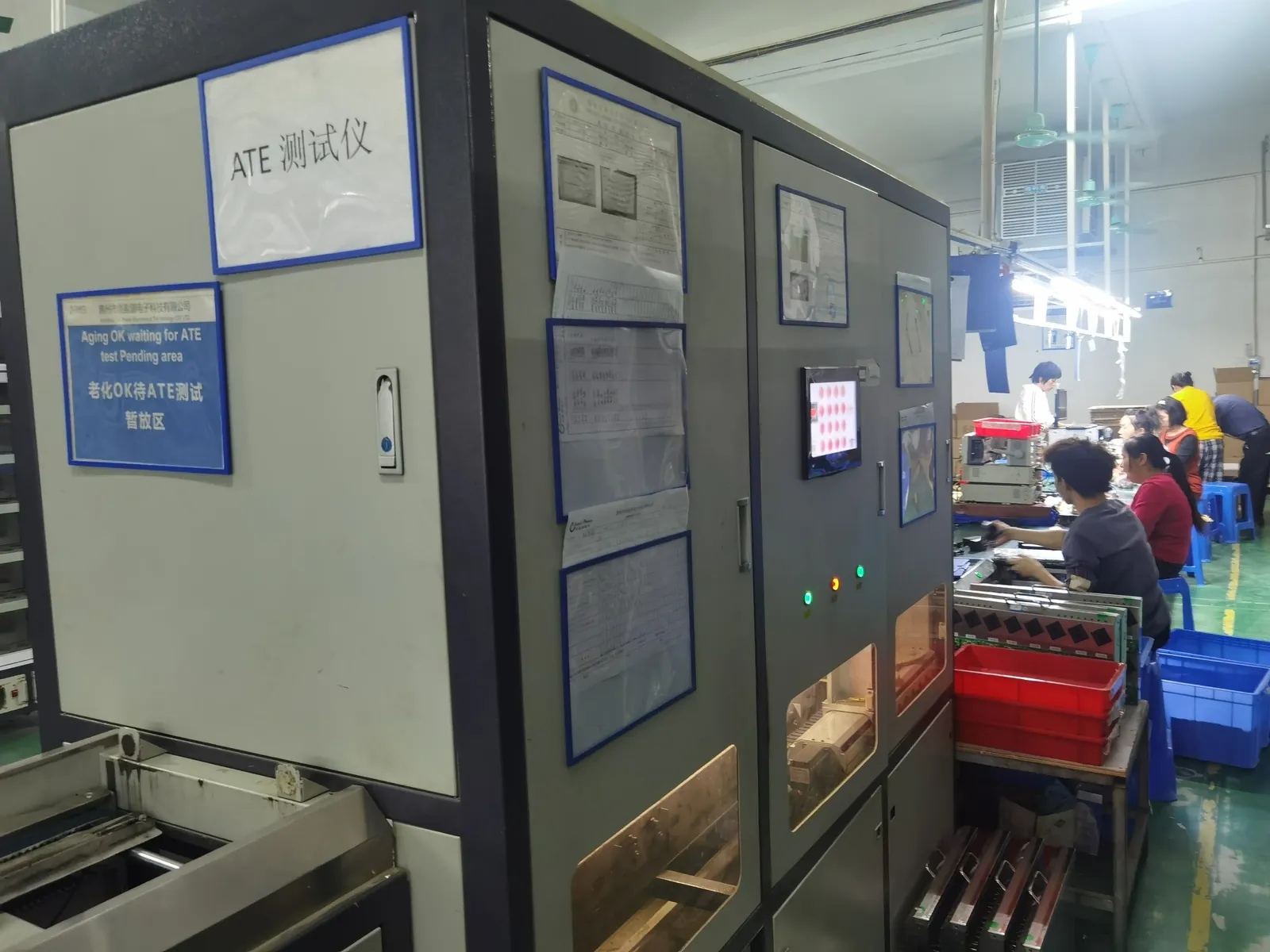
The single most important consistency control is the test limit. If every unit is ATE-checked against the same fixed band set at pilot, a drifting process shows up as a rising failure rate you can act on. If the limit is “looks OK,” drift is invisible until returns arrive. A custom power supply manufacturer should state the ATE coverage (100% functional, what is and is not checked) and the burn-in duration in writing. That is the operational definition of “consistent,” and it is what separates a build you can scale from one you pray about. Hold the factory to the pilot-run band, lot after lot.
Incoming inspection and the partnered SMT step
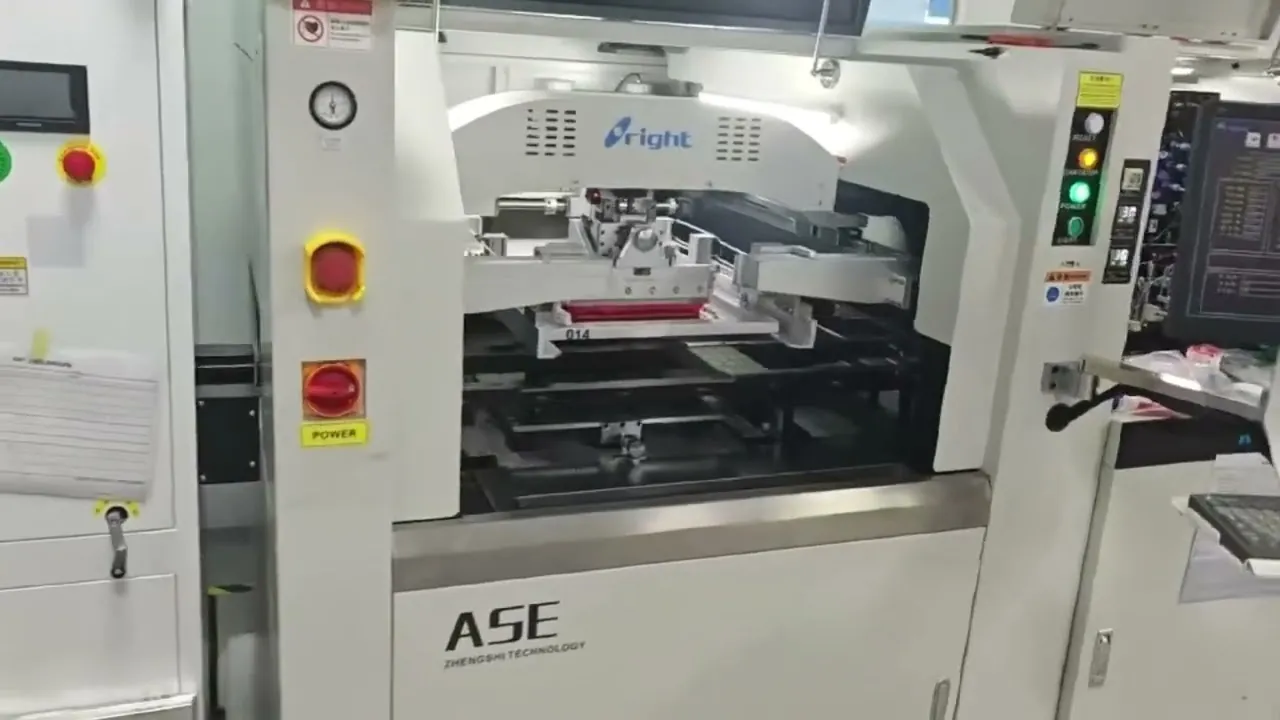
Most small custom power supply manufacturers, including Paiyi Power, do not own an SMT line — they hold a stake in a Tier-1 SMT partner (Fuji NXT / M3S placement) and own the rest in-house. The risk this creates is a board that arrives already built; the control is incoming inspection. A custom power supply manufacturer must X-ray or AOI the incoming PCBA, verify the BOM against the frozen list, and reject lots that drift before they reach manual assembly. The partnered SMT step is not a weakness if the incoming gate is real; it is a weakness only when the factory trusts the partner blindly. Ask to see the incoming-inspection record, not just the SMT partner’s name.
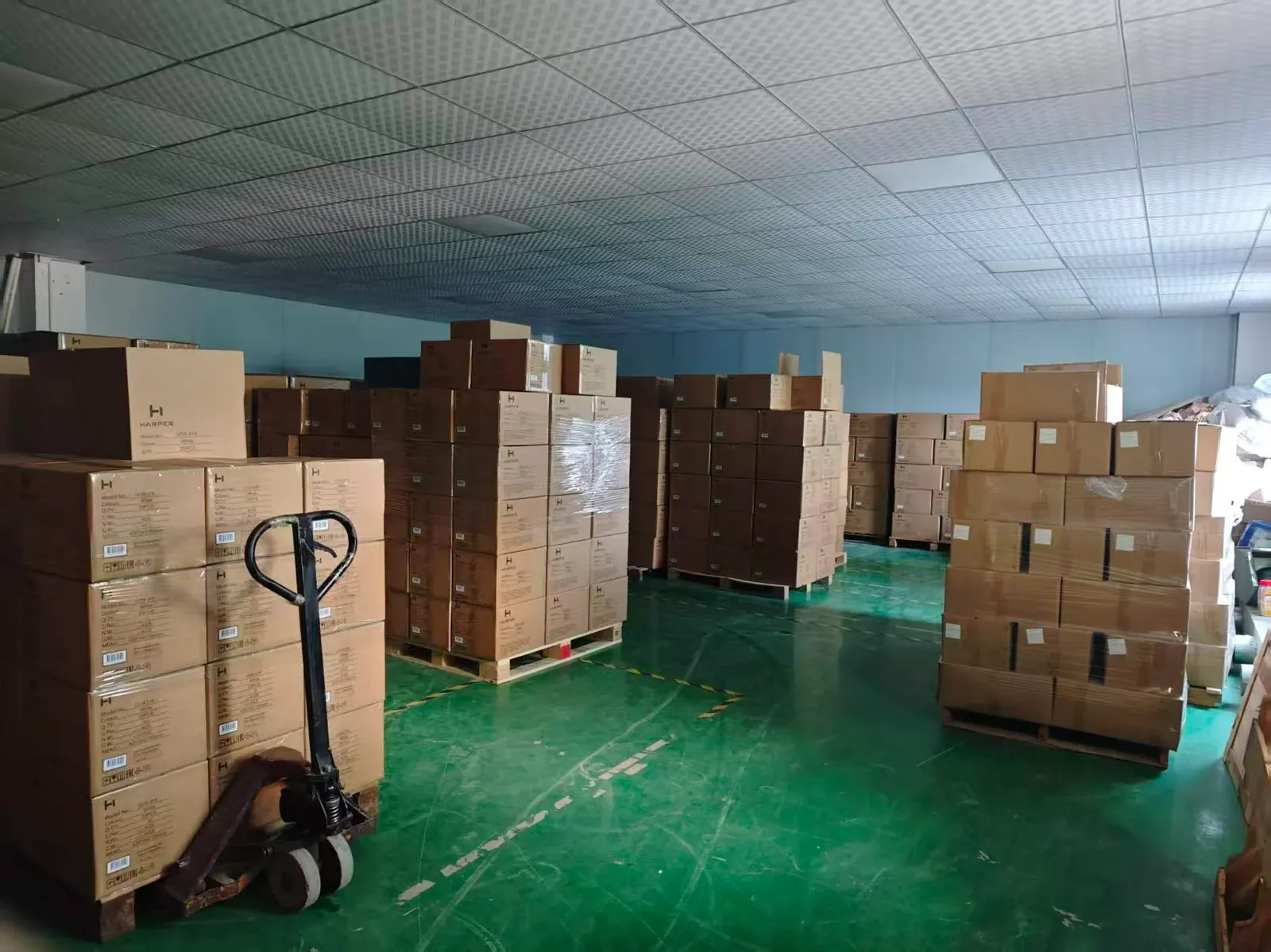
For transparency on wording: a custom power supply manufacturer should never call a partnered line “our SMT factory” if it is not owned. The accurate phrasing is “the SMT line Paiyi Power holds a stake in” or “our Tier-1 SMT partner.” Buyers who audit later and find the claim inflated lose trust in everything else. Own what you own — manual assembly, QC, ATE, burn-in — and be precise about the upstream step. That precision is part of what makes a custom power supply manufacturer trustworthy at volume, because it extends to the spec, the certs, and the test data.
100% ATE and burn-in: the non-negotiable checks
Two checks separate a safe custom power supply from a lucky one: 100% automatic functional test (ATE) and burn-in. ATE exercises every unit for output, ripple, regulation, protection trips and isolation at load — not a pulled sample. Burn-in holds units at temperature and load for a defined window so early-life components fail in the rack, not in the field. A custom power supply manufacturer that ships without 100% ATE is gambling with your brand. The acceptance criteria — how long, at what load, to what trip point — should be written into the PO, because “we test them” without numbers means nothing. Insist on the band, the duration, and the reject rule.
Pair ATE with the safety checks. Isolation resistance and hipot (high-potential) testing confirm the creepage and clearance hold under fault, which is the IEC 62368-1 promise made real. A custom power supply manufacturer that runs hipot on 100% of units can show you the trip log; one that samples it cannot. For high-power and medical-adjacent builds, treat hipot and ATE as the floor, not the ceiling. The burn-in chamber and the ATE bench are the two places a custom power supply proves it will still work in year three, and both belong in the written acceptance, not the sales pitch.
Documentation and change control
A custom power supply manufacturer you can scale with documents everything and changes nothing without telling you. The documents that matter are the frozen BOM, the test limits set at pilot, the cert PDFs tied to the model, and a change-control path: if a component goes obsolete or a supplier changes, the factory proposes, you approve, and the unit is re-qualified before it ships. A partner that substitutes a capacitor silently to save a cent is a recall waiting to happen. Change control is the quiet discipline that keeps the 50,000th unit identical to the approved one, and it is worth more than a low unit price.
Ask the custom power supply manufacturer for the document set up front and the change-notification lead time in writing. A reasonable shop notifies you before any safety-relevant or performance-relevant change and supplies re-test data; a poor one ships the change and mentions it in the next quarterly review. The documentation trail is also what your own auditor wants when you certify the end product, so a factory that treats paperwork as overhead is handing you future compliance debt. Good doc control is not bureaucracy — it is the memory of the build, and a custom power supply manufacturer without it cannot promise consistency.
MOQ, tooling and lead time for custom builds
Custom builds carry NRE and tooling that off-the-shelf units do not, so the economics only work above a volume. A typical custom power supply manufacturer sets MOQ around 200 pcs per model, with tooling and any cert fees borne by the buyer, and a realistic lead time of 5–6 weeks from approved prototype to first shipment. Sampling runs 7 days. Treat a quote with no NRE line and a two-week lead time as a modified-standard unit mislabeled “custom” — the math does not close. The table below frames the gate criteria from prototype through mass production so you can plan the calendar and the cash.
| Stage | Typical duration | Gate criteria |
|---|---|---|
| Spec intake | 3–5 days | Written spec sheet agreed |
| Prototype | ~7 days | Rail, thermal, EMC pre-screen pass |
| Pilot run | 1–2 weeks | Lot stats inside band; BOM frozen |
| Mass production | 5–6 weeks lead | 100% ATE + burn-in, MOQ 200/model |
How Paiyi Power runs a custom power supply program
For transparency, here is how we run the custom power supply work at Paiyi Power. We are a Huizhou-based custom power supply manufacturer and GaN OEM/ODM (founded Shenzhen 2015, Huizhou plant 2019, ~50 people) building modified-standard and fully custom units from 5W to 240W. SMT runs at the Tier-1 factory we hold a stake in (Fuji NXT / M3S); the board returns to Huizhou for incoming inspection, manual assembly, 100% ATE and burn-in. We hold CE, CB, FCC, RoHS, ErP and ISO 9001, and our high-power USB-C builds are designed to the USB PD 3.2 specification (with SPR AVS), never claimed as USB-IF certified without a TID we can show.
Our custom process is the five gates above, written into every PO: spec intake, topology decision, prototype with measured curves, pilot run with lot statistics, and mass production held by fixed ATE limits and burn-in. MOQ starts at 200 pcs per model, tooling and any buyer-market certs are the buyer’s cost, and lead time is a realistic 5–6 weeks. Because the 10,000th unit has to match the first, we freeze the BOM at pilot and route every change through written approval with re-test. That is the discipline a custom power supply manufacturer owes a buyer who puts the unit inside their own brand.
Frequently asked questions
These are the custom power supply questions buyers ask most, answered without the sales gloss.
When is a custom power supply worth the NRE versus a modified-standard unit?
Custom pays off when no catalog unit meets your voltage, form factor, thermal envelope or regulatory target — a sealed enclosure with no airflow, a non-standard rail, or a medical isolation level. If a modified-standard platform with a custom enclosure or cable closes 80% of the gap, take that route and save the tooling. A trustworthy custom power supply manufacturer tells you which bucket you are in before quoting, because over-customizing wastes budget and under-customizing ships a liability.
What should a custom power supply manufacturer ask me before quoting?
A real partner opens with a spec sheet: input range, output rail (voltage, current, ripple, regulation), thermal budget (ambient, enclosure, airflow, max case temperature), mechanical envelope, expected lifetime, and target safety marks. Anyone who quotes from “100W power supply” alone is reselling a reference design and will discover your constraints after tooling is paid. The spec inputs table above lists each parameter and why it moves the design.
How does a custom power supply manufacturer keep consistency at volume?
Through a frozen bill of materials, calibrated ATE with fixed pass/fail bands set at the pilot run, statistical sampling on safety-critical checks, and a burn-in step that stresses early-life failures out before shipping. The test limit is the operational definition of consistency: if every unit is checked against the same band, drift shows up as a rising failure rate you can act on. “Inspected by eye” cannot hold a 150,000-unit monthly run; documented limits can.
Do I need my own SMT line to be a real custom power supply manufacturer?
No. Many competent small OEMs hold a stake in a Tier-1 SMT partner and own the rest in-house — manual assembly, QC, ATE and burn-in. The control that matters is incoming inspection of the PCBA: X-ray or AOI, BOM verification, and lot rejection before assembly. Be precise in wording though; a partnered line should be called a “Tier-1 SMT partner,” never “our SMT factory,” or the claim collapses under audit.
Which safety marks does a custom power supply manufacturer normally hold?
For most B2B programs: CE, CB (IECEE), FCC, RoHS and ErP, plus ISO 9001, held as standard. UL/ETL/UKCA and market-specific marks are buyer-funded and factory-supported because the cert cost is per-SKU and per-market. The governing safety standard is IEC 62368-1. Always request the actual certificate PDF tied to your exact model, not a family cert covering a different watt class, and treat any vague “certified” claim as a red flag.
What is the realistic lead time and MOQ for a custom build?
A typical custom power supply manufacturer sets MOQ around 200 pcs per model, with tooling and cert fees borne by the buyer, sampling in about 7 days, and a realistic 5–6 week lead from approved prototype to first shipment. A quote with no NRE line and a two-week lead usually means a modified-standard unit mislabeled custom. Plan the calendar around the pilot-run gate, because that is where the production test limits are locked.
Why is burn-in part of a serious custom power supply program?
Burn-in holds units at temperature and load for a defined window so early-life components fail in the rack instead of in the field. Paired with 100% ATE and hipot isolation testing, it is what makes the unit safe by design rather than by luck. A custom power supply manufacturer should state the burn-in duration, load and reject rule in writing; “we test them” without numbers is not an acceptance criterion you can enforce.
How should change control work with a custom power supply manufacturer?
If a component goes obsolete or a supplier changes, the factory proposes, you approve, and the unit is re-qualified before it ships. A partner that substitutes a capacitor silently to save a cent is a recall risk. Ask for the document set — frozen BOM, test limits, cert PDFs — up front and the change-notification lead time in writing. Good doc control is the memory of the build and the only thing that keeps the 50,000th unit identical to the approved one.
Can a custom power supply manufacturer also do GaN and PD 3.2 builds?
Yes. A modern custom power supply manufacturer runs GaN platforms for size and efficiency and designs high-power USB-C units to the USB PD 3.2 specification (with SPR AVS). PD 3.2 does not raise the 140W ceiling but adds finer voltage control via AVS. Confirm the factory owns the GaN thermal and EMC work rather than dropping in a reference design it cannot tune, because that is where compact high-power builds live or die.
Sources
- IEC — IEC 62368-1 (audio/video/ICT equipment safety)
- Energy Star — External Power Supplies program
- USB Implementers Forum — USB Power Delivery specification
- Wikipedia — Power supply (topology and PFC overview)
- U.S. DOE — efficiency regulations for external power supplies
Related reading
- High-power charging: premium ODM for 100W–140W GaN
- Inside Paiyi Power: R&D to 100% inspection
- Certifications we hold (CE/CB/FCC/RoHS/ErP, ISO 9001)
- How to vet a GaN charger manufacturer OEM: 12-point checklist
- 100W+ GaN charger OEM: the complete selection guide
- Power supply factory audit: the complete on-site checklist