Power Adapter Certification: 5 Marks to Plan Before Your First PO
Published: September 2026
Reading time: 13 min
Audience: Buyers launching a charger or power adapter into one or more markets, who need to know which certifications the factory includes, which stay buyer-funded, and how early planning protects the launch date.
By Han — Paiyi Power, a Huizhou-based power supply OEM/ODM (GaN chargers and custom units 5W–240W, designed to USB PD 3.2 with SPR AVS) that holds CE, CB, FCC, RoHS, ErP and ISO 9001 and treats power adapter certification as an RFQ-stage planning task rather than a shipping afterthought, at MOQ 200 pcs per model.
Last updated: 29 September 2026.
Contents
Direct answer: how to plan power adapter certification
Plan power adapter certification in two layers. The baseline layer — CE, CB, FCC, RoHS and ErP — is what a competent factory already holds on its standard platforms and extends to your custom model with a model-specific report. The market layer — UL, ETL, UKCA, KC, INMETRO and similar national marks — stays buyer-funded, because each of those certificates is filed against your brand, your import record and your destination market.
Start both layers at the RFQ stage: the CB report under IEC 62368-1 is the reusable core, national marks reuse it instead of retesting from zero, and every week of delay between sample approval and filing pushes straight into your launch date.
The power adapter certification map: baseline vs market-specific
The clearest way to map power adapter certification is to separate what travels with the platform from what belongs to a country. CE, CB, FCC, RoHS and ErP are baseline marks: they describe the design’s safety and performance against international or regional rules, and a factory that builds thousands of units on the same platform holds them as part of its engineering work. UL, ETL, UKCA, KC and INMETRO are market marks: they are national filings that name a certificate holder, an importer and a destination, so they follow your commercial decision to enter a market — not the factory’s decision to build a circuit.
That split explains most certification surprises. Buyers assume the factory’s baseline paperwork covers every shelf and customs desk; it does not. A US big-box retailer may want an NRTL mark such as UL or ETL; the UK wants UKCA; Brazil and Korea run national schemes with local representatives. None of these are exotic — they are variations on the same IEC 62368-1 test data — but each is a separate filing with its own fee and its own queue. Mapping them at RFQ turns certification from a series of emergencies into a schedule you can hold.
What CE, CB, FCC, RoHS and ErP actually cover
Each baseline mark answers a different question, and the table below keeps the five apart so you can read a certificate file without guesswork. CE declares conformity with EU safety and EMC rules; CB is the IECEE test report that national certification bodies accept worldwide; FCC covers electromagnetic emissions for the US market; RoHS restricts hazardous substances; ErP sets efficiency and no-load limits for external power supplies. Together they form the baseline of power adapter certification that a serious OEM holds before you ask.
| Mark | Scope | Region | Notes |
|---|---|---|---|
| CE | Safety and EMC conformity declared by the manufacturer | EU / EEA | DoC plus technical file; factory-held on platforms |
| CB (IECEE) | IEC 62368-1 safety test report recognized by member bodies | Global scheme | The reusable core; feeds national marks |
| FCC | Electromagnetic interference (Part 15) | US | SDoC route typical for adapters |
| RoHS | Restriction of hazardous substances in materials | EU, widely referenced | Tied to BOM control |
| ErP | Efficiency and no-load limits for external power supplies | EU | A design input, not a label exercise |
Read the CB report first when you review a file: it is the deepest document, and the others lean on it. A CE declaration without a supporting test report, or an FCC record that names a different watt class than your order, is the kind of gap that surfaces at customs or during a retail onboarding audit. Ask for model-specific PDFs — not family certificates — and check that the model number, rated output and dates match your purchase order.
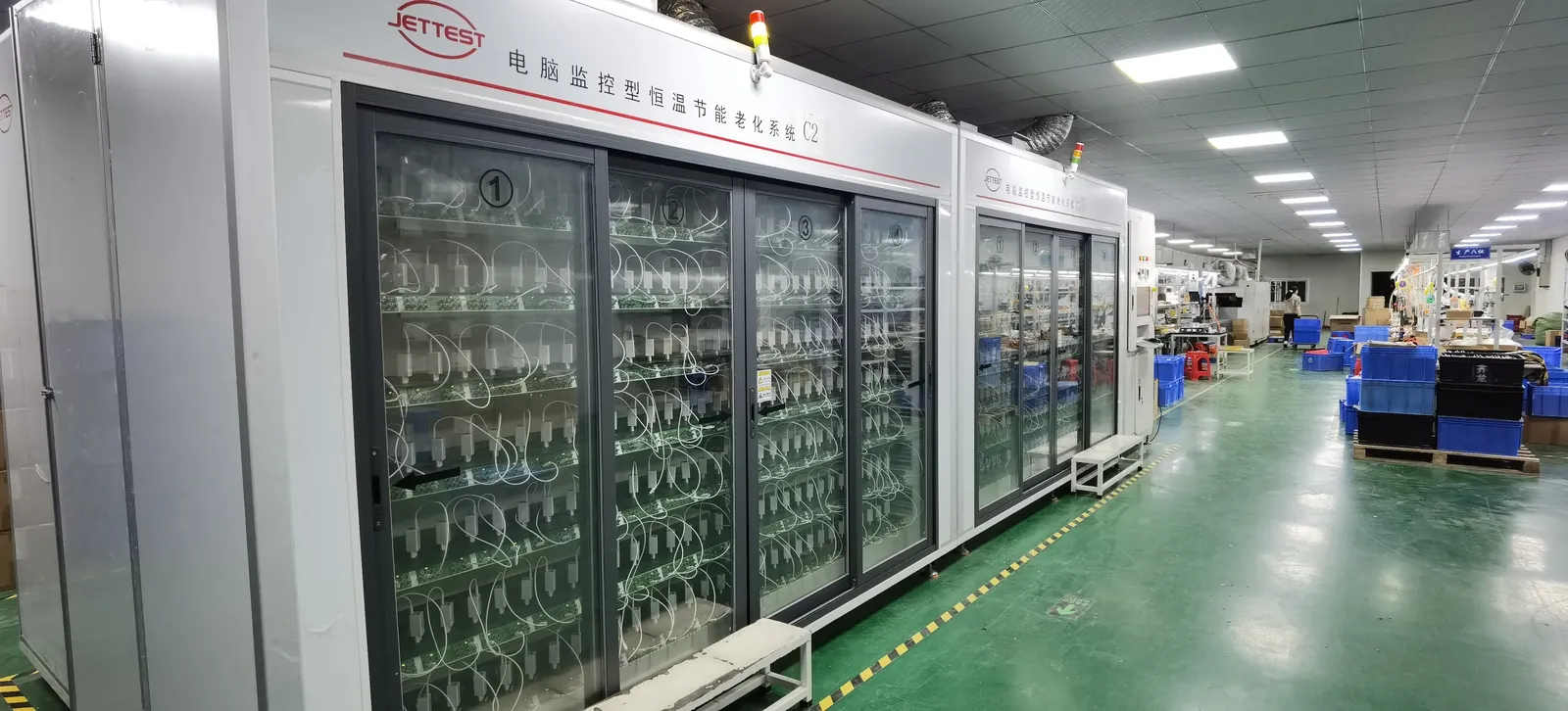
Certificates describe a design; the factory’s daily testing keeps the shipped units inside the described envelope. The 100% ATE functional test and the burn-in run on every unit are the production-side evidence that the certified design is the one being built — regulators rarely visit, but returns departments do. When you vet a supplier, pair the certificate pack with a look at the test floor: an aging chamber actually running and an ATE log with a tight spread are worth more than any framed document on the wall.
Why UL, ETL, UKCA and KC are buyer-funded
National marks are buyer-funded for a structural reason, not a stingy one. A UL, ETL, UKCA or KC certificate names a certificate holder and, often, a local responsible party; the holder is typically the importer or the brand that sells into that market, because enforcement, recalls and label liability land on them. A factory cannot sensibly hold a Korean KC license for every customer’s brand, so the filing follows the commercial relationship. What the factory does provide is everything the mark actually needs: the CB report, test samples, construction data and filing support through the national body.
Say it plainly in your budget: development, tooling and certification fees are carried by the buyer. A quote that bundles “certification” without naming which marks usually means only the baseline five — read the line items. Ask which fees are one-off (application, lab time) and which recur (annual surveillance, factory inspections, license renewals). A supplier who itemizes this at RFQ has run national filings before; one who promises “all certificates included” for a 500-unit custom order is promising your money, not theirs.
CB as the bridge: one test, many national marks
The IECEE CB Scheme is the mechanism that keeps buyer-funded marks affordable. A laboratory tests the adapter once against IEC 62368-1 and issues a CB test report and certificate; national certification bodies in member countries accept that report as the basis for their own mark. Instead of paying for a full test in every destination, you pay for a national-stage review — document check, local deviations, label approval — stacked on the same file. One test, many marks is the whole economic argument for planning your power adapter certification around CB.
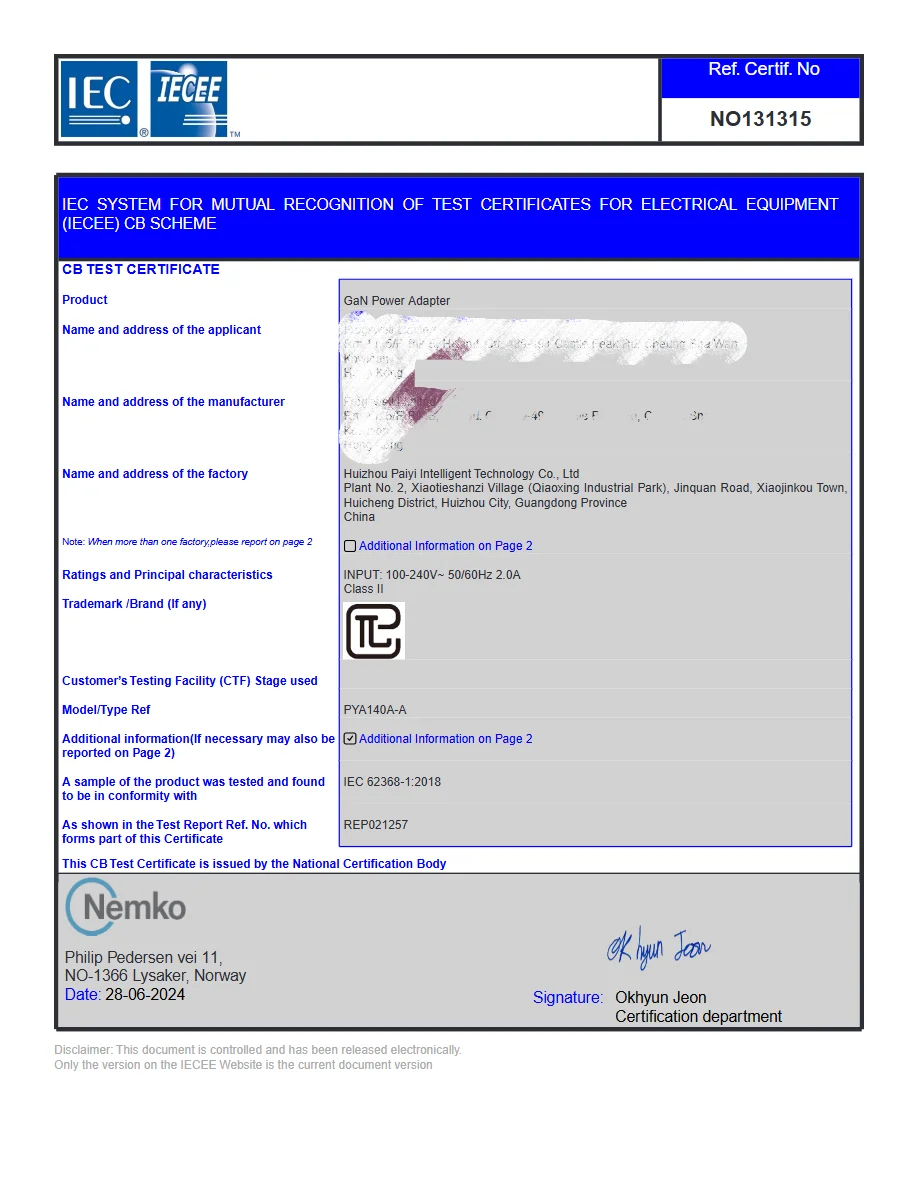
This is why the CB certificate is the first document to demand and the first to verify. Check that the ratings, model family and standard edition match what your markets need; a CB report to an outdated edition of IEC 62368-1 can force retesting at the national stage. When a buyer hands us a market list at RFQ, the practical questions are which national bodies the CB file can feed and what local deviations each market adds — answered in days on an existing platform, and slower on a full custom build where sampling alone runs 2–4 weeks.
Timing: when power adapter certification planning must start
Certification planning starts at the RFQ, in parallel with electrical design — not after sample approval. On a modified standard model, sampling takes about 7 days and the baseline paperwork already exists, so the real work is confirming that your variant stays inside the certified family. On a full custom build, sampling runs 2–4 weeks and the lab queue starts only when samples exist, so a late start compounds. The table below gives indicative extra weeks per market on top of the factory’s standard 5–6 week production lead after sample approval; treat the figures as industry bands to plan with, not quotes.
| Market | Base mark(s) | Extra step | Typical extra weeks |
|---|---|---|---|
| EU | CE + RoHS + ErP | None on held platforms; DoC and technical file refreshed | 0 |
| US | FCC (SDoC) | UL or ETL if retail or insurance requires | 0–4 |
| UK | UKCA | Conformity assessment route where applicable | 2–4 |
| Brazil | INMETRO (buyer-funded, project basis) | National certification via local body and representative | 6–10 |
| International CB | CB (IECEE) report | National stage per destination market | 2–6 per market |
Two timing rules keep the schedule honest. First, file baseline and market marks in parallel wherever the CB report allows, because national queues are the long poles. Second, freeze the design before filing: a component change after certificates issue can void the file and force re-qualification, which is the most expensive way to learn what change control means. If your launch date is fixed, work backwards from the longest national stage and add the 5–6 week production window. If your product charges over USB PD, the protocol side has its own track — see our breakdown of USB PD 3.2 certification timelines and costs — and it runs in parallel with the safety marks, not after them.
Cost ownership: what the factory includes and what you carry
Cost ownership in power adapter certification follows the same logic as the mark map: baseline marks ride with the platform, market marks and their logistics ride with the buyer. The table below splits the four cost items buyers ask about most — the baseline report pack, national marks, lab samples and local representatives — into what the factory includes and what the buyer funds. Use it as a quoting checklist; if a supplier’s answer differs, ask them to explain the difference in writing.
| Item | Factory includes | Buyer-funded | Notes |
|---|---|---|---|
| CE/CB/FCC/RoHS/ErP reports | Held on standard platforms; model-specific report issued for your variant | — | Tied to the exact watt class and rating |
| National marks (UL/ETL/UKCA/KC) | Filing support, CB report, test data, engineering time | Application, lab and surveillance fees | Certificate sits in the buyer’s name |
| Sample units for lab | Built and prepared per quote | Lab handling and courier costs | Fresh production units, not hand samples |
| Local representative fees | Guidance on where a local rep is mandated | In-country representative where required | Brazil and Korea are common cases |
Two budget notes prevent the classic overruns. Certification fees scale with the number of filings, not with unit price — a 2,000-unit order and a 20,000-unit order carry the same national mark fees, which is why they hurt more at low volume. And a quote that hides certification inside “tooling” makes both numbers unauditable, so insist on separate line items. Development, tooling and certification fees carried by the buyer is not fine print; it is the standard structure, and transparent suppliers state it before you ask.
The document pack to demand before the PO
Before you release a purchase order, the document pack should arrive by email — not at shipment, and not “on request”. The core set: the CB test report and certificate for your watt class, the CE declaration of conformity with its technical file reference, the FCC test report and SDoC records, RoHS and ErP declarations, the ISO 9001 certificate, the frozen BOM, and the production test limits that define pass and fail on the line. Add the nameplate artwork showing where each mark sits on the label, because a mark that does not fit the label is a rework order.
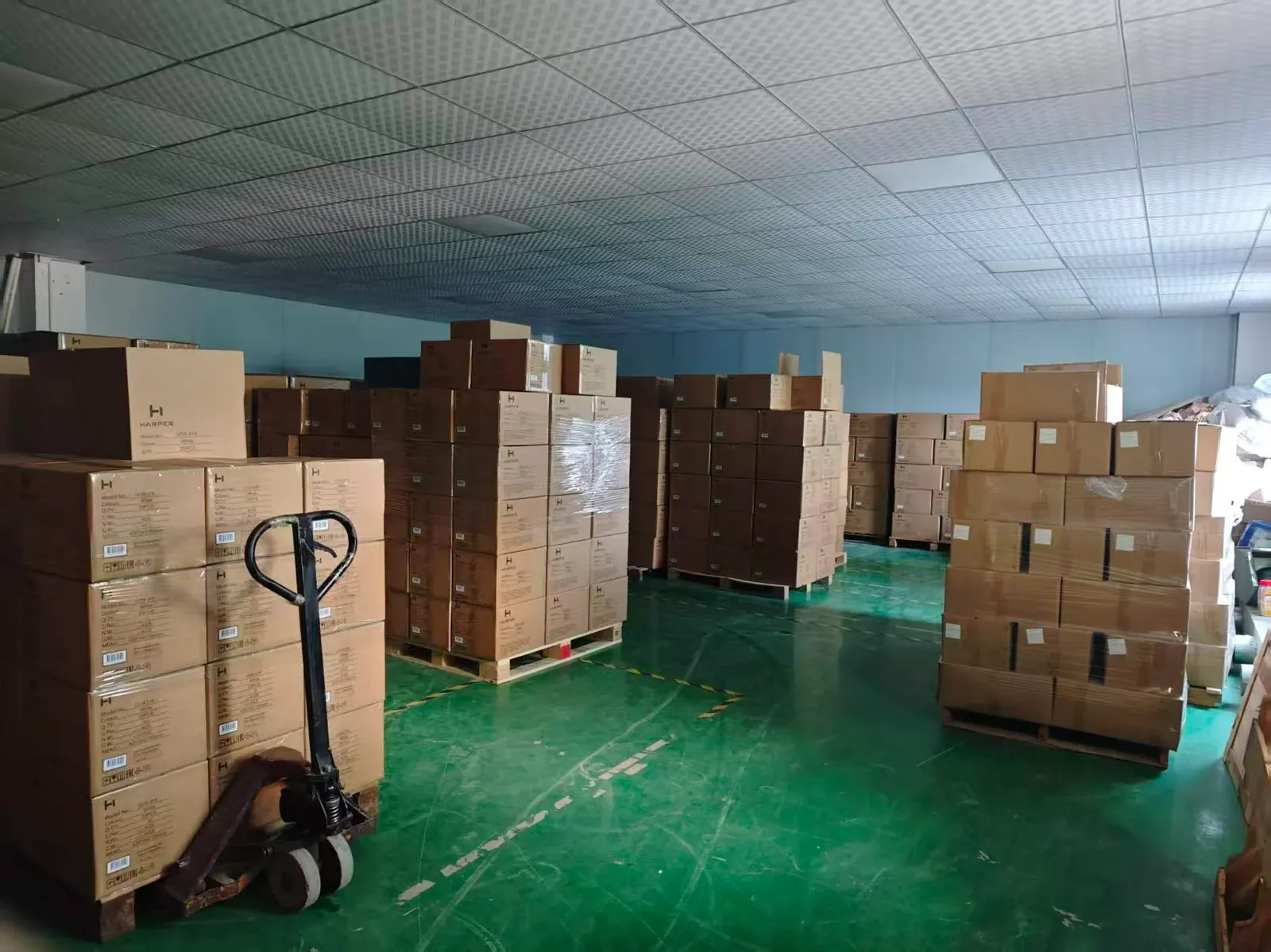
The pack is also your leverage in an audit. Cross-check the model numbers on the certificates against the BOM and the quote; check certificate dates and standard editions; check that the test limits match what the ATE actually runs. A factory that produces this pack in a day has its documentation in order; a factory that assembles it over three weeks is reconstructing its quality system while you wait. Either answer is useful — one says proceed, the other says schedule the factory audit before the deposit.
ErP and efficiency rules that change designs
ErP is the mark most often discovered too late, because it is an efficiency regulation rather than a safety test. For external power supplies in the EU, the applicable rules set limits on average active-mode efficiency and on no-load power draw, tiered by output power. Meeting them is a design decision: standby circuits, switching topology and feedback schemes all affect the no-load figure, and retrofitting a design that misses the limit means a board spin — new samples, a new schedule, sometimes a new tooling quote. Buyers who treat ErP as paperwork meet it at the worst possible moment.
Plan ErP as an engineering input instead. Ask the factory for the measured no-load power and average efficiency of the reference design at your voltage and current points, and file the results with the technical file. Buyers serving North America should track the parallel Energy Star external power supplies program for retail programs that reference it. The efficiency figures also quietly decide your product’s standby behavior — a spec your marketing team will eventually read on the box, where it is much cheaper to have it correct. And if you are still choosing between protocol generations, our PD 3.1 vs PD 3.2 comparison explains how the power profile you pick changes the operating points that get measured.
Batteries, UN38.3 and shipping paperwork
If your order includes battery packs — a power bank, a battery-included kit, or adapters with integral cells for backup — shipping certification changes category. UN38.3 is the UN transport test series for lithium cells and batteries, and it is buyer-side paperwork for battery shipments: the tests sit with the cell or pack manufacturer, the shipper of record declares them, and forwarders and airlines ask for the test summary and packing documentation before accepting cargo. A factory can supply construction data and coordinate with the cell maker, but the declaration follows the shipment, not the circuit.
Sort the paperwork before the booking, not after the forwarder rejects the cartons. Confirm which party appears as the shipper, whether the cells inside the pack are already UN38.3 tested with a current test summary, and what state-of-charge and packaging rules apply to your mode — air rules are stricter than sea. Sellers who bolt battery logistics on at the end pay for warehousing while documents catch up. If your product is mains-only, skip this section — but write that decision down, so nobody adds a battery later and inherits the schedule.
6 certification mistakes that delay launches
Most certification delays trace back to six repeatable mistakes, each of them cheap to avoid at RFQ and expensive to fix after tooling. Score your own project against the list below before you sign; a single unchecked item is usually enough to move a launch date.
- Starting certification after sample approval, so national queues stack onto production instead of running beside it.
- Assuming a family certificate covers a custom variant — always demand the model-specific report for your exact watt class.
- Discovering buyer-funded marks at shipment, when the CB file could have fed them from week one.
- Treating ErP and efficiency limits as paperwork, then paying for a board spin when no-load misses the tier.
- Shipping batteries without UN38.3 paperwork arranged with the forwarder in advance.
- Approving a component change after certificates issue without re-qualification, which quietly voids the file.
Notice the pattern: five of the six are sequencing errors, not technical ones. The factory cannot fix your sequence, because the decisions sit on the buyer’s side of the table — the market list, the launch date, the brand name on the filing. Hand those three facts to your supplier at RFQ and the mistakes above mostly cannot happen; withhold them and no amount of engineering skill will save the schedule. For the wider vendor conversation beyond certificates, run the GaN charger manufacturer checklist alongside this list.
Certification questions to put in your RFQ
Put the power adapter certification conversation into the RFQ itself, in writing, so the answers are quotable and comparable across suppliers. The eight questions below cover the baseline pack, buyer-funded marks, timing and cost ownership; vendors who answer them precisely have run national filings before, and vendors who answer vaguely have just told you where the risk lives.
- Which of CE, CB, FCC, RoHS and ErP do you hold for my watt class, and can I see model-specific PDFs?
- Which marks for my target markets are buyer-funded, and who files them?
- Can my national filings reuse the CB report, and which national bodies accept it?
- What are the measured no-load power and average efficiency of this design under ErP?
- Who prepares UN38.3 paperwork if my shipment includes batteries?
- What extra weeks should I plan if I add a market after the PO?
- What exactly arrives in the document pack at shipment?
- Which certification costs appear as line items, and which are bundled?
Attach your market list and launch date to the RFQ so the answers come back as a schedule rather than a brochure. Suppliers who return a per-market timeline with named fees have done this work before; that reply is worth more than any certificate in isolation, because it shows the factory plans power adapter certification the way your logistics team plans freight.
How Paiyi Power supports certification
For transparency, here is how we answer our own questions. Paiyi Power is a Huizhou-based power supply OEM/ODM — Shenzhen engineering since 2015, the Huizhou plant since 2019, about 50 people — building GaN chargers and custom units from 5W to 240W, designed to the USB PD 3.2 specification with SPR AVS. We hold CE, CB (IECEE), FCC, RoHS, ErP and ISO 9001 on our platforms; UL, ETL, UKCA, KC, INMETRO and other national marks run as buyer-funded, project-basis filings that we support with test data, samples and paperwork.
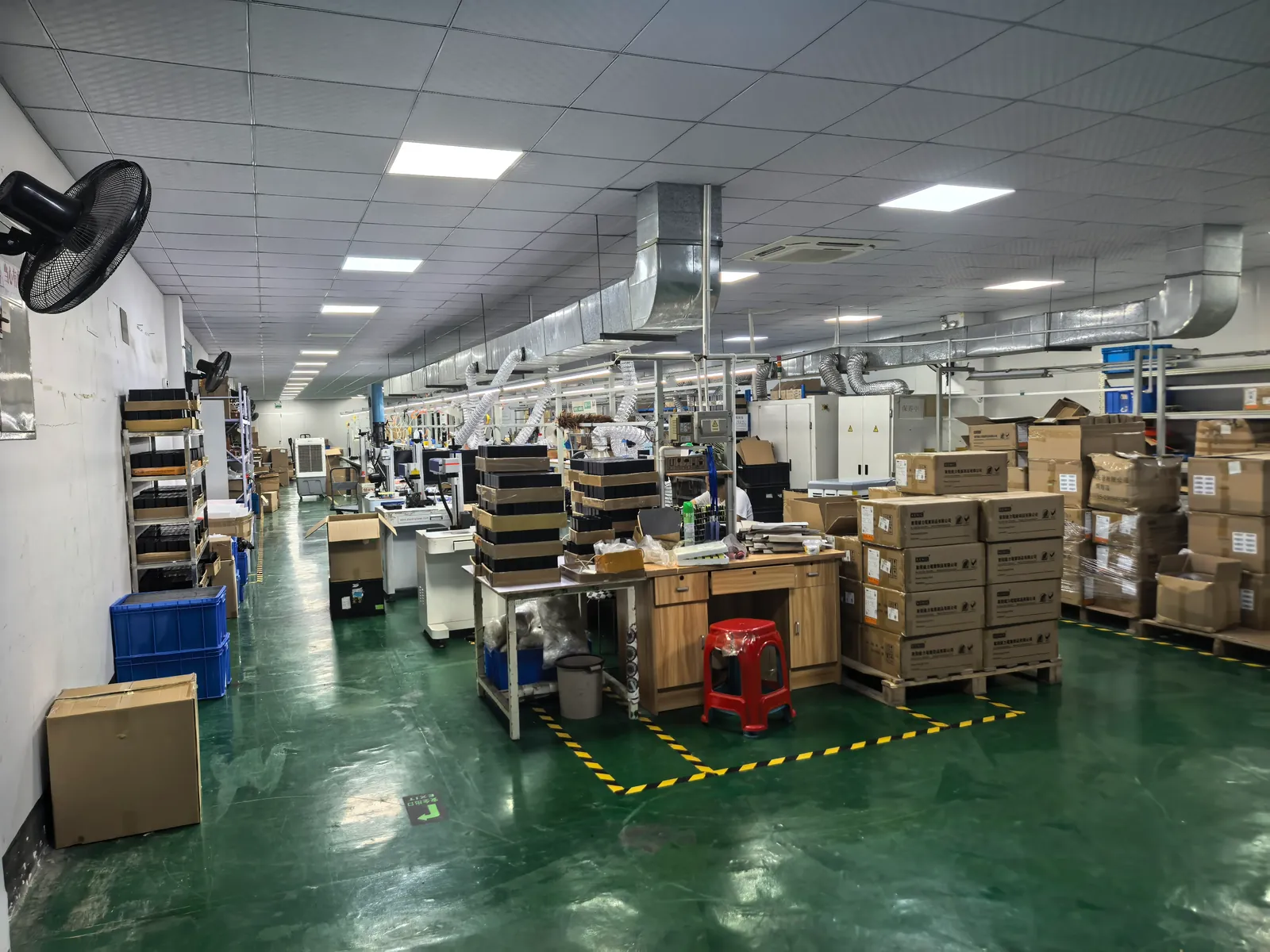
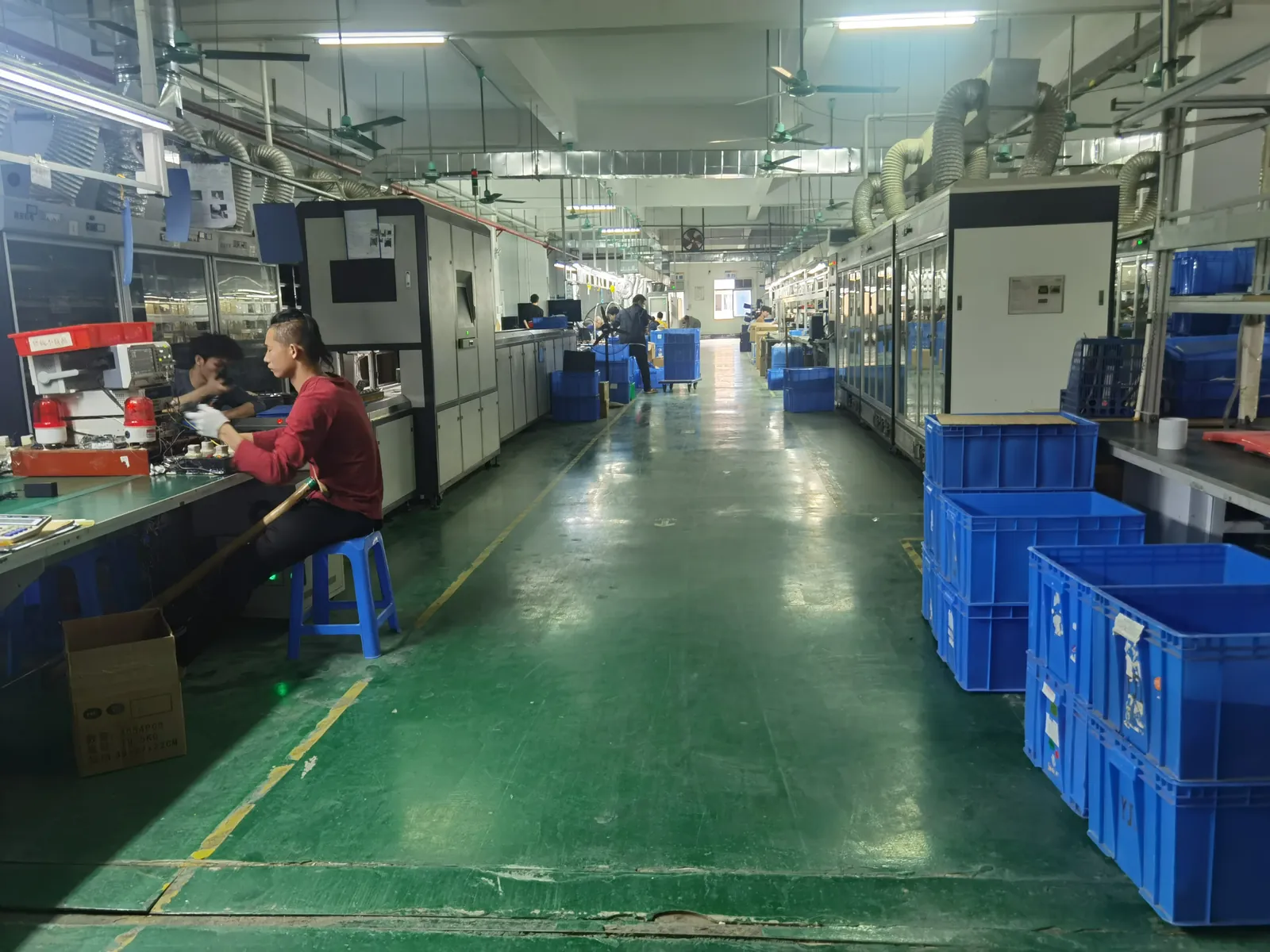
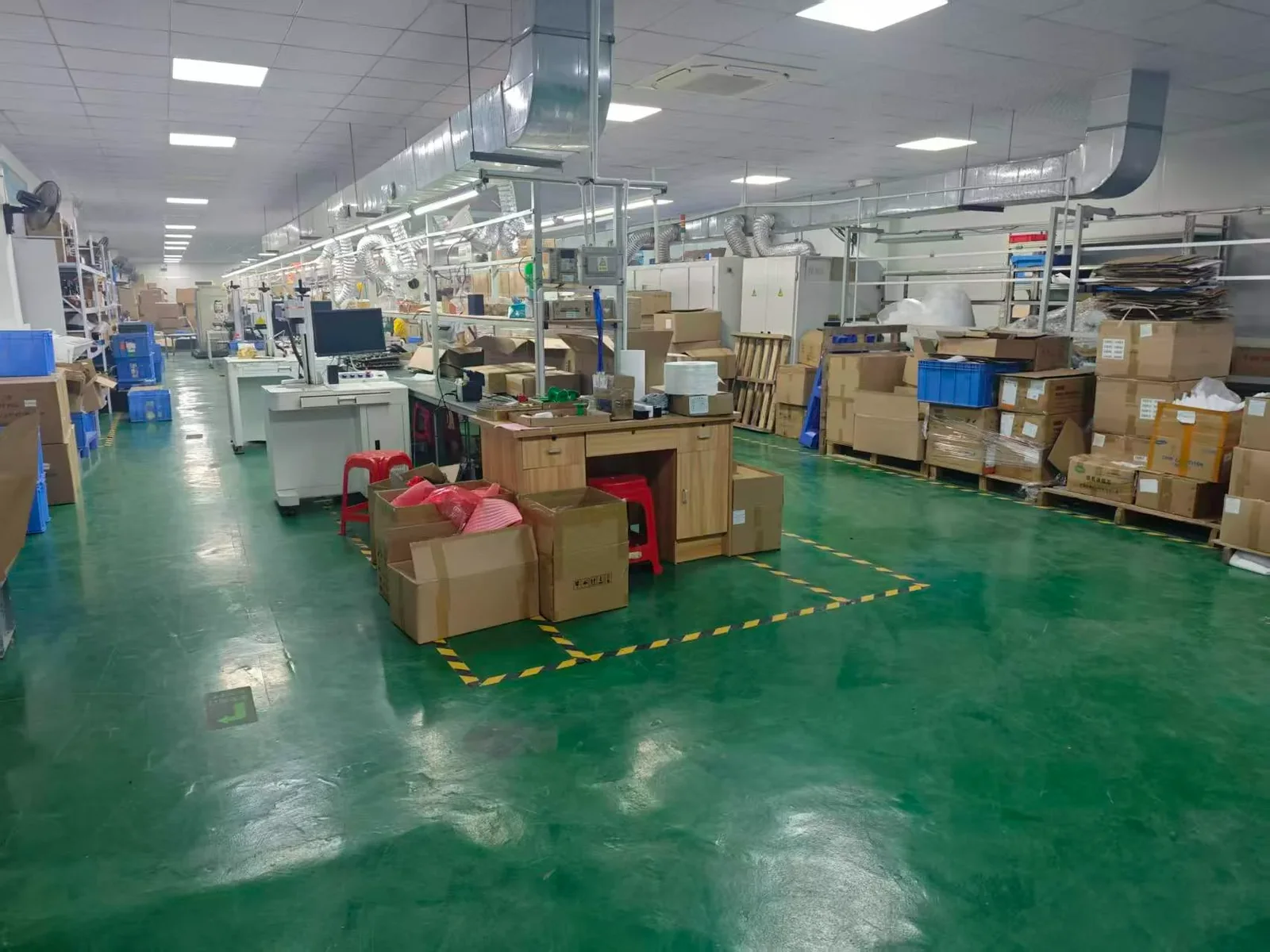
SMT runs at the Tier-1 SMT factory Paiyi Power holds a stake in (Fuji NXT / M3S), and boards return to Huizhou for manual assembly, 100% ATE functional test and burn-in under our ISO 9001 system.
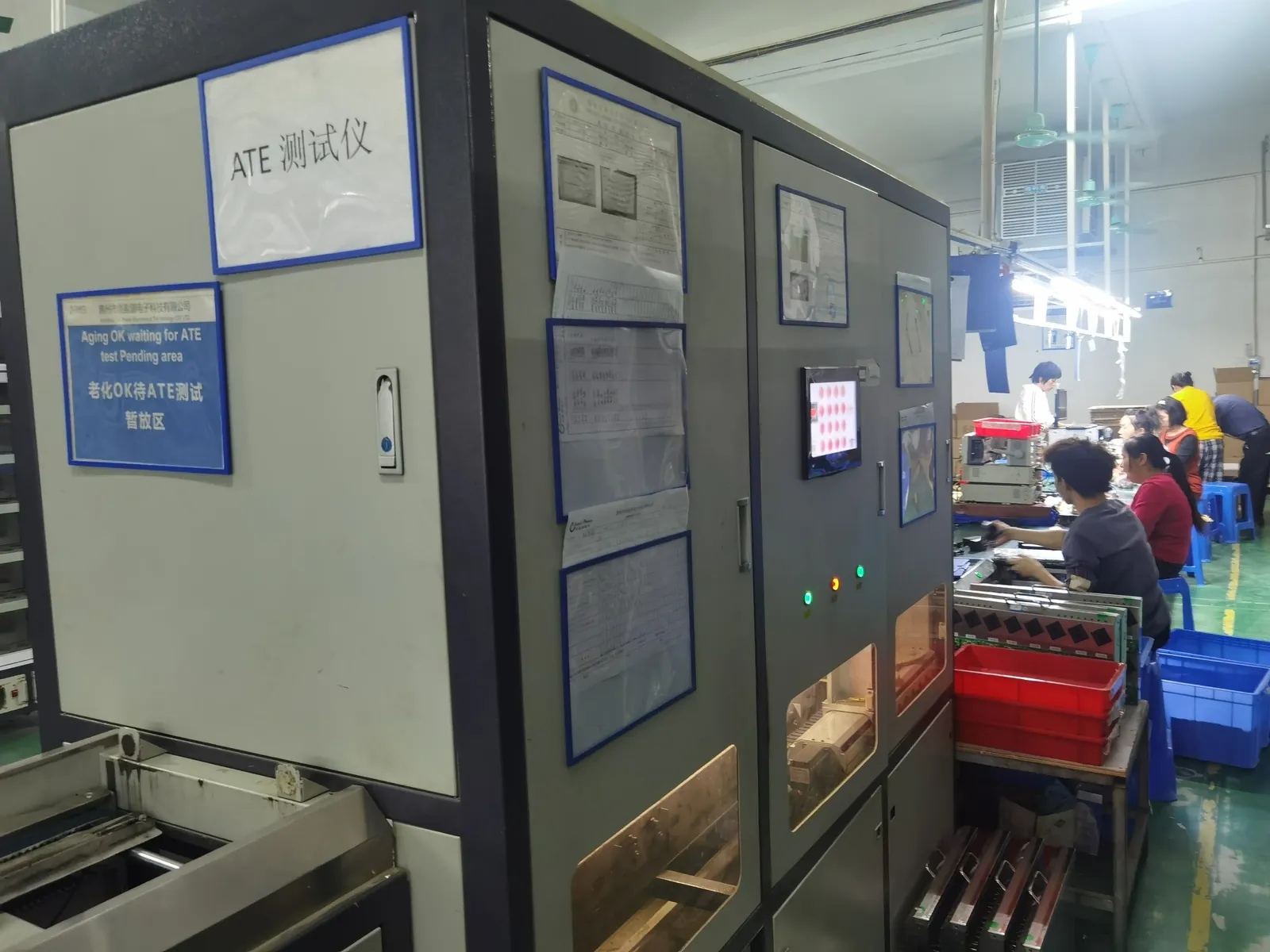
Planning starts with your market list: we map baseline coverage, name the buyer-funded filings per market with indicative timelines, and quote certification as explicit line items. MOQ is 200 pcs per model on a modified standard (full custom ODM from 500–1,000 pcs), sampling runs about 7 days modified standard or 2–4 weeks full custom, and mass production takes 5–6 weeks after sample approval, with capacity up to 150,000 units a month across four assembly lines. For the full context, see our certifications, the factory audit checklist you can run on us, and our guide to choosing a 140W GaN charger supplier.
Frequently asked questions
The certification questions buyers ask most, answered the way we answer them on calls.
Which certifications does a factory include by default?
A competent power supply OEM includes the baseline five on its standard platforms: CE for the EU, CB (IECEE) as the reusable safety report under IEC 62368-1, FCC for the US, RoHS for substances and ErP for efficiency — plus ISO 9001 for the quality system. “Include” means the factory holds the certificates and issues model-specific reports for your variant. It does not mean every national mark is covered: UL, ETL, UKCA, KC and INMETRO are buyer-funded filings the factory supports. Ask for the PDFs, not the claim.
Who pays for UL, ETL or UKCA?
The buyer does. These national marks name a certificate holder — usually the importing brand — along with local responsible parties where the market requires them, so the fees, the filing and the renewal all sit on the buyer’s side. The factory contributes the CB report, test samples, construction data and filing support, and often manages the correspondence with the power adapter certification body. Budget the application and lab fees as one-off costs and expect annual surveillance or renewal fees on top; itemize both in the quote so nothing hides inside the unit price.
How long does CB certification take?
For a modified standard model that stays inside a certified family, the CB paperwork is largely an update to an existing report, and the practical wait is measured in weeks. A full custom build adds sampling first — 2–4 weeks — and then the lab queue for testing to IEC 62368-1. Treat any timeline as indicative until the lab confirms a slot: queues move, and seasonal peaks are real. The planning rule that matters is simpler — start the CB conversation at RFQ so testing runs beside sampling instead of after it.
Can I ship to the US with only FCC?
Legally, FCC covers electromagnetic emissions and is what US customs cares about for an adapter. But legality and sellability differ: many retailers, insurers and corporate procurement teams want an NRTL safety mark such as UL or ETL before the product reaches a shelf, and some channels effectively require it commercially. So the answer is yes for the border, often no for the big-box aisle. Decide at RFQ which channel you are selling into, because the NRTL mark is a buyer-funded filing with its own queue you will want started early.
What is ErP and does it apply to chargers?
ErP is the EU framework for energy-related products, and for external power supplies it sets binding limits on average active-mode efficiency and no-load power, tiered by output rating. Chargers and adapters sold into the EU must meet it, and the technical file should contain the measured results. It is a design input rather than a label: missing the no-load tier usually means a board revision, not a form to fill in. Ask for the reference design’s measured figures at your operating points during the RFQ, before tooling locks anything in.
Does USB-IF certification matter for chargers?
Compliance with the USB Power Delivery specification matters a great deal — interoperability with phones and laptops depends on it — so design to the PD 3.2 specification with SPR AVS support and verify protocol behavior in test. USB-IF certification itself is a separate logo-licensing program some brands pursue for marketing; it is a buyer decision, with its own process and costs. Be wary of any supplier claiming “USB-IF certified” without a TID (test ID) they can show you. Ask for the protocol test evidence instead of the logo claim.
What documents should I receive with my order?
At minimum: the CB test report and certificate for your model, the CE declaration of conformity, the FCC test report and SDoC records, RoHS and ErP declarations, the ISO 9001 certificate, the frozen BOM, and the production test limits used on the line. If batteries ship in the order, add the UN38.3 test summary and transport documents. Ask for this pack before the PO, not at shipment — a factory that produces it in a day has its documentation house in order, and that order is exactly what customs and retailers will ask for next.
What happens if power adapter certification planning starts too late?
The national queues stack onto production instead of running beside it, so your launch date absorbs every week of delay twice. Worse, late planning surfaces design problems — an ErP no-load miss, a rating that falls outside the certified family — when the only fixes are a board spin or a retest, each with fresh fees and fresh weeks. In practice a late start costs more in schedule than in certificate fees. The remedy is unglamorous: hand the market list and the launch date to the factory at RFQ and file in parallel.
Do certification costs scale with wattage?
Not the way unit costs do. Lab fees track testing time and the number of filings rather than the adapter’s rating, so a 240W build and a 65W build often carry similar certificate costs — though higher-power designs can need extra test setups or cooling arrangements that add hours. What scales most is the number of markets, because each national filing adds its own fee. Plan per market, not per watt, and get the fees as line items so the quote survives comparison across suppliers.
Sources
- IEC — IEC 62368-1 (audio/video/ICT equipment safety)
- IECEE — CB Scheme (global certification for electrical equipment)
- ISO — ISO 9001 (quality management systems)
- USB Implementers Forum — USB Power Delivery specification
- Energy Star — External Power Supplies program
Related reading
- USB PD 3.2 certification: timeline and costs
- Certifications we hold: CE, CB, FCC, RoHS, ErP, ISO 9001
- How to vet a GaN charger manufacturer: 12-point checklist
- PD 3.1 vs PD 3.2: what EPR and AVS buyers should choose
- Power supply factory audit: 12-point complete checklist
- 140W GaN charger supplier: single vs multi-port guide