Power Adapter Manufacturer vs Trading Company vs Big OEM: How to Choose the Right Supplier
Published: September 2026
Reading time: 7 min
Audience: OEM brands, importers, buyers and product teams sourcing custom power adapters and chargers
By Han — Paiyi Power, a specialist power adapter manufacturer and OEM/ODM factory for GaN chargers and external power supplies, working with international B2B customers on mid-batch non-standard custom projects.
Last updated: 7 September 2026.
Contents
Direct answer: which supplier type fits a mid-batch custom buyer
For SMB and mid-batch non-standard custom buyers, a specialist power adapter manufacturer (an OEM/ODM factory) is usually the best fit. You get direct engineering, a lower MOQ, transparent cost, and certificate ownership. A big OEM only makes sense at very high volume where its scale pays off; a trading company adds a layer of margin and rarely engineers, so it suits off-the-shelf rebranding more than true custom work. Choose by two variables: your annual volume and how non-standard your specification is. If either number is small, the factory wins.
The three supplier models in one line
Most buyers meet three kinds of supplier, and they are easy to confuse because all three can ship you a power adapter:
- Power adapter manufacturer (factory / OEM-ODM): owns the line, the engineers, and the certificates.
- Big OEM: a large manufacturer built for high-volume standard production.
- Trading company: a reseller that sources from a factory (often unnamed) and sells under its own name.
The difference is not the box you receive — it is who designs it, who certifies it, and who you call when something is wrong.
Power adapter manufacturer (OEM/ODM factory): what it is
What a factory builds
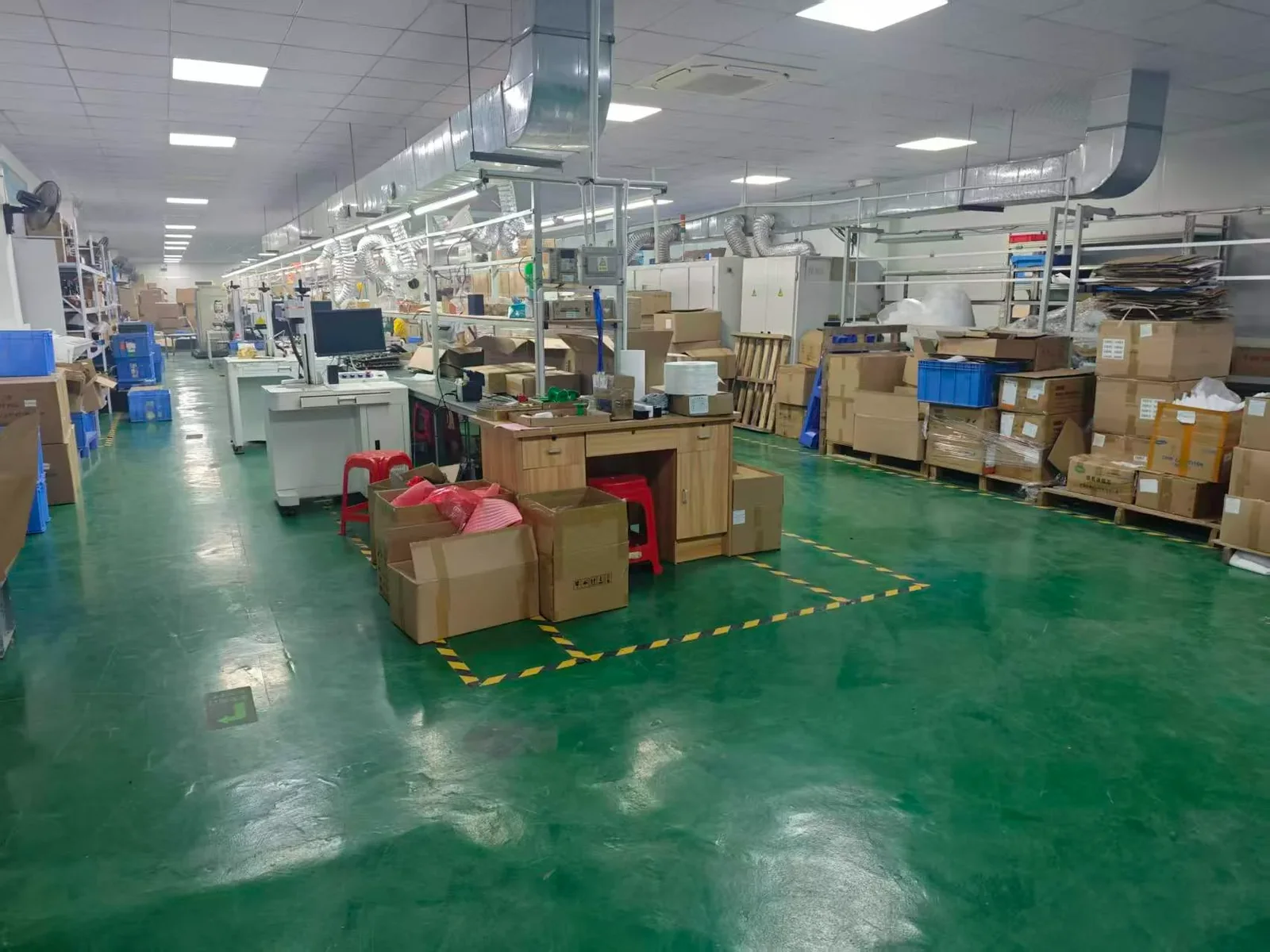
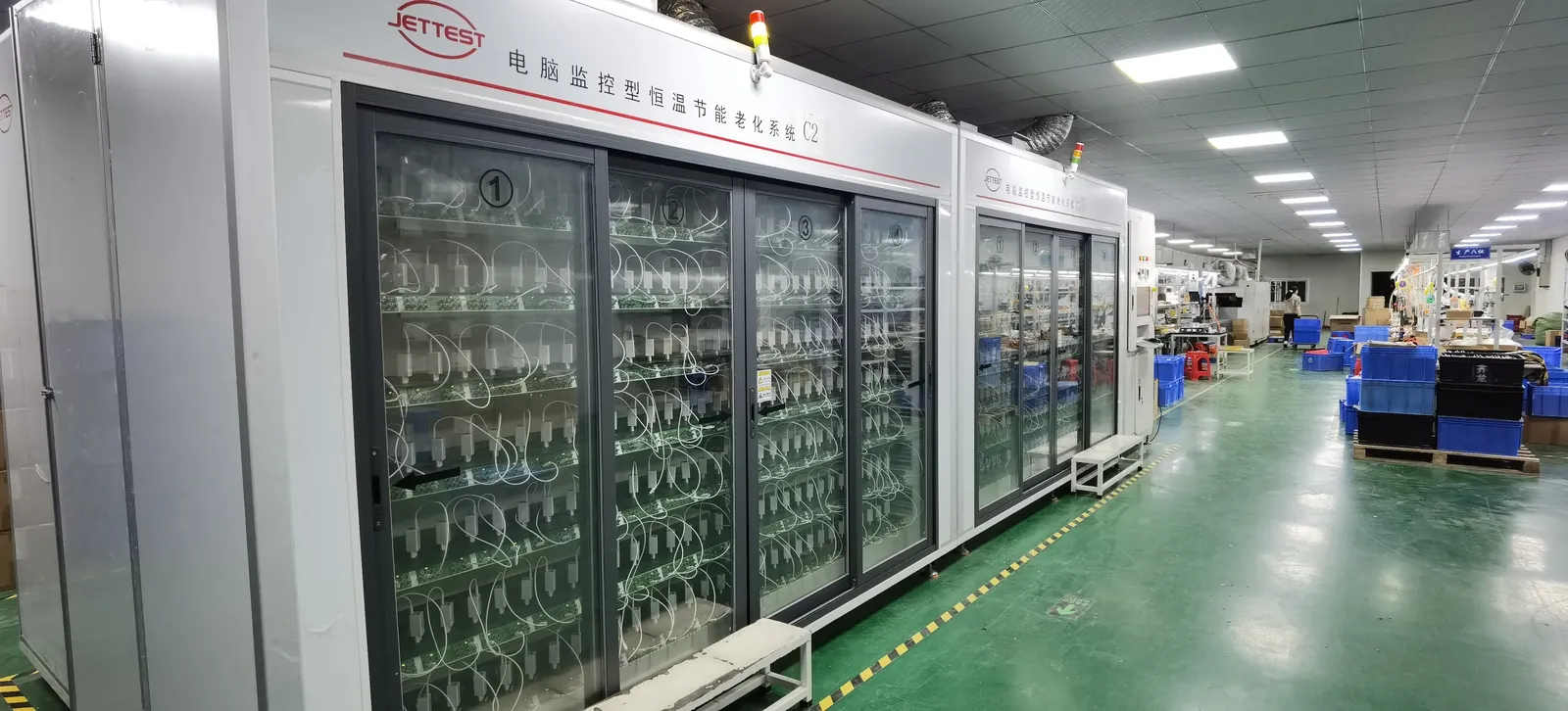
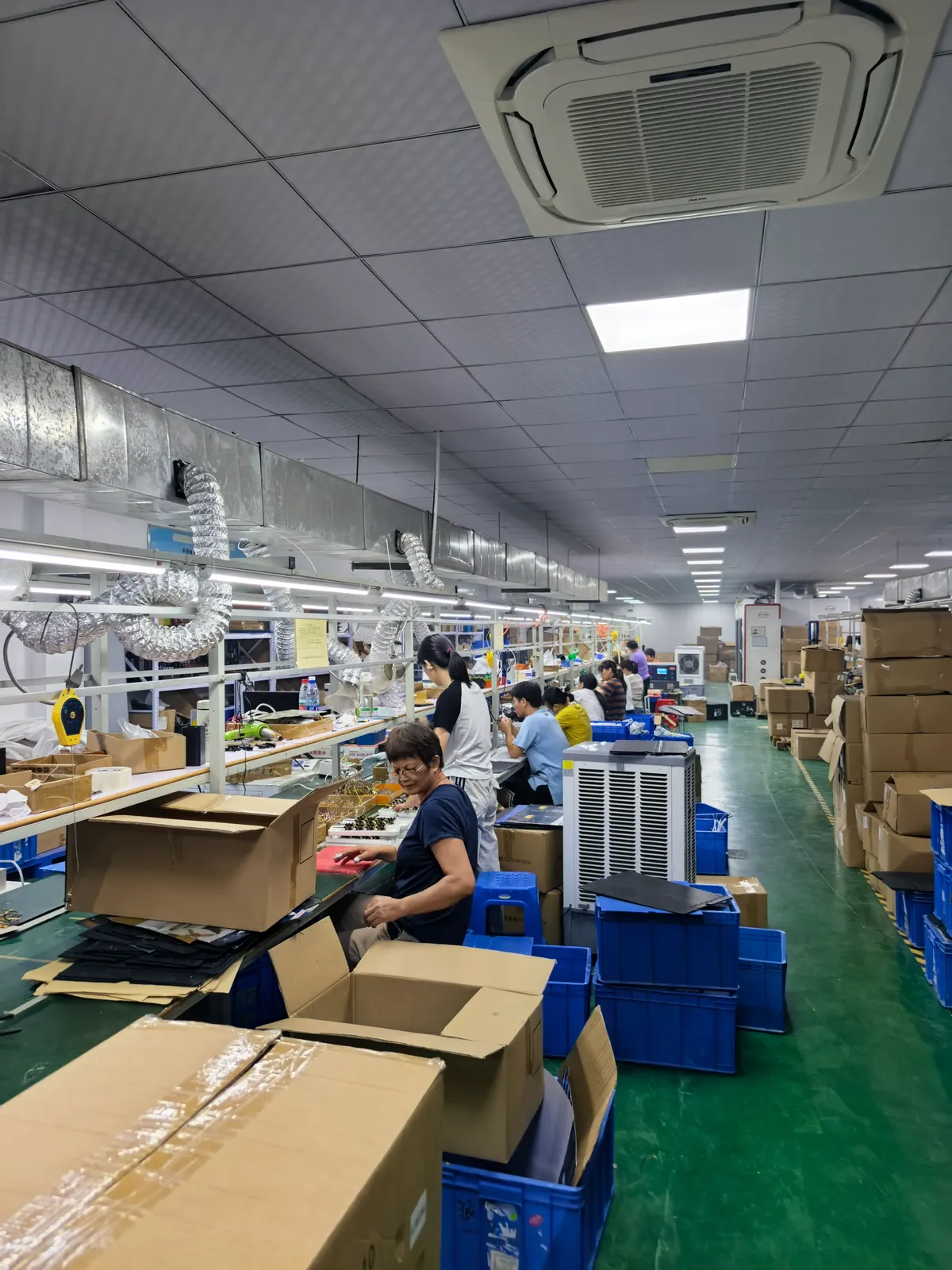
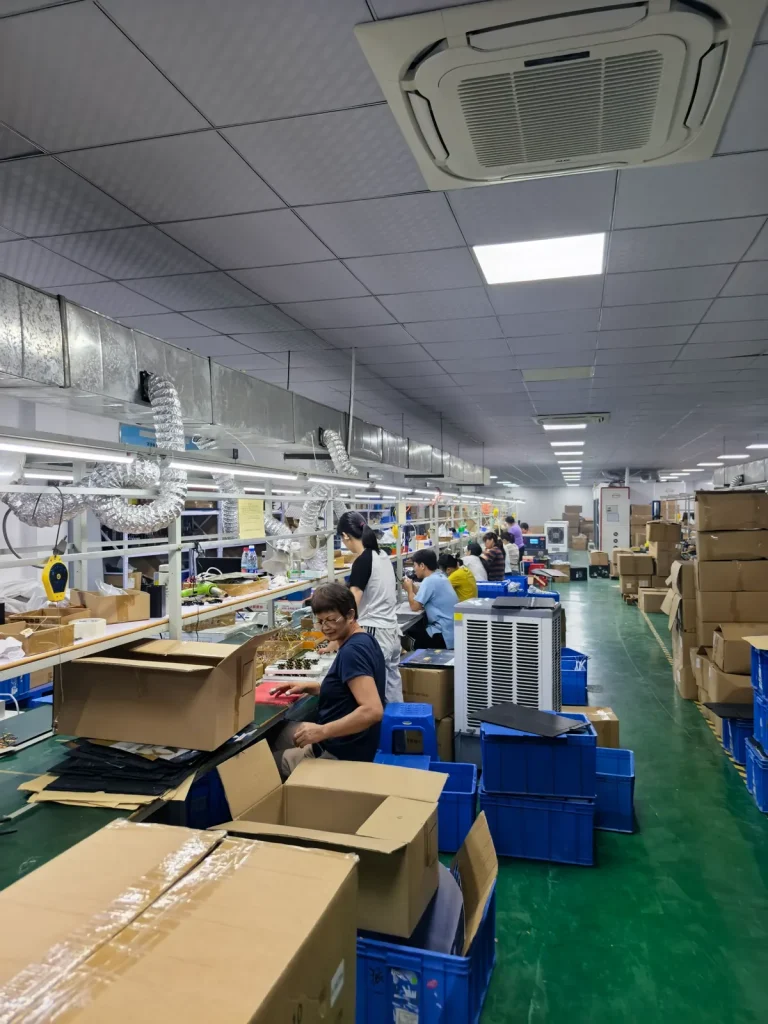
A real power adapter manufacturer runs its own assembly and QC lines, employs electrical, mechanical and thermal engineers, and holds its own quality system (for Paiyi Power, ISO 9001). It can take a spec — input, output, enclosure, connector, certifications — and turn it into a shippable SKU, including non-standard requests most catalogues reject. Board-level SMT is outsourced to qualified partner lines, with incoming inspection at Paiyi Power.
When a factory is the right call
Choose a factory when your volume is mid-batch (hundreds to tens of thousands), your product is non-standard, or you want to own the engineering relationship. This is the segment a specialist power adapter manufacturer is built for, and it is where the smallest communication gap sits between your requirement and the person who builds it.
Big OEM: scale, not flexibility
Strengths of a big OEM
A large OEM has deep capacity, mature systems, and strong documentation. For a single standard product at six-figure annual volume, its unit cost and process maturity are hard to beat.
Why SMB buyers outgrow them
Big OEMs are engineered for volume, not variety. Their MOQs are high (often 10,000+ pcs), their NRE and tooling fees are sized for large programs, and a non-standard request can sit in a queue behind much bigger accounts. For a mid-batch custom buyer, the scale that helps them also prices you out.
Trading company: the middle layer
How traders operate
A trading company does not build; it sources from a factory and resells, usually adding margin. Many are competent at logistics and paperwork, and some consolidate multiple product categories for one buyer.
Where traders fall short for custom
For true custom, a trader is a relay, not an engineer. Every change request passes through them to an unnamed factory, so lead time grows and accountability blurs. You also pay a markup on a price you cannot see itemised, and the certificate you receive belongs to the underlying factory — not the trader.
Side-by-side comparison
| Dimension | Specialist power adapter manufacturer (factory) | Big OEM | Trading company |
|---|---|---|---|
| MOQ | From ~200 pcs | 10,000+ pcs | 1,000+ pcs (resells factory MOQ) |
| Engineering / custom | Full (EE, mechanical, thermal) | Limited to catalogue | None (relays to factory) |
| Certificate ownership | Holds own certs | Holds own certs | Resells others’ certs |
| Cost transparency | Direct BOM-based quote | Volume-based, less itemised | Markup on factory price |
| Lead time | 5–6 weeks | 8–12+ weeks | 4–8 weeks (depends on factory) |
| Communication | Direct to engineers | Via account team | Via sales only |
| Best for | Mid-batch non-standard custom | High-volume standard | Off-the-shelf rebrand |
MOQ and batch size: the real divider
MOQ is the fastest way to tell which supplier will actually take your order. A specialist power adapter manufacturer can open a project at a few hundred units; a big OEM often cannot justify the setup below five figures.
| Annual batch size | Best supplier | Why |
|---|---|---|
| Under 500 pcs | Few factories (Paiyi from 200) | Most traders and OEMs decline or pad cost |
| 500–5,000 pcs | Specialist factory | Sweet spot for custom at fair cost |
| 5,000–50,000 pcs | Factory or big OEM | Compare on unit cost and lead time |
| Over 50,000 pcs | Big OEM or large factory | Scale economy dominates |
Non-standard custom: who can actually engineer it
“Custom” is where the three models split hardest. A specialist power adapter manufacturer can design around an odd requirement; a big OEM fits you to its catalogue; a trader passes the message along. This table is the honest picture.
| Custom need | Factory | Big OEM | Trader |
|---|---|---|---|
| Odd / non-standard output voltage | Yes | Sometimes | No |
| Custom mechanical enclosure | Yes | Limited | No |
| Custom connector / cable | Yes | Limited | No |
| Wide-temp / rugged / IP rating | Yes | Limited | No |
| Thermal derating design | Yes | Sometimes | No |
Who owns the certificate and the compliance risk
A safety certificate names a model and a manufacturer. When a power adapter manufacturer holds the cert, you can verify it directly and the compliance risk sits with the builder. When a trader resells, the cert belongs to the underlying factory, and the trader may not even name it — so your due diligence has to reach past the seller to the source. For compliance-sensitive markets (EU, North America), owning that traceability is not optional.
Cost transparency: what you are really paying for
A factory quote is built from the bill of materials, labor, and tooling, so you can see what moves the price. A trader quote bundles an unseen margin on top of a factory price you never see. That is not always wrong — a trader earns its fee on logistics and consolidation — but for a custom program where cost and spec change together, direct visibility saves arguments later.
Lead time and change flexibility
Custom projects change. A specialist power adapter manufacturer can usually absorb a spec revision between prototype and production because the engineers are in-house. A big OEM routes changes through process control sized for stability, not agility. A trader waits on the factory it does not control. For a buyer still iterating, the factory’s shorter loop is a real advantage, not a nice-to-have.
Communication and accountability
When a unit fails in the field, you want the builder on the call, not a reseller reading from a factory’s email. A factory gives you a direct line to the people who designed and tested the unit. A trader gives you a sales contact who must escalate every technical question. The accountability gap is the reason many SMB buyers eventually move from trader to factory once volume justifies it.
Red flags when a supplier describes itself
- It calls itself a “factory” but will not show the line or name the cert holder.
- It quotes custom work instantly with no engineering question asked.
- It cannot send a model-specific test report, only a family certificate.
- Its MOQ and lead time look identical to a trader’s, not a factory’s.
- It resists a video call to the production floor.
None of these proves dishonesty on their own, but together they point to a reseller wearing a factory’s hat.
How Paiyi Power fits: a specialist power adapter manufacturer
Paiyi Power is a specialist power adapter manufacturer and OEM/ODM factory based in China, focused on mid-batch non-standard custom work. The figures below are our own factory data, current as of September 2026. See our OEM advantages for the full position.
| Item | Paiyi Power |
|---|---|
| Minimum order quantity (MOQ) | 200 pcs per model |
| Monthly capacity | Up to 150,000 pcs |
| Production lines | 4 |
| Employees | 50 |
| Lead time | 5–6 weeks |
| Pre-shipment inspection | 100% of units |
| Quality system | ISO 9001 |
| PD 3.2 status | Products designed to the USB PD 3.2 specification, including SPR AVS. Earlier production runs were tested and certified to USB PD 3.1. |
One thing we state plainly: Paiyi Power is a factory, not a trader. We hold our own quality system and send the model-specific test report for the exact unit you are sourcing, rather than a generic family certificate. For the PD 3.2 window, see our certification timeline explainer.
Frequently asked questions about power adapter manufacturer
What is the difference between a power adapter manufacturer and a trading company?
A manufacturer builds the unit and holds the certificate; a trading company buys from a factory and resells it. The manufacturer owns engineering and compliance; the trader owns sales and logistics. For custom work, that difference decides who can actually change the design.
Is a big OEM better than a small factory?
Only at high volume. A big OEM wins on unit cost and process maturity for standard products above roughly 50,000 pcs a year. Below that, a specialist power adapter manufacturer usually beats it on MOQ, flexibility, and communication.
Can a trading company do custom power adapter design?
Not directly. A trader relays your request to a factory it may not name. Real custom design — electrical, mechanical, thermal — happens at the factory, so going to the manufacturer cuts a layer of delay and ambiguity.
Who owns the safety certificate, the factory or the trader?
The factory that built and tested the unit. A trader resells that certificate. Always ask for the model-specific report naming the actual manufacturer, especially for EU and North American compliance.
What MOQ should I expect from a power adapter manufacturer?
It varies by factory size. A specialist power adapter manufacturer like Paiyi Power opens custom projects from 200 pcs; large OEMs often start at 10,000+. Traders resell whatever MOQ their source factory sets.
How do I verify a factory is real and not a trader?
Ask for a video call to the production floor, the model-specific test report, and the certificate holder’s name. A real manufacturer answers all three directly; a reseller stalls or redirects.
Does a small factory mean lower quality?
No — size is not quality. Quality comes from the quality system (for example ISO 9001), 100% pre-shipment inspection, and engineering discipline. A 50-person factory with those controls can out-spec a large one on a custom SKU.
Should I care about PD 3.2 if I am not shipping to the EU?
Yes, if you ship after 2026. USB-IF retired new PD R3.1 certifications in September 2026, so new development should sit on the PD 3.2 baseline regardless of region. Details are in our PD 3.2 timeline.
How fast can a specialist factory deliver a custom sample?
Typically within the 5–6 week lead time for first production, with prototypes earlier. Because the engineers are in-house, a specialist power adapter manufacturer can usually return a revised sample faster than a trader or a big OEM locked to its catalogue.
Sources
- ISO 9001 — Quality Management Systems (ISO)
- Incoterms 2020 (ICC)
- UL — Product Safety Certification
- IEC — International Electrotechnical Commission
- USB-IF — USB Power Delivery specifications