
From an 86.58Wh reference design to a 2,016Wh LiFePO4 station
Two OEM/ODM energy platforms: a compact travel-class reference design and the PY-G2000L-S — a 2,000W pure-sine-wave station with AC, USB-C, QC3.0, DC and 12V outputs, plus mains and MPPT solar charging.
Product images
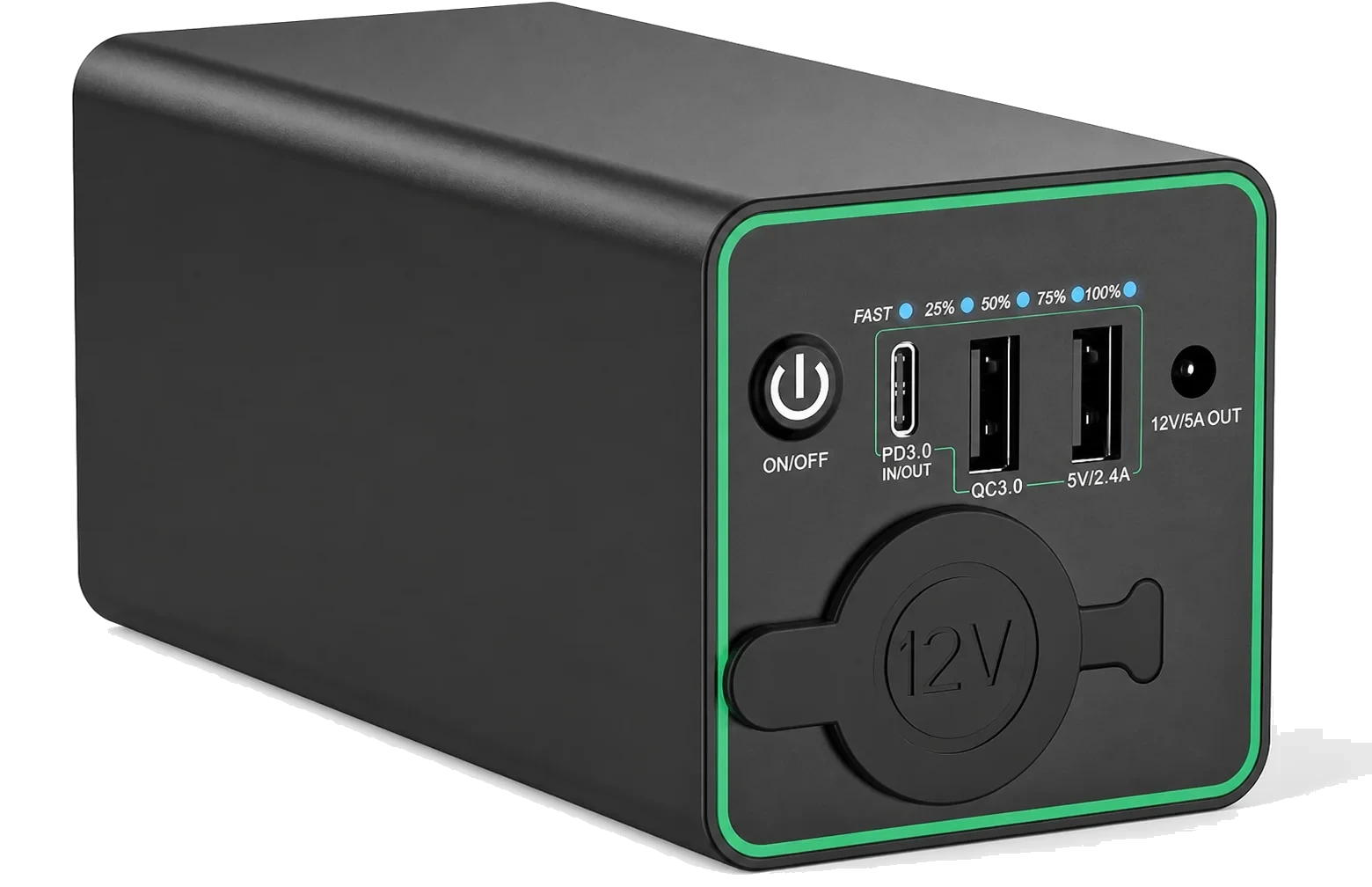
86.58Wh Portable Power Station
Mass-production proven OEM reference design for travel-class portable power.
View output specification
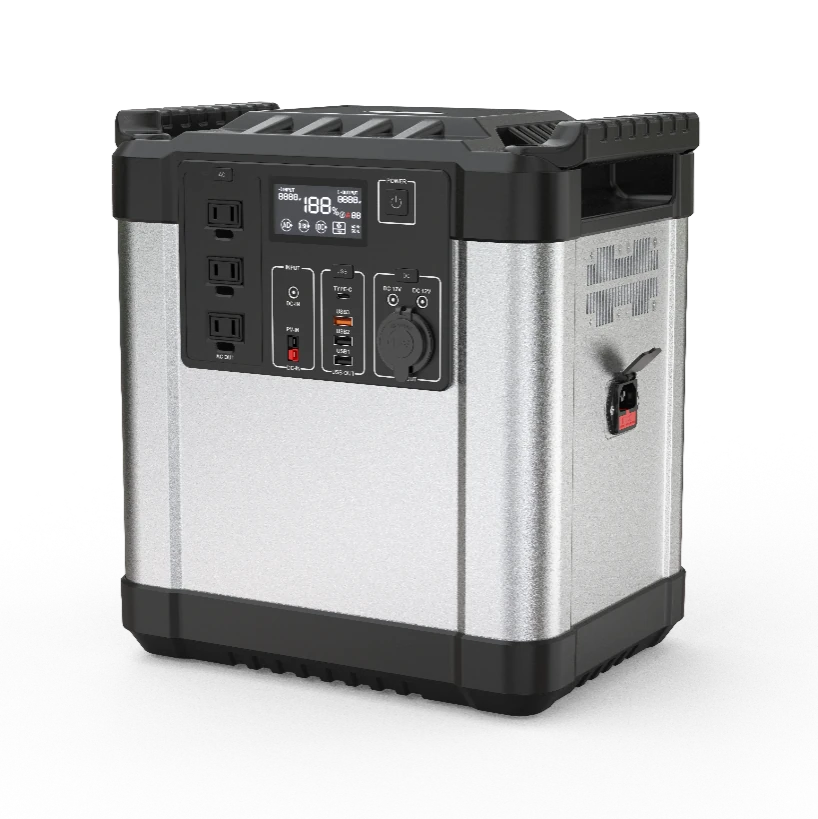
2016Wh LiFePO4 Power Station
LiFePO4 14S3P, 2000W rated / 4000W peak pure sine wave AC, mains and MPPT solar charging.
View output specification
Engineering drawings
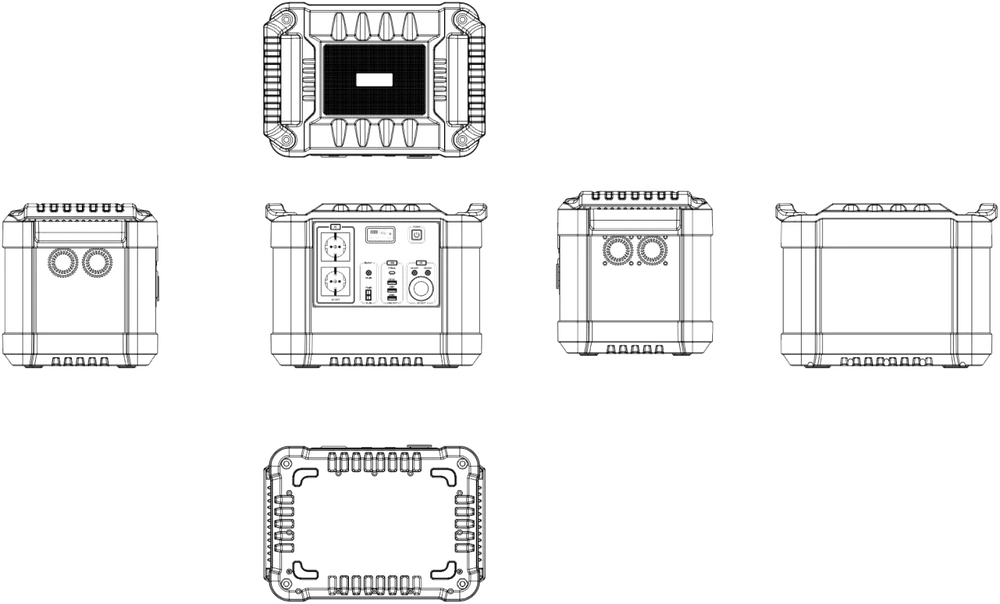
Six-side view
Enclosure and port layout drawing from the product specification sheet.
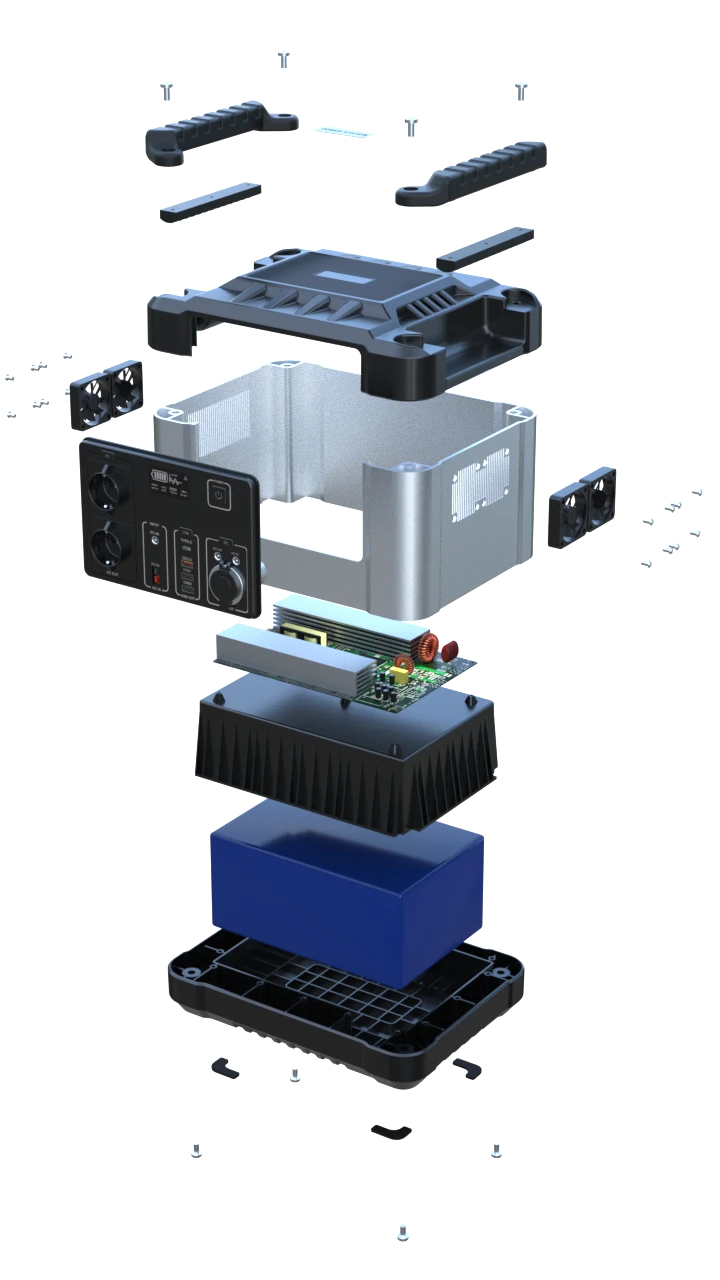
Two platforms
| Platform | Capacity | Output | Best fit |
|---|---|---|---|
| 86.58Wh Portable Power Station | 86.58Wh | Compact travel-class reference design | Flight-safe portable power, small devices, promotional programs |
| PY-G2000L-S | 2,016Wh / 44.8V 45Ah LiFePO4 | 2,000W rated AC, 4,000W peak; pure sine wave | Backup power, outdoor and mobile work, off-grid projects |
PY-G2000L-S — specification
| Section | Parameter | Value as specified |
|---|---|---|
| Battery | Capacity / chemistry | 44.8V 45Ah · 2016Wh · LiFePO4 · 14S3P |
| Battery | Rated / peak power | 2000W rated, 4000W peak |
| BMS | Continuous output | ≥2400W (BMS / system section of the specification sheet) |
| Charging | Mains input | AC ~1500W |
| Charging | MPPT solar input | 12–60V DC / 20A / 600W |
| AC output | Voltage / frequency | 110V / 60Hz or 230V / 50Hz, pure sine wave |
| AC output | Efficiency / power factor | ≥85% · 0.98 |
| AC output | Overpower protection | 2200W min / 3000W max trip |
| DC output | 12V port | 12V DC / 8A |
| DC output | Cigarette-lighter port | 12V DC / 10A |
| USB output | USB-A / QC3.0 | 5V / 2.4A · QC3.0 5V 3A, 9V 2A, 12V 1.5A |
| USB output | USB Type-C | PD 3.0, 100W max — 5V 3A / 9V 3A / 12V 3A / 15V 3A / 20V 5A |
| BMS protection | Cell overcharge / release | 3.60V / 3.50V per cell |
| BMS protection | Cell overdischarge / release | 2.50V / 2.70V per cell |
| BMS protection | Charge / discharge overcurrent | 60A charge · 140–300A discharge |
| BMS protection | High-temperature cut-off | 60°C discharge (recovery at 50°C) |
| Environment | Operating / storage | -10°C to 40°C operating · -10°C to 60°C storage · 10–90% RH |
| System | Display and functions | SOC display (±5%), charge-and-discharge at the same time, bypass mode, power-saving auto shut-down, standby ≤5W, fan ≤75dB |
Values above are quoted from the PY-G2000L-S specification sheet. Where the battery section and the BMS section state output power differently, both figures are shown rather than merged — we will confirm the applicable rating for your configuration in writing before sampling.
Compliance and shipping — read this before planning a program
Our charger and adapter platforms hold CE / CB / FCC / RoHS / ErP documentation based on a single IEC 62368-1 CB certificate. An energy-storage product is a different compliance case. Battery transport documentation (UN38.3 test summary, MSDS) and market-specific certification for the complete station are arranged per project and are the buyer’s responsibility, as are development, tooling and certification costs. We do not claim certifications we do not hold.
What you can change
- AC voltage / frequency version and socket standard for the destination market
- Output port mix, USB-C wattage and DC connector layout
- BMS thresholds, display content and fault-code behaviour
- MPPT input configuration, enclosure, colour, logo and packaging
- Certification scope and test documentation plan
Commercial terms
| Item | Standard |
|---|---|
| MOQ | From 200 pcs on current ODM platforms; 500–1,000 pcs semi-custom; by project for full custom |
| Sampling | About 7 days from specification confirmation |
| Mass production | 5–6 weeks |
| Development, tooling and certification | Covered by the customer |
Frequently asked questions
Can you ship the 2,016Wh unit by air?
Lithium battery transport is governed by UN38.3 documentation and carrier limits. We will confirm the packing and shipping route with you per order; do not assume air freight is available.
Is the 2,400W figure the same as the 2,000W rating?
They come from different sections of the specification sheet: 2,000W rated / 4,000W peak in the basic parameters, and ≥2,400W continuous output in the BMS / system table. We quote both until your project’s exact configuration is fixed.
Can the unit charge and discharge at the same time?
Yes. With mains input the system uses bypass mode; with MPPT input it uses normal inverter output. Shut-down charging and low-battery cut-off are also supported.
Need a platform recommendation?
Tell us the device, the target market, the required ports and the quantity. We reply with a platform, a specification sheet and a realistic timeline.