Como Testar uma Fonte de Alimentação: Guia Completo para Engenheiros e Equipes de QC
Publicado: Setembro de 2026
Tempo de leitura: 9 min
Público: hardware engineers, QA teams, and B2B buyers verifying external power adapters and chargers before approval or incoming inspection
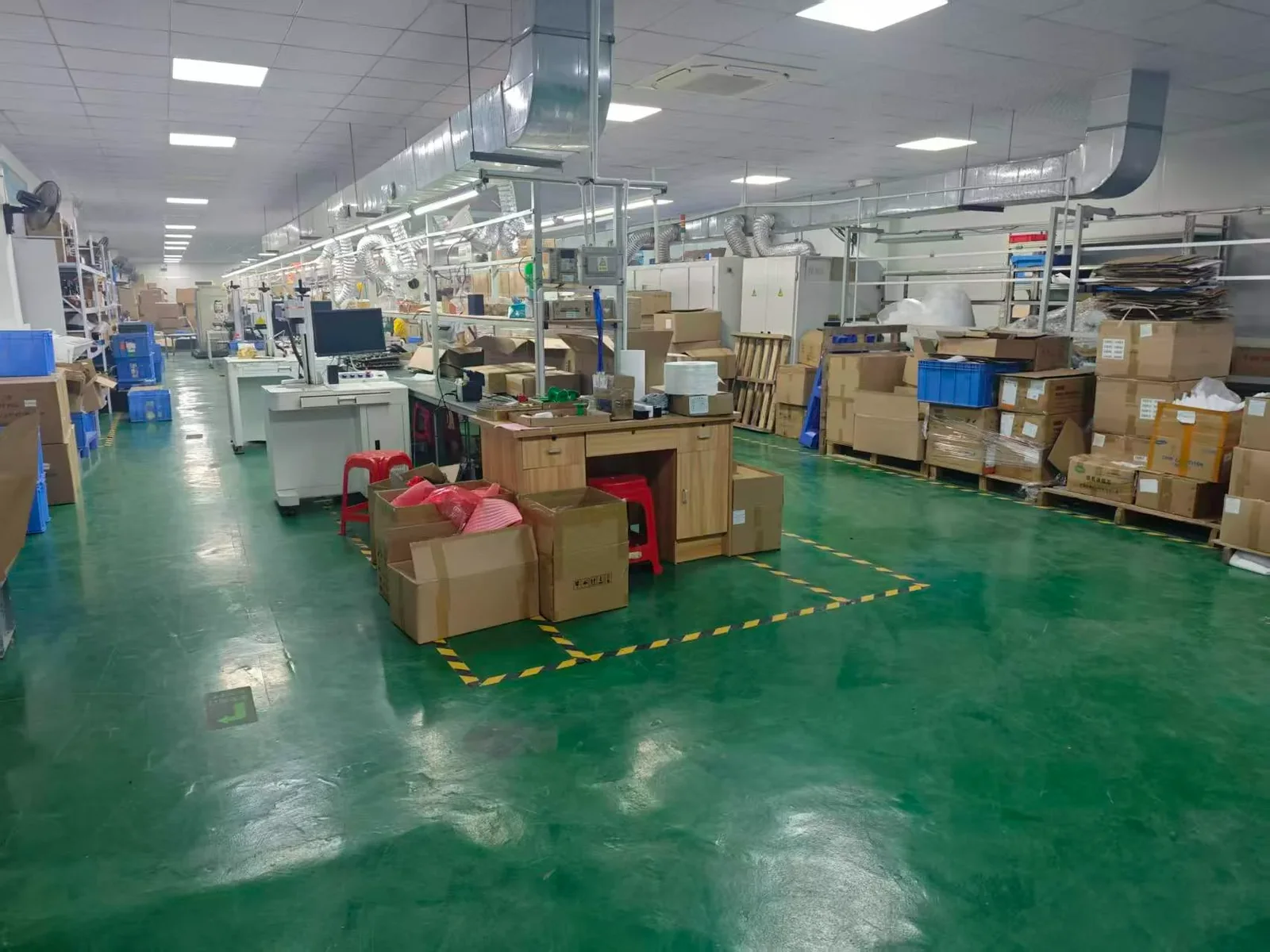
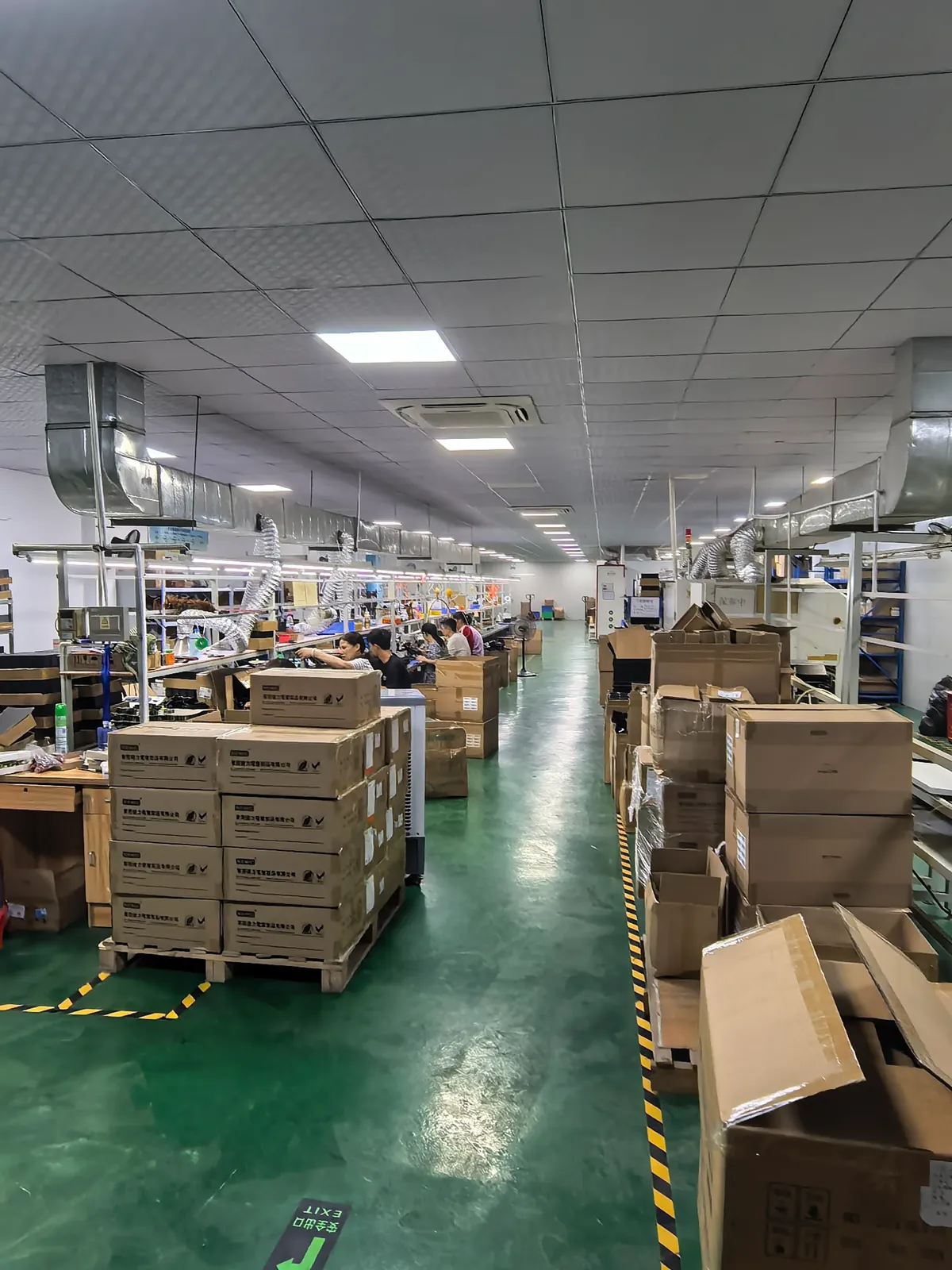
Por Han - Paiyi Power, a power adapter manufacturer running ATE functional test, burn-in and 100% inspection on external supplies from 5W to 240W.
Última atualização: 8 de setembro de 2026.
Conteúdo
Direct answer: how do you test a power supply?
Test it in this order: visual inspection, no-load voltage, loaded voltage (load regulation), ripple and noise, efficiency and no-load draw, protection behaviour, then thermal burn-in. A supply that shows the correct voltage on a multimeter with nothing connected has passed only the easiest of the seven checks. Most field failures come from tests three, four and six — the output sagging under load, excess ripple upsetting the load circuit, or a protection function that latches instead of recovering. Safety dielectric (hi-pot) testing is an eighth check, but it belongs in a controlled lab, not on a bench. Below is the full sequence, the pass/fail limits we use, and which tests a buyer can realistically run versus which belong at the factory.
Three different jobs all called “testing a power supply”
Before choosing a method, be clear which question you are answering — the test set differs.
| Goal | Who does it | Core checks |
|---|---|---|
| Design validation | Manufacturer engineering | Full electrical, thermal, safety, EMC |
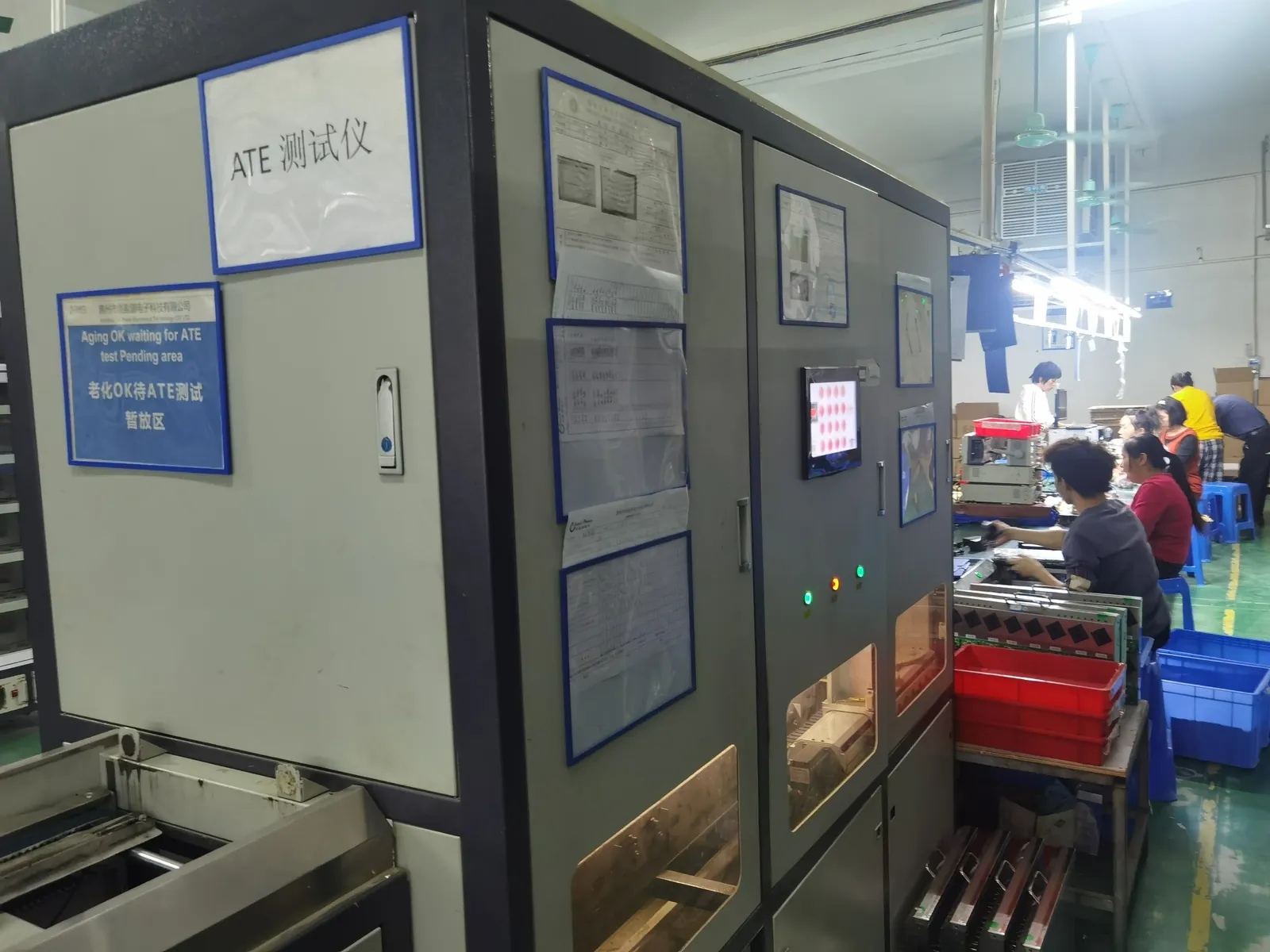
| Production QC | Factory line (ATE + burn-in) | Voltage, load, protections, 100% functional |
| Inspeção de entrada | Buyer / brand QC | Visual, no-load and loaded voltage, sample ripple |
This guide is written primarily for external power supplies — wall-mount and desktop adapters — which is what we build. The same logic applies to internal supplies with the obvious difference that you are working inside a chassis.
Safety first
- Never open a supply that is plugged in, and never touch the primary side even when unplugged — the bulk capacitor can hold a lethal charge for minutes.
- Use an isolation transformer when probing anything mains-referenced, and a residual-current device on the bench.
- Do not attempt dielectric (hi-pot) testing without training and fixtures. It applies kilovolts and is a lab procedure.
- Sizing matters: an electronic load must be rated above the adapter’s output and able to dissipate the heat. 240W at full load is a lot of heat in a small box.
Tools you need
| Tool | What it tells you | Notas |
|---|---|---|
| Digital multimeter | DC output voltage, continuity | Enough for tests 1–2 only |
| Carga eletrônica | Behaviour under real current draw | Constant-current mode; mind the watt rating |
| Oscilloscope | Ripple, noise, transient response | Use 20 MHz bandwidth limit; short ground path |
| AC power meter | Input power, efficiency, no-load draw | Needs true RMS and low-current resolution |
| Thermocouple / IR camera | Case and component temperature | For burn-in and derating checks |
Test 1: visual and mechanical inspection
Catch the obvious before powering anything: cracked or deformed housing, damaged strain relief, bent or recessed connector pins, incorrect label (output voltage, polarity, current), mismatched plug type for the target market, and poor seam or flash on the enclosure. On a USB-C adapter, check that the receptacle is not loose. A surprising share of “electrical” failures are mechanical.
Test 2: no-load output voltage
With nothing connected, measure the output. It should sit within the stated tolerance — typically ±5% for general-purpose adapters, tighter (±1–3%) for medical, industrial and many non-standard designs. Consider:
- Correct polarity on barrel connectors (centre-positive is common but não universal).
- A supply reading 0V may be a protection latch rather than a dead unit.
- On USB-C, a supply with no device attached may output 0V until a valid sink negotiates. That is normal PD behaviour, not a fault — you need a PD trigger or analyser to see the voltage.
Test 3: loaded voltage and load regulation
This is the test that separates a good supply from a plausible one. Load the output to 25%, 50%, 75% and 100% of rated current and record the voltage at each step. The voltage should stay inside tolerance and should not drift steadily downward as load increases — that drift signals inadequate design margin or a genuinely undersized unit.
| Verificação | Typical acceptance | Por que importa |
|---|---|---|
| Tensão de saída | Within ±5% of nameplate (tighter if specified) | Out-of-tolerance supply stresses the load |
| Load regulation | Holds tolerance from no-load to full load | Drift indicates thin design margin |
| Ripple e ruído | Typically under 1–2% of output (20 MHz BW) | Upsets analogue, RF and measurement circuits |
| Transient response | Recovers within tolerance after a load step | Poor recovery causes unexplained resets |
| Potência em vazio | Meets DOE Level VI / EU ErP limits | Legal requirement in most markets |
Test 4: ripple and noise
Set the oscilloscope to AC coupling, enable the 20 MHz bandwidth limit, and probe as close to the output terminals as possible. Do não use the long alligator-clip ground lead that ships with most probes — it acts as an antenna and will show you switching noise that is not really there. Use a tip-and-ring or coaxial connection, or a dedicated probe tip adapter, and load the output while measuring.
Excess ripple is a design issue, not a tolerance issue: a supply can be perfectly on-voltage and still be unusable for audio, RF, or precision measurement. If your application is sensitive, specify a ripple limit in your purchase spec rather than relying on a generic figure.
Test 5: efficiency and no-load power
Efficiency is output power divided by input power, measured with a true-RMS AC meter. Standards-based testing averages efficiency across several load points rather than quoting a single best case. No-load (standby) consumption is a separate legal limit and is where weak designs show up. Current requirements are covered in detail in our guide to normas de eficiência para fontes externas, including DOE Level VI, EU ErP (Reg. (EU) 2019/1782) and voluntary CoC Tier 2.
Test 6: protection functions
Deliberately trigger each protection and confirm the behaviour matches the specification. This is the step most buyers skip, and it is where the difference between a commodity and an engineered supply is clearest.
- Over-current (OCP): raise the load past the rating. The supply should limit or shut down rather than overheat.
- Short-circuit (SCP): short the output. It should survive, then either recover or latch — as specified. Confirm which, because a latching supply looks “dead” to an end user.
- Over-voltage (OVP): usually verified by the manufacturer on the bench, since forcing it can destroy the unit.
- Over-temperature (OTP): run the unit hot in a chamber; it should reduce or cut output, then recover.
Test 7: thermal behaviour and burn-in
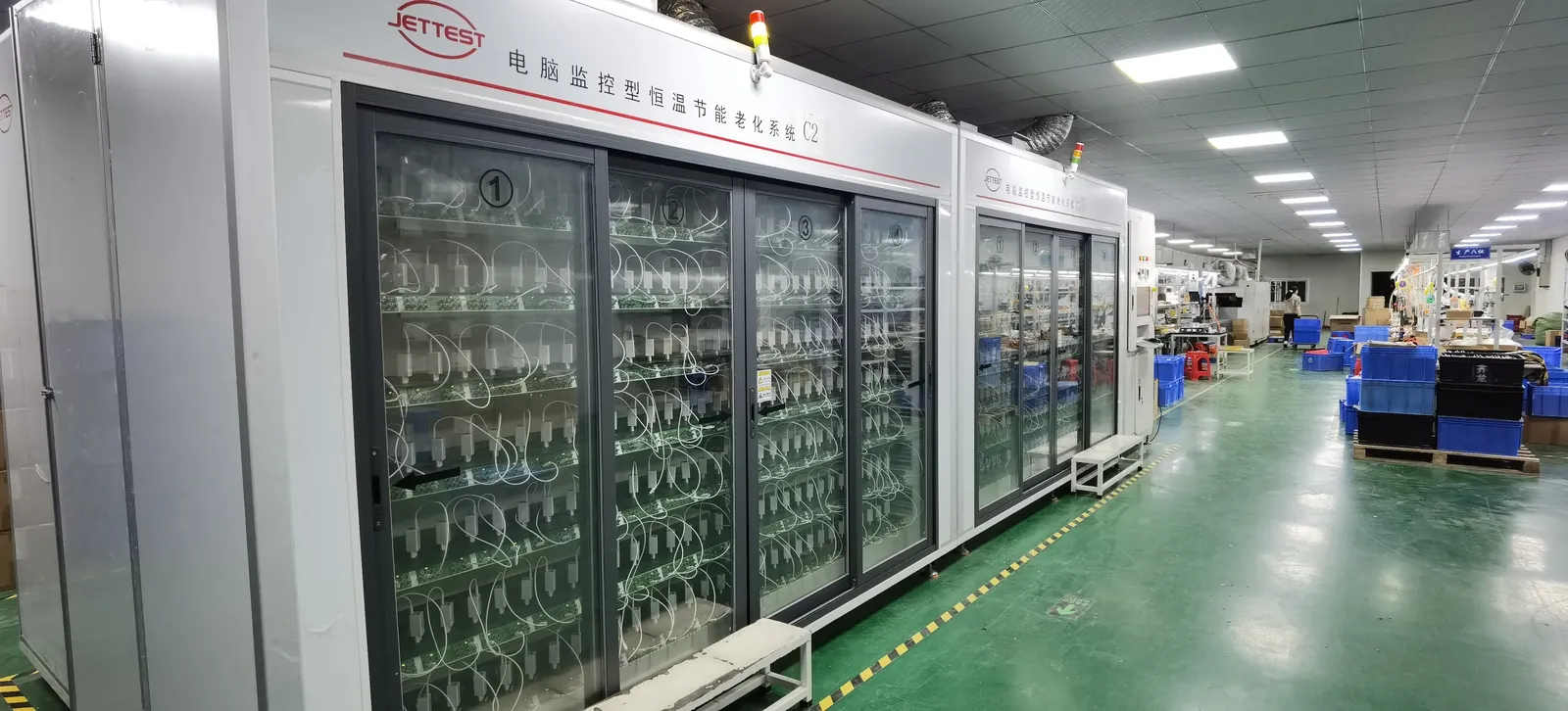
Run the supply at or near full load in a warm environment and watch the case temperature over several hours. What you are looking for is stability: the output should not sag and the temperature should plateau. Burn-in is standard practice precisely because early failures cluster in the first hours of operation — which is why a factory that ships without it pushes that risk onto the customer.
Test 8: safety and EMC (lab only)
These are not bench tests. Dielectric withstand (hi-pot), insulation resistance, and conducted/radiated emissions require calibrated equipment and a controlled environment, and they are what CE, CB and FCC markings rest on. Ask the manufacturer for the model-specific test report rather than trying to replicate it. The relevant safety baseline for IT and AV equipment is IEC/EN 62368-1.
What to ask your supplier for
- Um test report per SKU covering output, load regulation, ripple, efficiency and protections.
- O curva de derating - saída contínua versus temperatura ambiente.
- Política de burn-in: duration, load level, and what percentage of units receive it.
- Inspection level: whether every unit is functionally tested or only sampled.
- Certificados with numbers you can verify (CE, CB, FCC, ISO 9001).
At Paiyi Power, every unit is functionally tested on ATE and inspected before shipment, under an ISO 9001 quality system. If you are comparing suppliers on more than price, our article on fabricante vs. trading company vs. grande OEM explains why the testing regime differs so much between them, and transparência de custo de fontes shows what that testing actually costs per unit at different volumes.
Frequently asked questions about how to test a power supply
Can I test a power supply with just a multimeter?
Em parte. A multimeter confirms the no-load voltage and not much else. Load regulation, ripple and protection behaviour all need a load, a scope, or both.
Why does my adapter show 0V on USB-C?
Often it is not faulty. USB Power Delivery supplies output 0V until a device negotiates a contract. Use a PD trigger or analyser to see the voltage.
What voltage tolerance is acceptable?
±5% is the common general-purpose figure, with ±1–3% typical for medical, industrial and non-standard designs. Always specify it in your purchase spec.
How much ripple is too much?
As a rule of thumb, under 1–2% of output measured with a 20 MHz bandwidth limit and a short ground path. Sensitive analogue or RF loads need a tighter, explicitly specified limit.
Is it safe to open an adapter to test it?
Not while it is connected, and not casually afterwards. The primary-side capacitor can retain a lethal charge after unplugging. Use an isolation transformer and treat the primary side as live.
What is burn-in and why does it matter?
Running units under load for hours before shipment. Early-life failures cluster in the first hours of operation, so burn-in moves that risk from your customer back to the factory.
Should I hi-pot test incoming adapters myself?
Não. Dielectric testing applies kilovolts and belongs in a controlled lab with the right fixtures. Request the manufacturer’s report instead.
What does 100% inspection actually mean?
Every unit is functionally tested, not a statistical sample. Ask whether the claim covers ATE testing, burn-in, or visual inspection only — the three are often conflated.
Can you test a custom or non-standard adapter?
Yes, and the test plan should be written into the project. Custom voltages and connectors need their own limits agreed up front. See engenharia de adaptadores fora do padrão.
Fontes
- USB-IF - Especificações USB Power Delivery
- IEC 62368-1 e IEC 62680 - normas de segurança e USB Power Delivery
- Departamento de Energia dos EUA - eficiência de fontes externas (Nível VI)
- Comissão Europeia - Ecodesign / ErP para fontes externas
- ISO - Sistemas de gestão da qualidade ISO 9001