Shipping Power Adapters from China: Packaging, Drop Tests and Freight Rules
Published: September 2026
Reading time: 8 min
Audience: importers, e-commerce and retail brands, and logistics managers moving power adapters and chargers from Chinese factories to warehouses and customers
By Han — Paiyi Power, a power adapter manufacturer shipping USB-C and AC adapters worldwide from 200 pcs per model.
Last updated: 9 September 2026.
Contents
Direct answer: how are power adapters shipped?
Shipping power adapters from China is easy because adapters without built-in batteries move as ordinary general cargo — no dangerous-goods class, no UN38.3 test report, no lithium surcharge. That makes them dramatically easier and cheaper to move than power banks or battery packs. What actually decides whether your shipment arrives sellable is more mundane: the packaging specification, the drop and vibration performance of that packaging, protection of the DC connector and enclosure cosmetics, and picking the right freight mode for your volume and deadline. Get those four right and freight is a solved problem; get them wrong and you will discount a scuffed, rattling percentage of every container.
Adapters are not batteries — what that saves you
A common first-question from new importers: “do adapters need the same dangerous-goods paperwork as power banks?” No. UN 38.3 testing, Class 9 labelling, state-of-charge limits and the air-freight restrictions that govern lithium products simply do not apply to a battery-free AC adapter. Your adapter ships as general cargo by air, sea, rail or express at standard rates.
Two related clarifications. First, if your product contains a battery and the adapter ships with it, the battery rules follow the battery — plan those shipments around the cell, not the adapter. Second, “no DG class” does not mean “no documents”: customs at destination still wants a commercial invoice, packing list and, for the EU, the CE declaration of conformity and RoHS support documents. The HS code for external power supply units is 8504.40 — put the right code on the invoice and customs clears itself.
The packaging specification that prevents returns
Packaging is a specification, not an afterthought, and it belongs in the RFQ next to the electrical spec. A workable spec for a retail-boxed 65–140W adapter looks like this:
- ESD bag around the adapter, closed — prevents scuffing of glossy enclosures and keeps terminals clean.
- Inner box with a moulded pulp or EPS insert that stops the adapter from moving more than a few millimetres in any direction.
- Retail carton printed with the rated output, plug type and model — the box is part of the product on a retail shelf.
- Master carton of double-wall corrugate, quantity chosen so a packed carton stays liftable (roughly 10–15 kg for adapters of this class), sealed and strapped.
- Desiccant for sea freight into humid climates, and connector caps or bag-sealed DC plugs so nothing rattles or corrodes in transit.
State the packed weight and dimensions per master carton in the order documents — your freight forwarder needs them for every quote, and the difference between a well- and badly-palletised container is measurable in damaged units.
Drop and vibration testing: what to ask for
The standard reference for parcel-shaped goods is ISTA 3A — a packed-product sequence of drops, impacts and vibration that simulates the parcel network. For palletised sea freight, ASTM D4169 is the usual frame. You do not need to become a packaging engineer; you need to ask two questions in writing: “does this packaging pass an ISTA 3A-style drop sequence at the packed weight?” and “can you share the drop-test report?” A factory that tests its packaging will answer with a document; one that guesses will answer with adjectives.
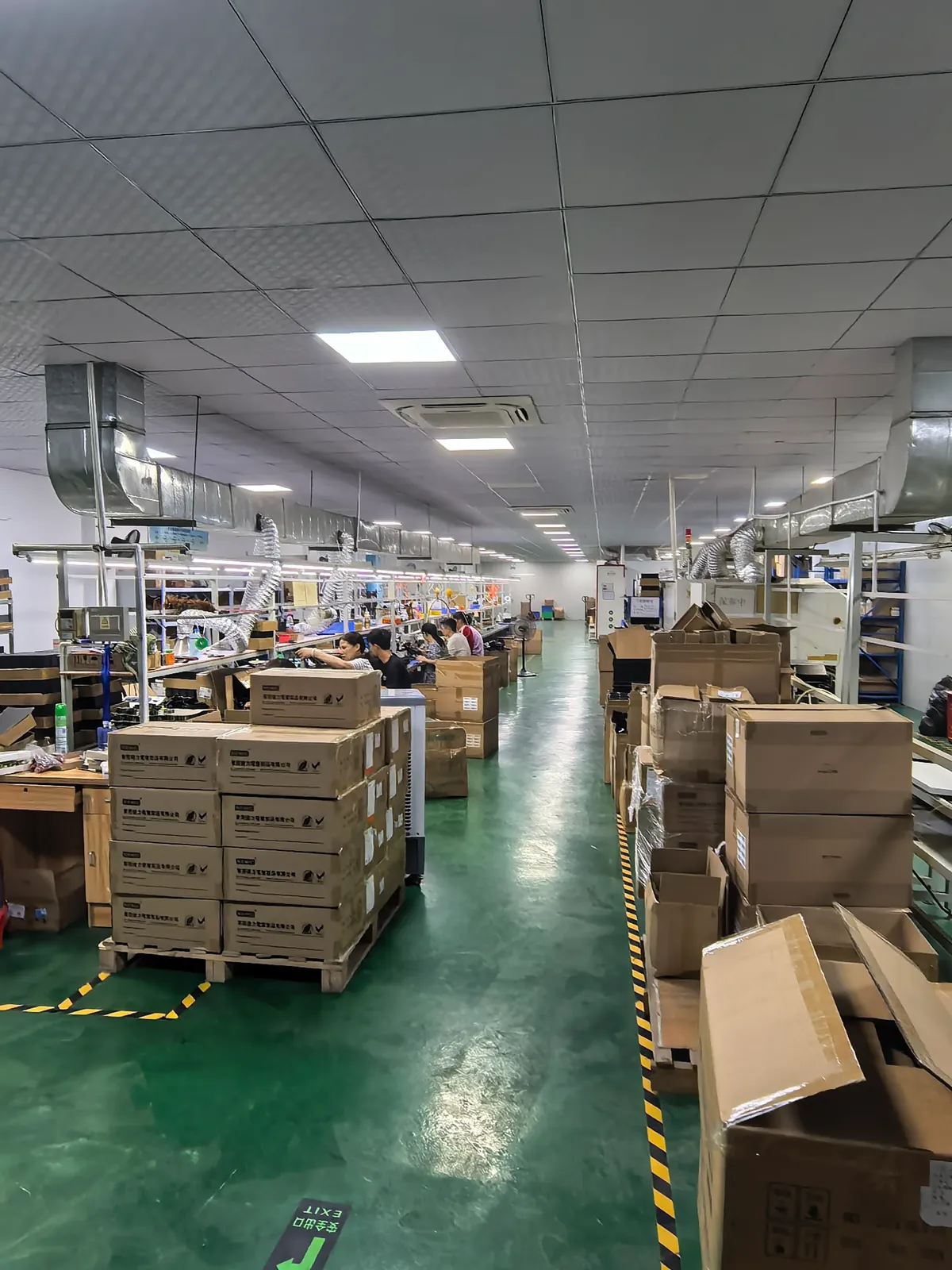
In our experience the scuffed-corner and rattling-connector returns that look like “bad quality” are almost always packaging and handling outcomes, not electrical ones. The electrical quality was already verified on ATE — see how to test a power supply — and then thrown away by a carton that could not survive the parcel network.
Choosing a freight mode
| Mode | Best for | Typical transit (CN → EU/US) | Watch out for |
|---|---|---|---|
| Express (DHL/FedEx/UPS) | Samples, urgent small lots | 3–7 days | Cost per kg makes volume uneconomic |
| Air freight | Launches, replenishment gaps | 5–12 days door-to-door | Rate volatility; book volume early |
| Sea LCL | Sub-container lots, 3–20 m³ | 25–40 days | Extra handling — packaging must be tougher |
| Sea FCL | Container-scale programmes | 20–35 days | Plan pallet pattern before loading |
| Rail (EU) | Middle ground CN → EU | 18–25 days | Capacity and schedule vary by route |
Under FOB your forwarder picks up at the Chinese port; under DAP the factory arranges delivery to your door; under EXW you collect everything from the factory gate. The Incoterms choice changes your landed cost more than most unit-price negotiations — see our low-MOQ sourcing guide for the Incoterms questions to ask a supplier.
Documents for customs when shipping power adapters from China
Standard set, prepared at booking time: commercial invoice (model, quantity, unit value, HS 8504.40), packing list (cartons, weights, dimensions), bill of lading or airway bill, and destination-specific compliance paperwork — for the EU that includes the CE declaration of conformity and RoHS support documents; the US expects a responsible-party FCC identification. None of this is difficult when the factory holds the certificates, which is one more reason to keep CE/FCC factory-held rather than importer-held — see our guide to power adapter certification by country.
Protecting connectors, cosmetics and humid routes
Three field-tested details. Connector protection: a bagged adapter with a capped DC plug survives handling that would scratch an exposed barrel connector and pack grit into a USB-C port. Cosmetics: glossy housings scuff against each other — the ESD bag is what keeps the top-clap of the box from becoming a returns photo. Humidity: sea freight into tropical or coastal markets through months of humidity cycles needs a desiccant and a carton that resists edge-softening; this is a one-line RFQ item that prevents a category of “unit arrived damp” complaints.
Consolidation, pallets and labels
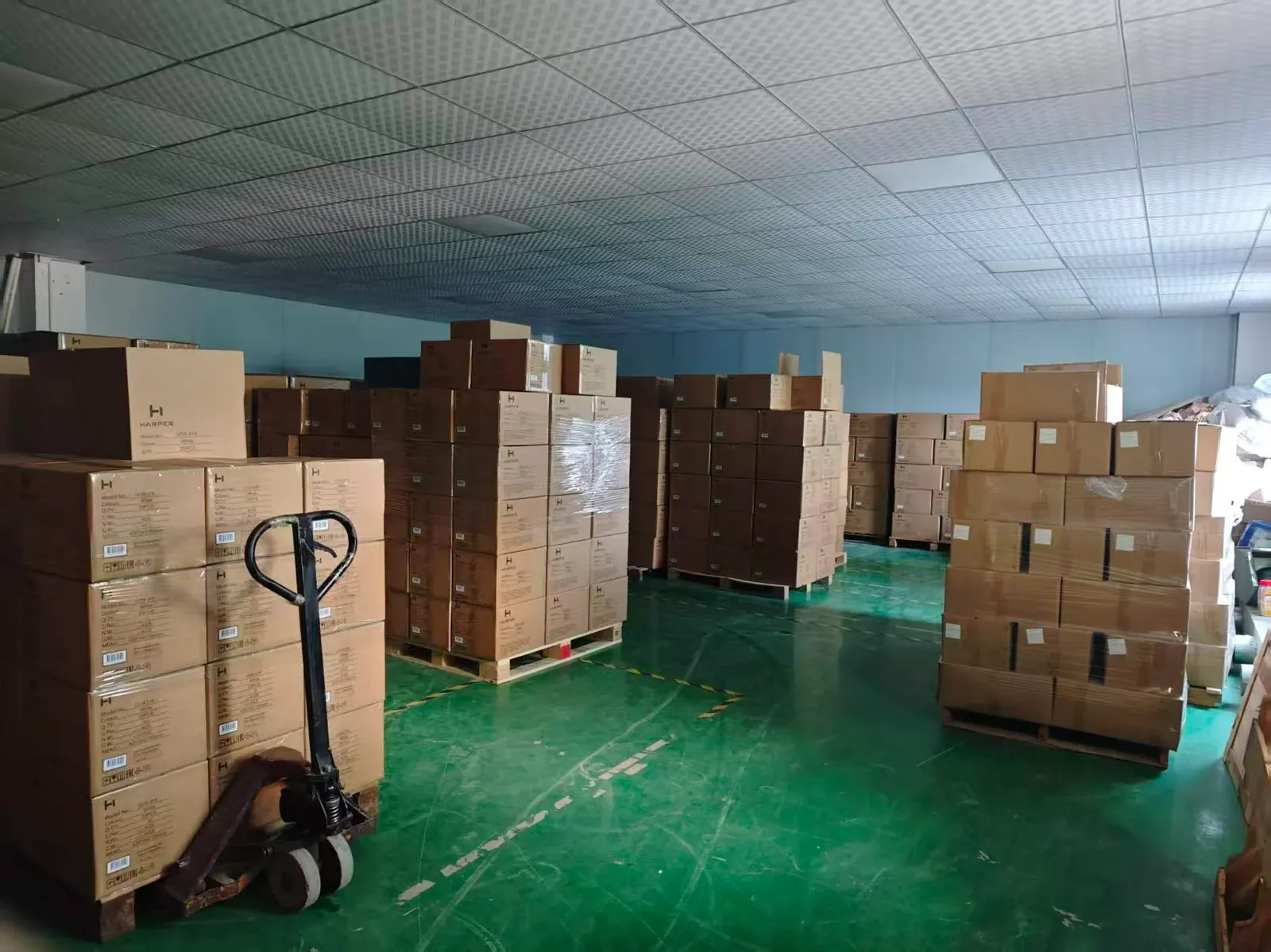
If you mix models in one shipment, palletise by SKU with one label face per pallet and a carton map in the packing list — your warehouse will thank you at receiving. Keep heaviest cartons on pallet bottoms, corner-protect stacked pallets, and photograph the loaded container before the doors close; that photograph settles most “arrived crushed” disputes quickly. For mixed production runs, we pack and label per SKU at the factory so consolidation happens at the carton level, not the re-pack level.
Frequently asked questions
Do power adapters need UN38.3 or dangerous-goods declarations?
No. Adapters without built-in batteries are general cargo. The lithium rules apply to the battery, so only shipments that include cells carry that paperwork.
What HS code applies to power adapters?
8504.40 (static converters / power supply units) is the standard heading for external power adapters. Use it consistently on invoice, packing list and any certificates to keep customs files aligned.
Can I ship adapters by air freely?
Yes, at standard air rates — no DG surcharge, no state-of-charge rules. Volume and rate are the only considerations, which is why air suits launches and gaps rather than steady replenishment.
How many adapters fit in a carton or container?
It depends on the model’s size and your box spec — a typical 65–140W adapter lands at 10–15 kg per master carton, and a 20-foot container absorbs very roughly 8,000–12,000 units at that class. Ask for the packed carton dimensions in the quotation and do the pallet math before you order.
Who arranges shipping under FOB?
You (the buyer) do, through your forwarder — the factory delivers to the vessel. Under DAP the factory arranges the whole journey to your door. Under EXW you collect from the factory. Pick per shipment, not per relationship.
What is ISTA 3A?
A standardized parcel-network test sequence — drops, impacts and vibration applied to the packed product at its real weight. Asking “does this pack-out pass ISTA 3A-style testing?” is the fastest way to separate packaging that was designed from packaging that was assumed.
Do I need cargo insurance?
For sea freight, yes — it is cheap relative to the cargo. Factory liability ends at the Incoterms handover point; insurance covers the gap between that point and your warehouse.
Can the factory ship DAP to my warehouse?
We can quote DAP for most destinations — it moves customs and freight coordination onto the factory side, at the price of less control over the forwarder. Buyers with their own logistics contracts usually stay FOB.
Sources
- ICC — Incoterms 2020 rules
- ISTA — International Safe Transit Association (3A procedure)
- ASTM D4169 — Performance testing of shipping containers and systems
- WCO — Harmonized System (HS 8504.40)
Related on this blog: low MOQ power adapter OEM/ODM, power adapter cost transparency, power adapter certification by country.