Switching Power Adapter Suppliers: How to Move or Add a Second Source Without Killing Your Program
Published: September 2026
Reading time: 8 min
Audience: brand owners and procurement teams planning to move power adapter production to a new factory, or to qualify a second source for an existing program
By Han — Paiyi Power, an OEM/ODM power adapter manufacturer that regularly receives transferred programs and supports second-source qualification.
Last updated: 9 September 2026.
Contents
Direct answer: how do you switch power adapter suppliers?
A supplier switch fails when it is reactive. A controlled move has four parts — a complete data handover, released tooling, a bridge order that covers the transition, and a qualification run against the golden sample — and it takes 8–12 weeks run in parallel with your current supply. For critical programs, the stronger play is a second source qualified from day one: two factories building the same specification, split 70/30, so no single factory can hold your program hostage. What makes both paths work is what you already own on paper — which is why the agreements and records described in our OEM agreement guide decide how easy your exit is before you ever need one.
Why supplier switches fail
Switches usually go wrong the same way: the decision is made in frustration (a missed shipment, a price fight, a quality dispute), the new factory starts sampling from a photograph of the old adapter, and three months later the program has two half-understood designs and a stock gap. The three classic failure points:
- No data package: the drawings, test reports and BOM live only in the old factory’s files.
- Tooling held hostage: the mould is physically at the old factory and the release terms were never written.
- No bridge order: production stops at the old factory before the new one is qualified, and the stock gap forces an unqualified rush order.
All three are preventable on paper — and preventable years before the switch, which is what makes the difference between a negotiated move and a hostage negotiation.
What you must own before you need to switch
Three assets decide how portable your program is: the data (specification, drawings, BOM, test reports), the tooling (legally yours, with release terms), and the golden sample (the sealed, signed production reference from your sample evaluation). If you hold all three, the program belongs to you and any qualified factory can build it. If you hold none, the program belongs to whoever has the files — and that is usually the factory. This is the strongest argument for the five agreement clauses in our OEM agreement guide, signed at program start rather than at exit time.
The data handover package
The package a new supplier needs to rebuild your program is specific. Check it against this list:
- Electrical specification: output ratings, tolerances, ripple limit, protections and their behaviour, efficiency targets.
- Mechanical drawings: enclosure, connector, cable length and gauge, label artwork, packaging files.
- BOM: component values and brands where they matter (capacitor temperature rating, controller IC).
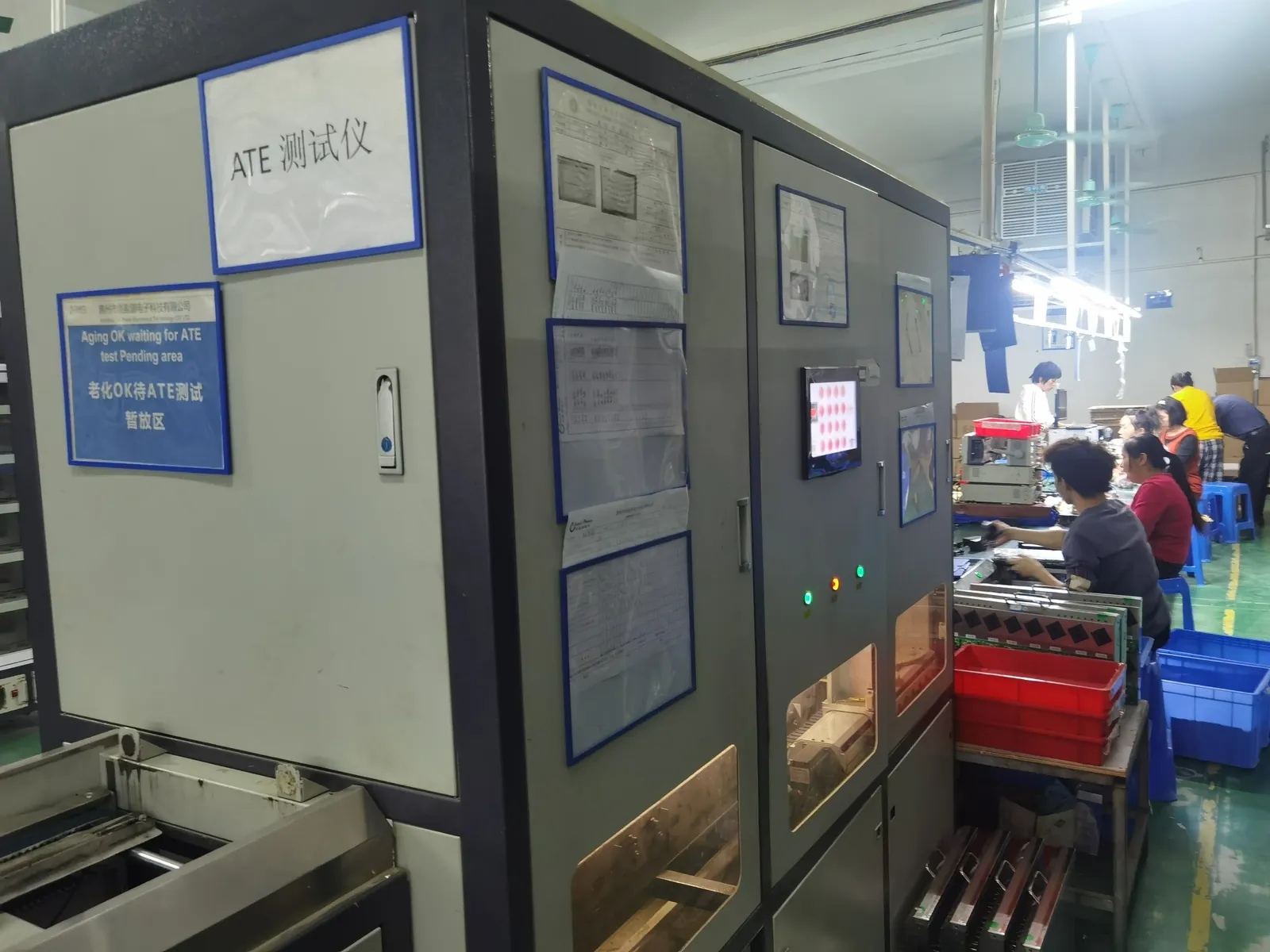
- Test documentation: the model-specific test report, the ATE test procedure, acceptance limits, burn-in policy.
- Certification file: CB report, CE/FCC documents and anything market-specific.
- The golden sample reference: photos, measurements and the sealed unit itself.
Anything on this list that lives only in the old factory’s systems is a piece of your program you do not own. Collect it while the relationship is good — the handover is a routine request in a healthy relationship and an impossible one in a broken one.
Tooling release in practice
If your program has an injection mould, the release terms from the agreement now get their test: written notice, a defined release window, the mould refurbished before the move (it will have been sitting in a moulding machine), and shipment with insurance. Budget one to two weeks for the physical move and a first-shot inspection at the new moulder — a mould that ran fine on machine A may need tuning on machine B. If the old factory co-invested, the buyout formula from the agreement applies; if no agreement exists, expect a negotiation and price it before you start.
Qualifying the new supplier
Qualification is a comparison, not a restart: the new factory builds samples against your data package and the golden sample, and both units are tested side by side — output, ripple, protections, thermal — using the same methods as your original sample evaluation. Differences get documented as deviations or fixed. Run the new unit through the same burn-in discipline before you approve. The fastest qualifier is a factory experienced in receiving transferred programs: the questions it asks in week one tell you how the next eight weeks will go.
The bridge order
Before the old factory’s production ends, place a bridge order sized to cover the transition window — the weeks of qualification, tooling move and first production at the new source. Rule of thumb: bridge stock covering 10–16 weeks of demand, adjusted for your season. The bridge order also serves as the old factory’s final quality reference; a clean last shipment is the cheapest way to end a relationship with the door open, which matters more than it sounds — the industry is smaller than it looks.
The certification catch
The detail that surprises buyers most: factory-held certificates belong to the factory. CE declarations, CB reports and FCC grants name the holder — when you switch factories, market certifications that were factory-held must be re-issued under the new factory, typically built on a difference-tested CB report. This is exactly why we recommend keeping certificates factory-held and insisting on a model-specific CB report — see power adapter certification by country for which schemes move easily and which need local re-registration (INMETRO, BIS and SII are the heavy ones, especially where an importer holds the certificate). Plan certification into the switch timeline rather than discovering it after the bridge stock runs out.
Switch timeline table
| Phase | Typical duration | Runs in parallel with |
|---|---|---|
| Data handover + new supplier selection | 1–2 weeks | Current production continues |
| New supplier samples vs golden sample | 2–3 weeks | Bridge order placed |
| Tooling move + first shots | 1–2 weeks (if moulded) | Certification transfer file prep |
| Qualification + burn-in at new factory | 1–2 weeks | Bridge stock ships as needed |
| First production at new source | 5–6 weeks after approval | Old factory winds down |
A clean switch typically runs 8–12 weeks end to end, almost entirely overlapped with continuing supply.
Frequently asked questions
When should I switch suppliers?
When the data, tooling and golden sample are already in your hands — not before. If you are switching because you must (quality collapse, commercial breach), the bridge order and the agreement clauses are what protect you.
Can the old factory refuse to release the tooling?
Not if the agreement says otherwise — but without an agreement, possession becomes leverage. This is the single strongest reason the tooling clause exists before you need it. See our OEM agreement guide.
Do I need to recertify after switching factories?
Factory-held certificates do not move with you — the new factory needs its own per-model reports, built on difference testing of the existing CB report. Market schemes with importer-held certificates (INMETRO, SII) need the importer engaged in the move.
How do I keep two factories building the same adapter identical?
One specification, one golden-sample standard, one test procedure — enforced on both. Run periodic cross-comparison of units from both lines; drift between sources is gradual and invisible without a common reference.
What if the new factory’s samples differ from the golden sample?
Document the deviation and demand a revised sample — the golden sample exists precisely so this conversation is objective. Approving “close enough” is how the second source becomes a different product.
How big should the bridge order be?
Cover 10–16 weeks of demand — enough to ride qualification and first production without a gap, not so much that you are financing inventory twice.
Should I tell the old factory I am leaving?
Yes, professionally and on your schedule: a clean wind-down with a final bridge order keeps the data handover cooperative and leaves a reference in an industry where paths recross.
Is dual sourcing worth the overhead?
For critical programs, yes: a 70/30 split keeps both lines warm, prices honest, and your supply immune to one factory’s bad quarter. The overhead is real but smaller than one unmanaged supply disruption.
Sources
- ICC — Incoterms 2020 rules
- IECEE — CB Scheme (certificate transfer between factories)
- WIPO — Intellectual property in manufacturing relationships
Related on this blog: power adapter OEM agreement guide, how to vet a Chinese power adapter manufacturer, why power adapters fail.