Chinese Power Adapter Manufacturer: How to Find, Vet and Work With One
Published: September 2026
Reading time: 9 min
Audience: overseas brands, distributors, and procurement teams sourcing power adapters, chargers and power supplies from China for the first time or switching supplier
By Han — Paiyi Power, a Chinese power adapter manufacturer in Huizhou with an ISO 9001 system, MOQ from 200 pcs, and in-house assembly and QC rather than a trading front.
Last updated: 8 September 2026.
Contents
Direct answer: how do you choose a Chinese power adapter manufacturer?
Verify three things before price: that the factory is real, that it will build at your volume, and that its certificates match the exact model you are buying. Most sourcing problems are not caused by bad factories but by buyers who never confirmed which of those three they were getting. A genuine answer to all three can be established in about a week: a video walk-through of the line, a written MOQ and lead-time commitment, and a model-specific test report you can verify with the issuing lab. Price is the fourth question, not the first — because a cheap quote from a trading company and a cheap quote from a factory are not the same product.
Why source power adapters from China
China remains the centre of gravity for external power supplies for a practical reason: the supply chain for magnetics, semiconductors, enclosures and connectors is concentrated there, so iteration is fast and tooling is cheap. For a brand, that means a custom adapter can be developed in weeks rather than quarters, and unit cost at volume is hard to match elsewhere.
The trade-off is distance. Everything you would normally verify by walking the floor has to be verified remotely, and everything you would catch with a site visit has to be caught on paper first. That is what the rest of this guide is about.
Know who you are actually talking to
| Type | What they control | How to tell |
|---|---|---|
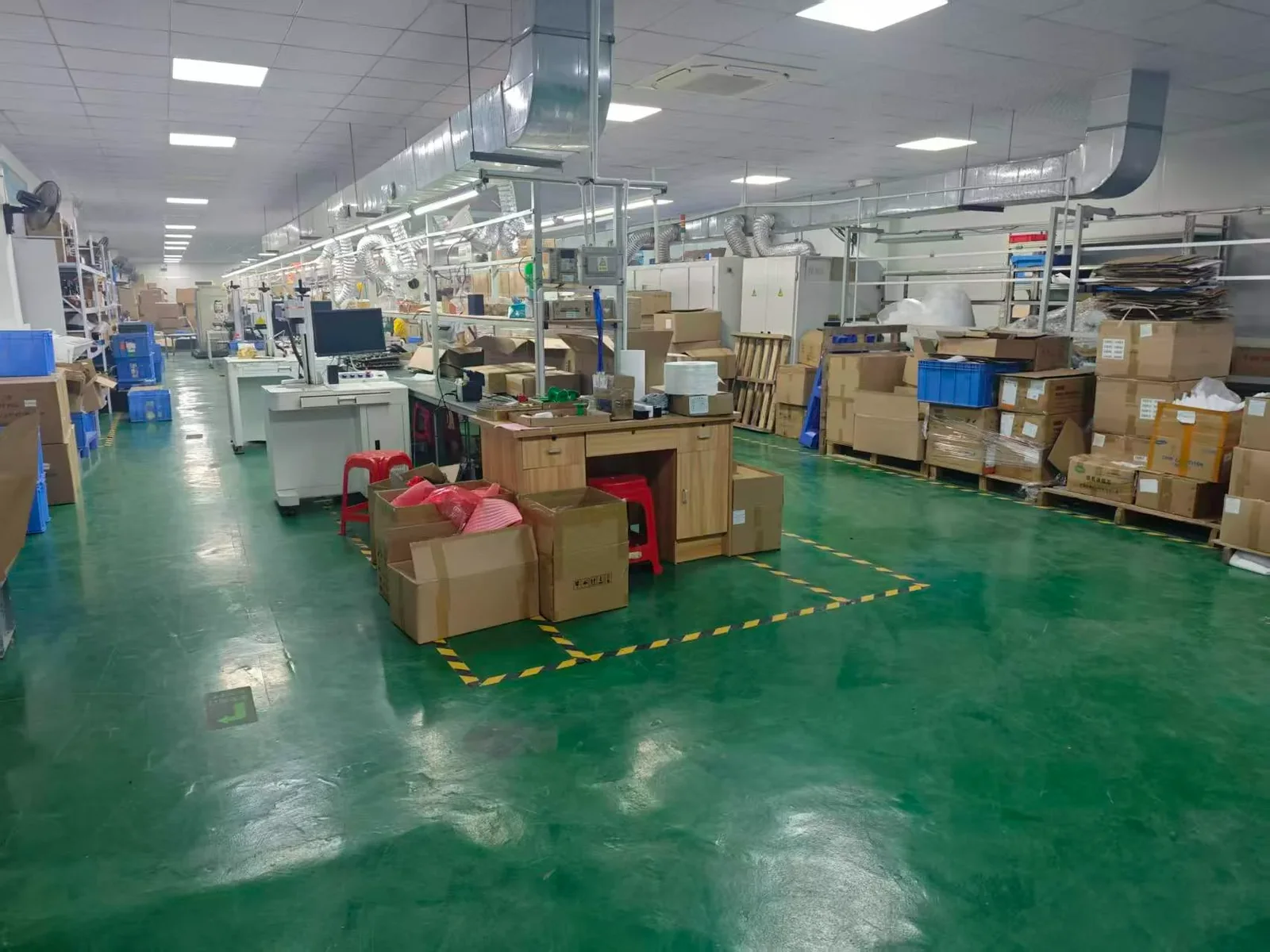
| Factory / manufacturer | Its own lines, engineering, and quality system | Can show the line, the ATE test station, and a business licence matching the address |
| Trading company | Relationships with factories; no production | Hesitates on a live video walk-through; cannot explain the test flow in detail |
| Big OEM | Everything, at high volume | High MOQs; your order is not a priority below a certain size |
None of these is wrong in itself — a trading company can be a reasonable route for a very small buyer. The problem is only when you think you are buying from a factory and you are not, because then you have no control over the thing that determines quality. Our comparison of manufacturer vs trading company vs big OEM goes deeper on the trade-offs.
Six checks that verify a factory is real
- Live video walk-through. Ask for a call from the production floor, not a showroom. Ask them to walk to the test station and the burn-in rack.
- Business licence and address match. The entity on the licence should match the entity on the quote and the invoice, and the address should match the factory in the video.
- Model-specific test reports. A certificate for a product family is not evidence about your SKU. Ask for the report for the exact model, and check the report number with the lab.
- Engineering conversation, not sales conversation. Ask a technical question — ripple at full load, derating above 40°C, leakage on a medical build. A factory answers from the bench; a trader answers from a catalogue.
- Inspection and burn-in policy in writing. What percentage is tested, for how long, at what load.
- References you can verify. Ideally a customer in your market, or at minimum project references with dates.
MOQ: the question that decides everything
MOQ is where most first-time buyers get stuck. Large OEMs quote MOQs in the tens of thousands because that is what their lines are built for; a 500-piece order is not worth their changeover time. Specialist factories exist to fill that gap, and their economics are different.
At Paiyi Power the MOQ is from 200 pcs per model. That is deliberately set for mid-batch B2B programmes — a new product launch, a regional variant, a private-label run — rather than for mass retail. If you are being quoted a very low MOQ with a very low price, ask why: it often means a standard catalogue unit with your logo added, which is fine, but it is not a custom programme.
Certificates: what to ask for and how to spot a fake
| Ask for | Why |
|---|---|
| Certificate with a number and issuing lab | Verifiable; a PDF with no number is decoration |
| Model number matching your SKU | Family certificates do not cover your product |
| Scope of the report | Safety and EMC are separate documents |
| Validity and any amendments | Standards editions change; an old report may no longer apply |
| ISO 9001 for the factory | Evidence of a quality system, not just a good sample |
Paiyi Power holds CE, CB, FCC and ISO 9001, and issues model-specific reports. On USB Power Delivery, our products are designed to the USB PD 3.2 specification including SPR AVS; certification status is per model and per batch, and earlier production runs were certified to PD 3.1. We will not tell you a product is “PD 3.2 certified” unless that specific model has the report.
Quality systems: what actually separates factories
Two factories can build the same circuit and ship very different products. The difference is usually process, not design:
- 100% functional testing versus sampling. Ask which, and on what equipment.
- Burn-in under load, which catches early-life failures before they reach you.
- Incoming inspection of critical components, especially magnetics and electrolytics.
- Traceability so a defect can be traced to a batch.
- Change control: written notice before any component substitution.
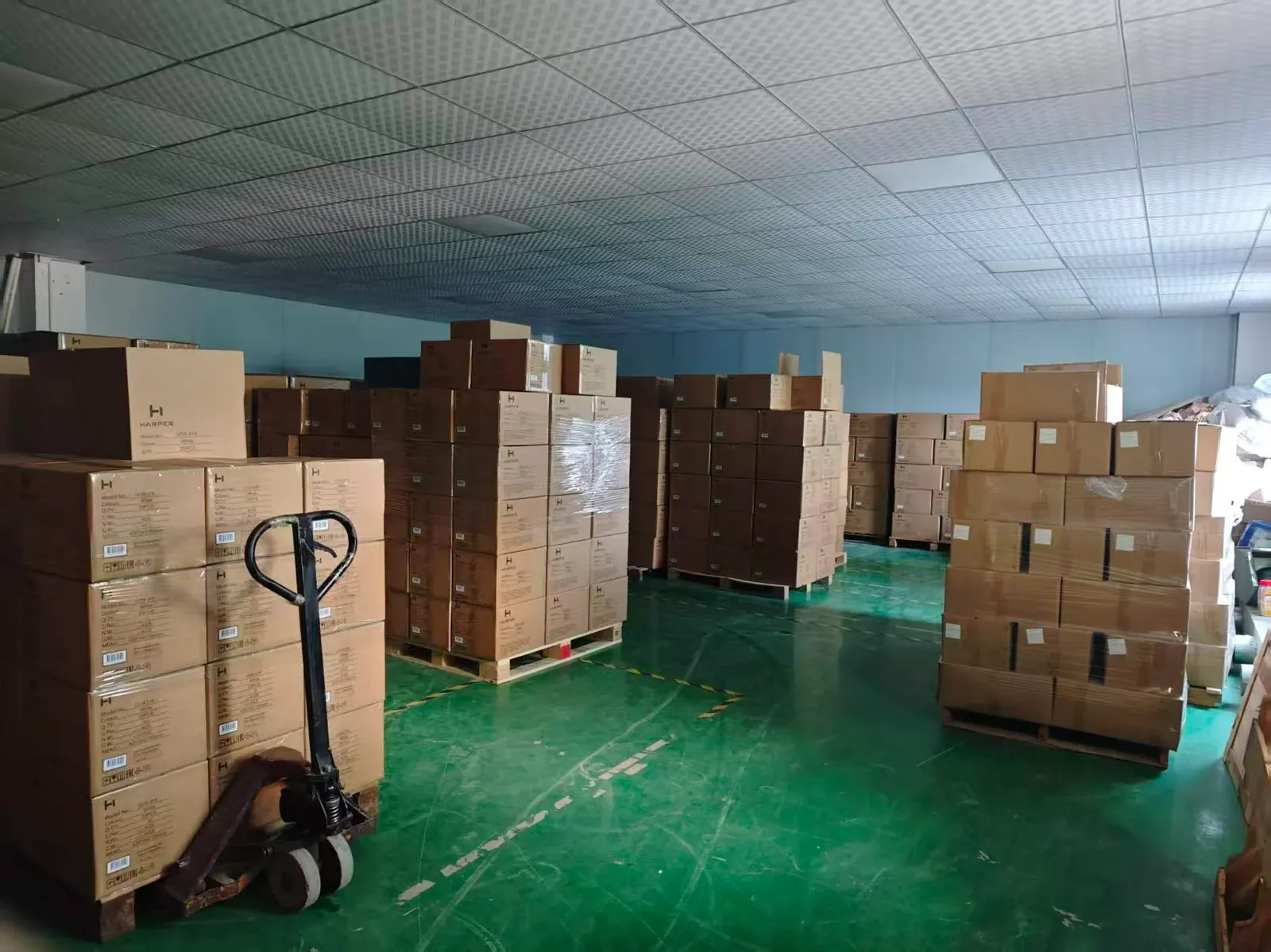
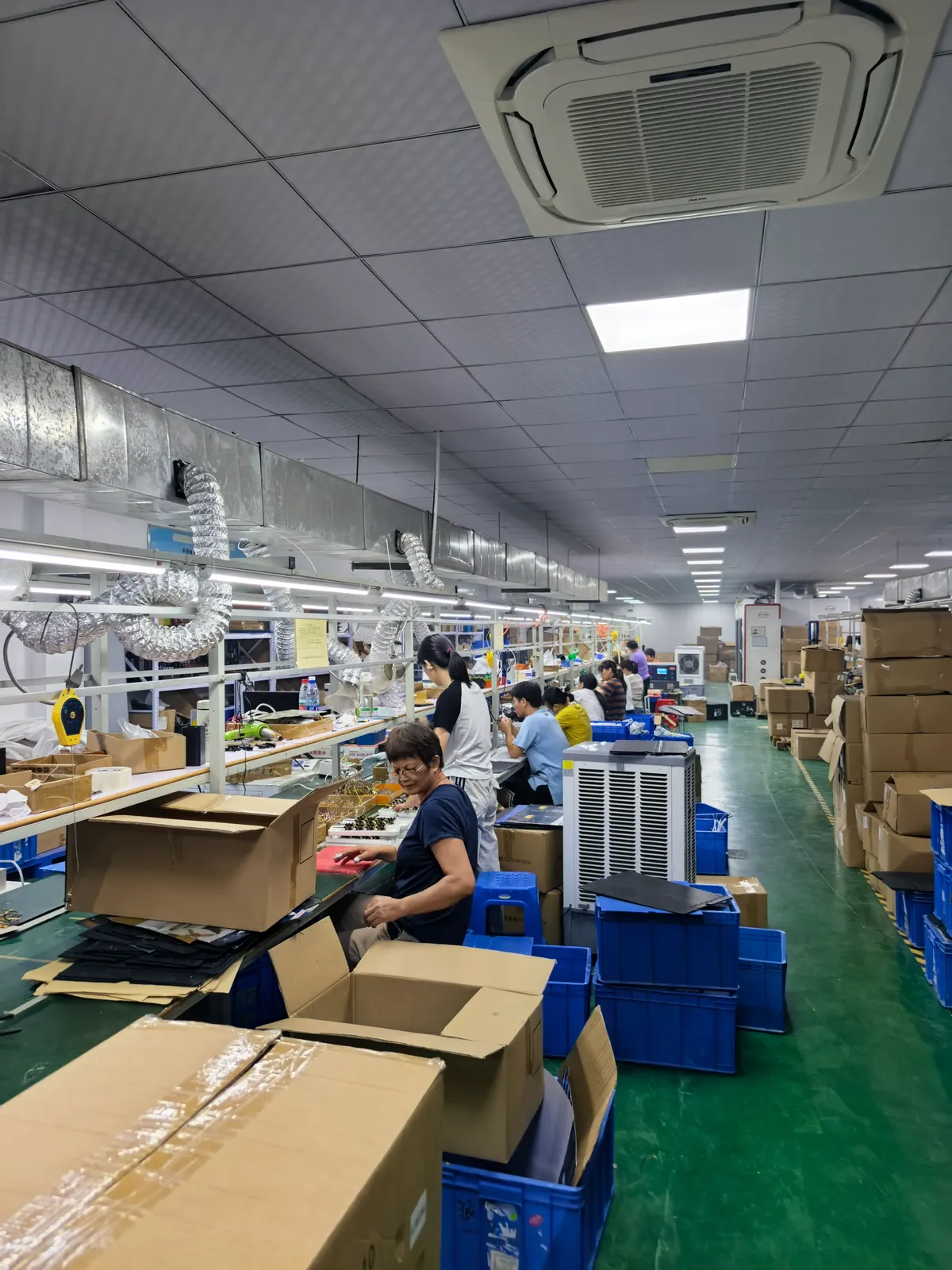
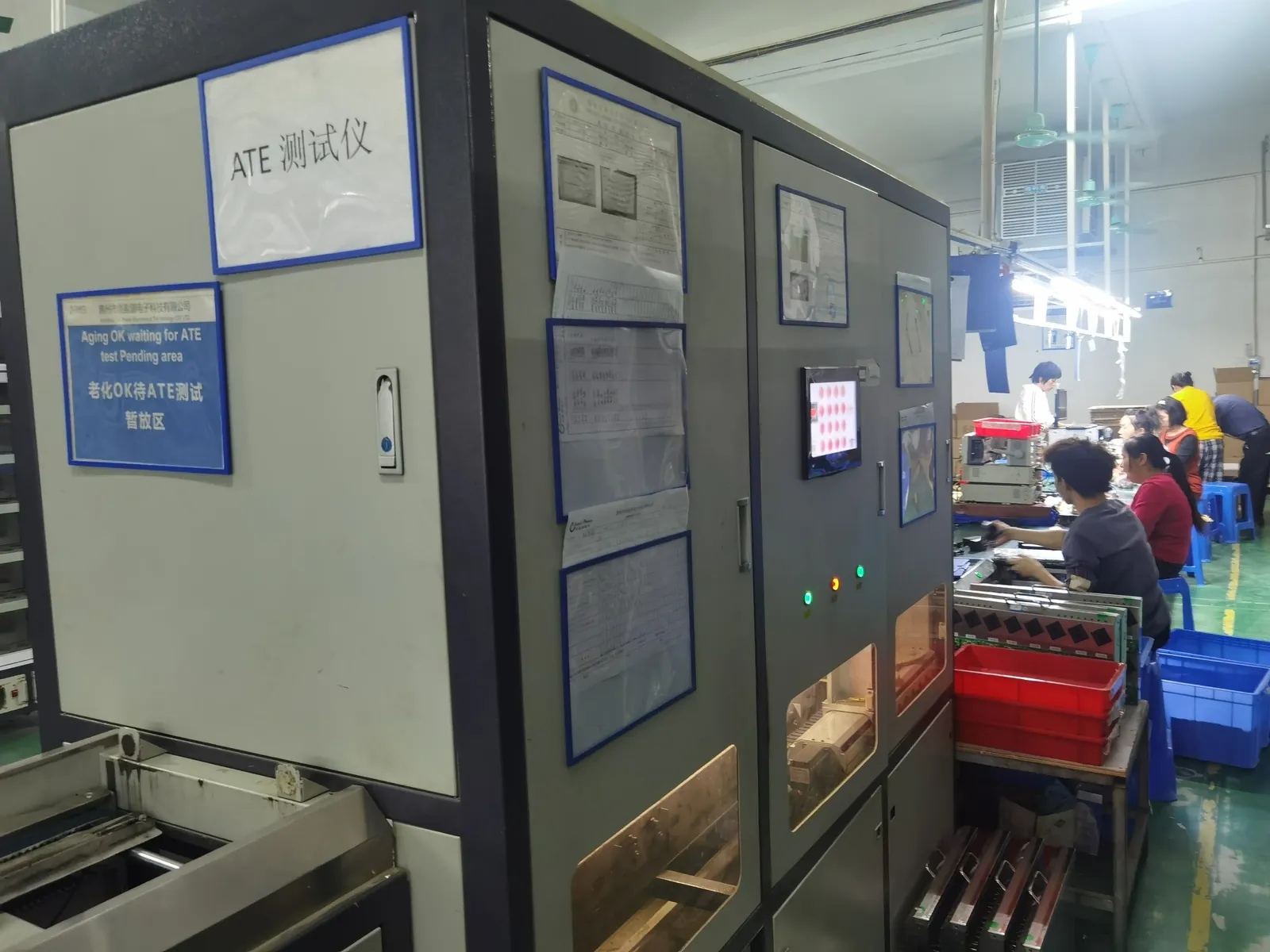
One clarification worth making, because it is often misrepresented: PCB assembly (SMT) is routinely subcontracted in this industry, including by reputable factories. What matters is not whether the boards are populated in-house but whether the factory controls incoming inspection and owns final assembly, test and QC. Paiyi Power subcontracts board-level SMT to qualified partner plants, performs incoming inspection on the boards, and does final assembly, ATE functional test, burn-in and 100% inspection in-house.
Communication and engineering capability
The single best predictor of a smooth programme is whether an engineer answers your emails. Adaptors are a component of your product, and specifications change: a connector moves, an enclosure shrinks, an efficiency target tightens. A supplier who can only relay messages to someone else will cost you weeks.
Ask who your technical contact is, what their background is, and how a change request is handled. Ask for a revised sample turnaround in writing.
What drives unit cost
- Volume — the largest single lever; see power adapter cost transparency for how price moves from 500 to 50,000 units.
- Wattage and topology — higher power and GaN designs cost more.
- Tooling — a new enclosure is a real cost; modified standard avoids it.
- Certification scope — each market adds test cost.
- Components — brand-name electrolytics and controller ICs cost more and last longer.
- Efficiency target — CoC Tier 2 is achievable but costs more than the legal minimum.
Lead times, tooling and samples
A realistic sequence for a custom programme: sample in a few weeks, then 5–6 weeks to first production after sample approval at Paiyi Power. Tooling, if a new enclosure is needed, is quoted separately and adds time up front but lowers unit cost. Plan certification in parallel with tooling rather than after it.
Payment terms, IP and contracts
- Standard terms are a deposit with the balance before shipment; terms evolve as the relationship does.
- Tooling ownership should be stated explicitly — who owns the mould and what happens if you move.
- NDA before sharing your device specification, and IP clauses covering your tooling, artwork and design files.
- Spare parts and repeat runs in writing, so a phase two matches phase one.
Red flags
- Refuses or stalls on a live factory video call.
- Cannot produce a model-specific test report, only a generic “certificate”.
- Quote is far below the market with no technical explanation of why.
- Business licence entity does not match the invoicing entity.
- Pushes you to skip samples and go straight to production.
- No written position on change control or component substitution.
- Claims certifications the product clearly cannot hold, such as blanket “PD 3.2 certified” on an older design.
A practical six-step sourcing workflow
- Write the specification first — output, connector, markets, efficiency target, volume, timeline.
- Shortlist three suppliers and confirm which are actual factories.
- Do the video walk-through and ask two technical questions you already know the answer to.
- Order samples from two and test them yourself with a load and a scope.
- Verify the certificates against your exact model numbers.
- Place a pilot order before committing to the full programme.
What Paiyi Power offers
| Item | Detail |
|---|---|
| Entity | Shenzhen trading company established 2015; Huizhou factory established 2019; ~50 staff |
| MOQ | From 200 pcs per model |
| Lead time | 5–6 weeks to first production |
| Capacity | Up to 150,000 pcs/month across 4 lines |
| Process | SMT subcontracted to qualified plants with incoming inspection; final assembly, ATE test, burn-in and 100% inspection in-house |
| Certificates | CE / CB / FCC / ISO 9001 |
We build for brands that need mid-batch custom work — non-standard voltages, custom enclosures and connectors, and private-label programmes that a large OEM will not take on. Verifiable project references are available on request.
Frequently asked questions about Chinese power adapter manufacturers
How do I verify a Chinese factory is real?
Live video from the production floor, a business licence matching the address, and a model-specific test report you can check with the issuing lab. Those three catch almost everything.
Is a trading company always bad?
No, but know which you are using. A trader can suit very small orders; the risk is thinking you have factory-level control when you do not.
What is a realistic MOQ?
From 200 pcs per model at a specialist factory like Paiyi Power. Large OEMs typically want tens of thousands.
Should I trust a certificate PDF?
Only if it names your model and carries a number you can verify. Family or generic certificates are not evidence about your SKU.
Do factories really subcontract SMT?
Yes, commonly — including reputable ones. What matters is incoming inspection of the boards plus in-house final assembly, test and QC.
How long does a custom adapter take?
Samples in a few weeks, then 5–6 weeks to first production after approval, plus tooling time if a new enclosure is needed.
Is the cheapest quote a red flag?
Often. Very low pricing usually means a catalogue unit with your logo, or unspecified component downgrades. Ask what specifically makes it cheap.
How do I protect my design?
NDA before sharing specifications, written tooling ownership, and IP clauses covering artwork and design files. Get them before the first sample, not after.
Can I start with a small pilot order?
Yes, and you should. A pilot run before the full programme is the cheapest insurance available.
Sources
- IEC 62368-1 and IEC 62680 — safety and USB Power Delivery standards
- ISO — ISO 9001 quality management systems
- USB-IF — USB Power Delivery specifications
- U.S. DOE — External Power Supply efficiency (Level VI)
- EU Commission — Ecodesign / ErP for external power supplies