Non-Standard Power Adapter Engineering: How Custom Adapters Are Designed and Made
Published: September 2026
Reading time: 7 min
Audience: equipment OEMs, hardware engineers, procurement and product teams with power requirements that off-the-shelf adapters cannot meet
By Han — Paiyi Power, a technical OEM/ODM manufacturer of power adapters, GaN chargers and custom power strips, running low-MOQ programmes for non-standard projects.
Last updated: 7 September 2026.
Contents
Direct answer: what is non-standard power adapter engineering?
Non-standard power adapter engineering is the design work of matching a power supply to a device that no off-the-shelf adapter can serve — an odd voltage or current, a custom connector, an unusual form factor, or a harsh environment. A technical factory turns your specification into a schematic, a prototype, a pre-compliance-tested design and finally a certifiable production adapter. At Paiyi Power, non-standard projects typically start at 200–500 pcs, with samples in 1–2 weeks and a 5–6 week production lead time on an existing platform.
What counts as “non-standard”?
An adapter is non-standard when at least one requirement falls outside a standard catalogue line. In practice that means one or more of:
- Voltage — 13.5V, 18V, 19.5V, 24V, 36V or another value the market does not stock.
- Current or power — an unusual current rating, a tight load profile, or a peak-current requirement.
- Connector — a barrel jack of a specific size, an aviation or DIN connector, a Molex/JST header, or a proprietary terminal.
- Form factor — a housing that must fit a specific cavity, bracket or heat sink.
- Environment — waterproofing (IP-rated), extended temperature, vibration, or outdoor exposure.
- Electrical behaviour — specific ripple and noise, hold-up time, standby power, or load regulation.
- Certification — a market or standard the base platform was not originally built for.
Most “non-standard” requests are a combination of two or three of these on top of an existing power platform — which is exactly where a technical factory saves you time and money.
The non-standard elements you can engineer
On an existing power platform, these are the levers a factory can pull for you:
| Element | Typical request | Engineering consideration |
|---|---|---|
| Output voltage / current | 13.5V/2A, 19.5V/6.7A, 24V/3A… | Transformer ratio, feedback loop, output caps |
| DC connector | 5.5×2.1mm, aviation GX16, DIN, Molex | Cable assembly, strain relief, polarity |
| Form factor / housing | Fits a 20mm cavity or a DIN rail | Mechanical layout, thermal path, tooling |
| Environment | IP67, −40°C to +85°C | Potting, sealing, component de-rating |
| Electrical behaviour | Ripple <50mV, standby <0.1W | Filtering, controller choice, feedback |
| Certification | CE, UL, IEC 62368-1, IEC 60601-1 | Safety margins, EMC pre-test, filing |
The engineering workflow
A non-standard adapter is not “modified on the line” — it follows a defined engineering path. At Paiyi Power the sequence is:
- Requirement review — we map your spec against the closest existing platform and identify what changes.
- Schematic and BOM — the electrical design is adapted: transformer, controller, feedback, protection.
- Prototype — first samples are built and bench-tested against your spec (voltage, ripple, efficiency, temperature).
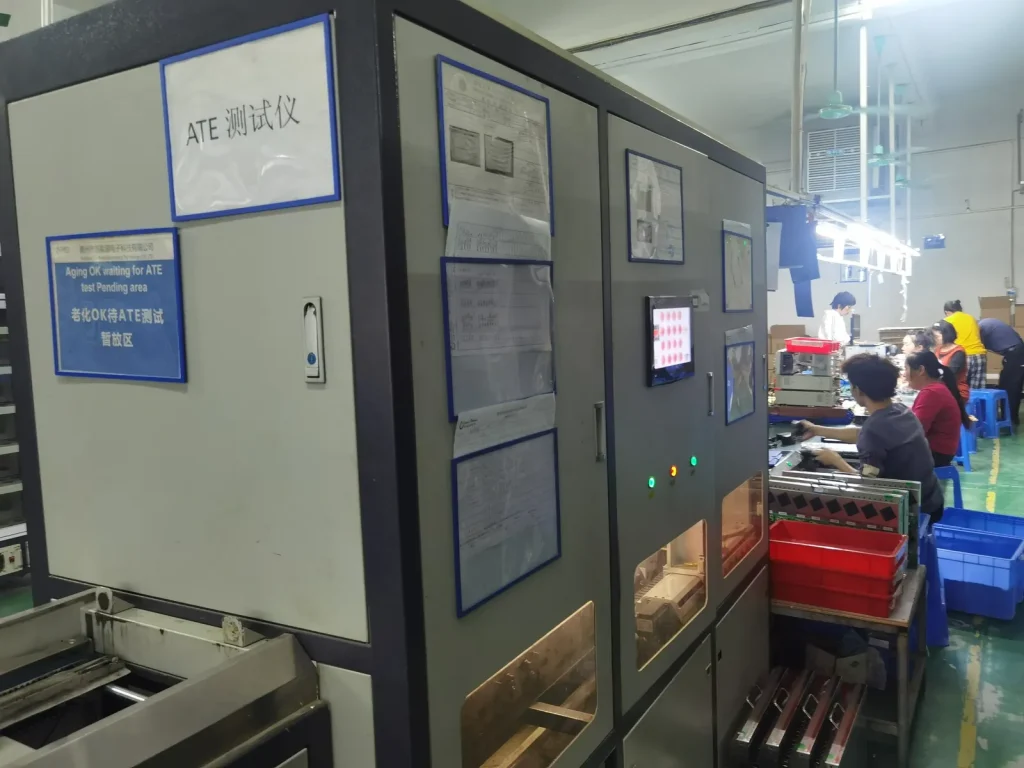
- EMC pre-compliance — conducted and radiated emissions are measured in-house before the expensive certification lab.
- Mechanical fit — the housing, connector and cable are confirmed against your device.
- Certification — the design is submitted to an accredited lab for the marks your market needs.
- Pilot and mass production — a small pilot run validates the line, then production with 100% inspection.
The value of a technical factory is that steps 1–4 happen in one building, so feedback loops are short and you are not paying a lab to find a problem your factory should have caught first.
Odd voltages and currents
Matching an unusual output is rarely about “turning a knob”. The voltage is set by the transformer turns ratio and the feedback divider, and the current limit by the controller and output stage. Common non-standard requests and what they mean:
| Request | Typical application | What it changes |
|---|---|---|
| 13.5V | Battery-float / charge rail | Feedback divider, output caps |
| 19.5V | Notebook / computing | Transformer ratio, rectifier rating |
| 24V | Industrial, PoE-style, motors | Higher-voltage components, clearance |
| 36V / 48V | LED strings, telecom, e-mobility | Insulation, safety spacing, controller |
| High peak current | Motor start, solenoid, print head | Bulk capacitance, current-limit tuning |
A point we make to every customer: the more precisely you specify the load behaviour, the better the design. A 24V/2A spec with a 6A motor-start transient is a different adapter from a 24V/2A static load.
Custom connectors and cabling
The connector is where many non-standard projects get into trouble. Barrel jacks come in many inner/outer diameters (5.5×2.1mm, 5.5×2.5mm, 3.5×1.35mm and more), and proprietary devices often use aviation (GX16/GX20), DIN, Molex, JST or terminal-block connections.
What a factory controls here: the cable gauge and rating, the strain relief, the polarity and pinout, and the retention of the connector. Getting the pinout wrong is a field-failure risk, so the drawing is locked at prototype stage and matched to your device before production.
Mechanical and environmental engineering
When an adapter must survive the environment, the design changes beyond the schematic:
- Waterproofing (IP rating) — IP67 or IP68 means potting, sealed seams and cable glands; the thermal path must still dissipate heat.
- Extended temperature — components are de-rated and the design verified across a −40°C to +85°C envelope, not just room temperature.
- Vibration and shock — potting and mechanical fixing matter for industrial, rail and marine use.
- Derating — a component rated 10A is used at 6A where temperature or altitude is a concern.
These are exactly the cases that favour a factory with in-house engineering over a catalogue supplier: the environmental requirement changes the component selection, not just the label.
EMC and pre-compliance
Electromagnetic compliance is where non-standard projects most often fail late and cost the most. The practical answer is to test conducted and radiated emissions in-house before the adapter goes to the certification lab, so the lab submission is a formality rather than a discovery process.
At Paiyi Power, pre-compliance testing is part of the engineering workflow, which shortens the certification cycle and reduces the number of lab iterations — a real cost saving on non-standard designs where the EMC behaviour is not yet known.
What non-standard costs at small batch
Non-standard does not have to mean high MOQ. The minimum depends on how much of the platform changes:
| Level of change | Typical MOQ | What is involved |
|---|---|---|
| Voltage/current and connector change on existing platform | 200–500 pcs | Electrical adaptation + cable assembly |
| New housing, same electronics | 1,000–3,000 pcs | Injection tooling drives the minimum |
| New PCB / power stage | 1,000–5,000 pcs | Engineering, EMC pre-test, component procurement |
| New platform + new certification | 3,000–10,000 pcs | Lab fees and certification cycles must be recovered |
How to brief a factory for a non-standard adapter
The better the brief, the faster and cheaper the project. Send all of the following when you can:
- Output — voltage, current, and whether the load is static or has peaks (motors, solenoids).
- Input — mains voltage and any regional variations.
- Connector — exact type, pinout and polarity, with a photo or drawing.
- Environment — temperature range, humidity, waterproofing, vibration.
- Electrical limits — ripple, efficiency, standby power, hold-up.
- Certification — target markets and the specific standards (CE, UL, IEC 62368-1, IEC 60601-1).
- Quantity and timeline — first order and a realistic forecast.
Paiyi Power: non-standard manufacturing profile
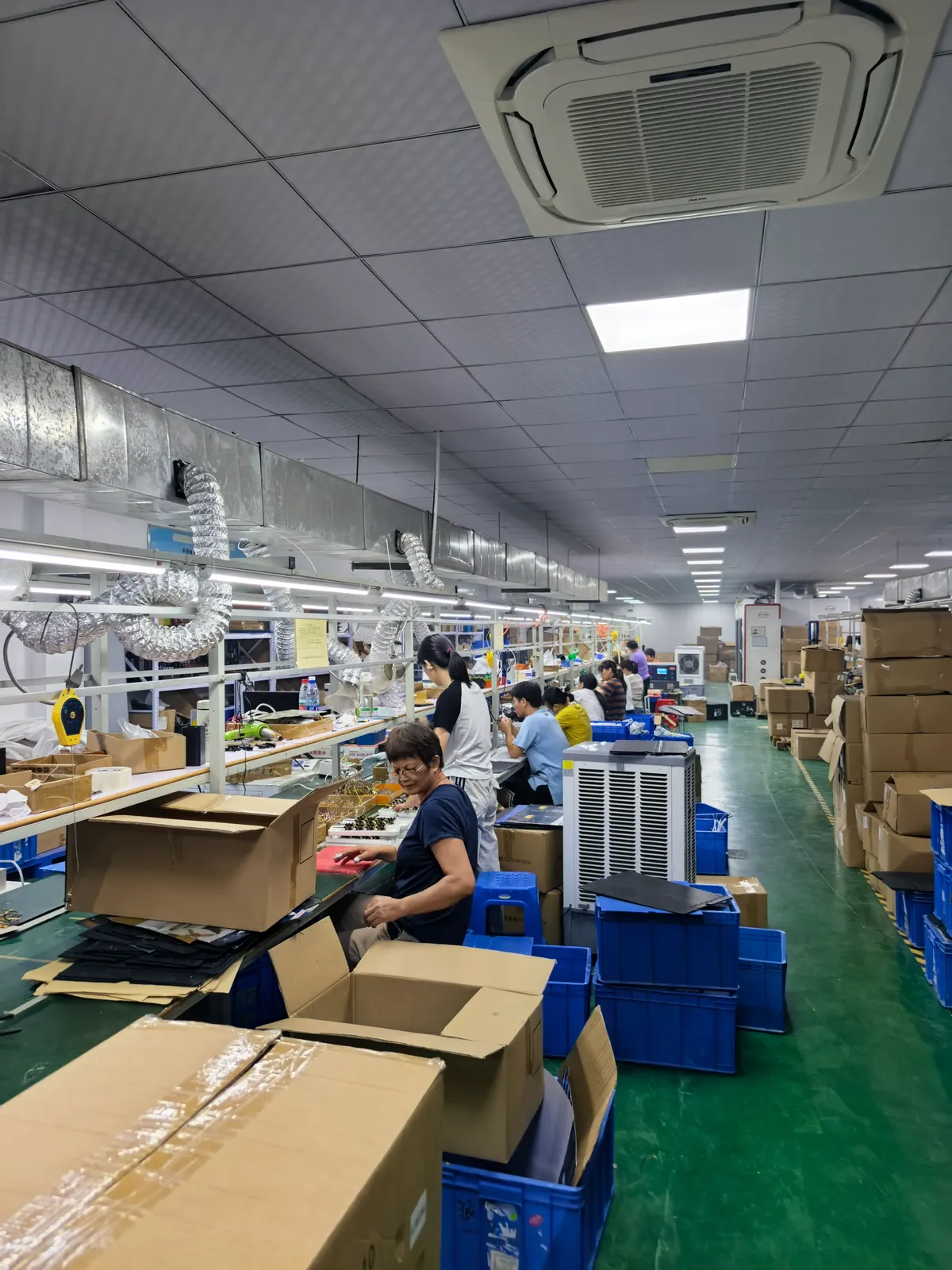
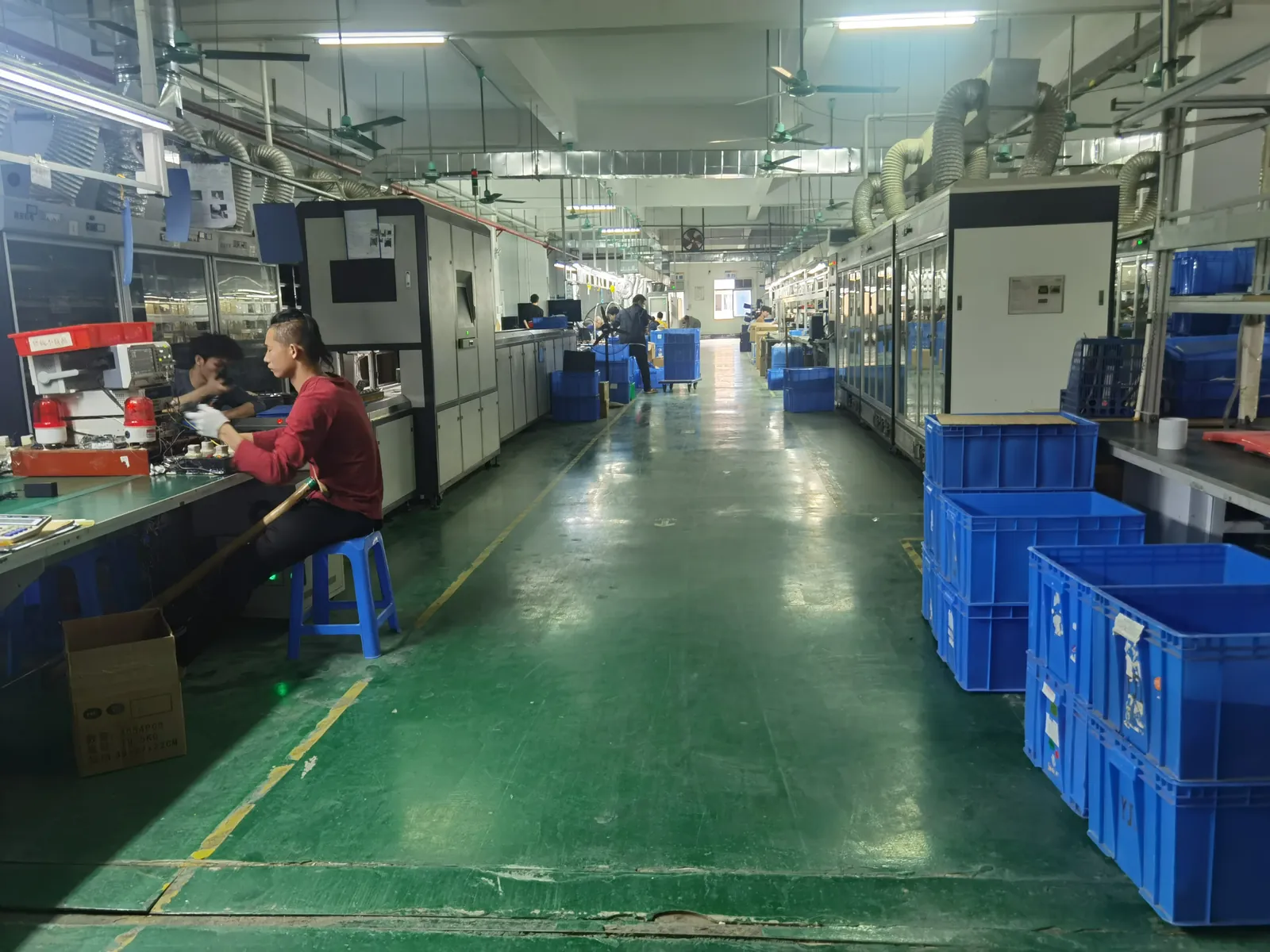
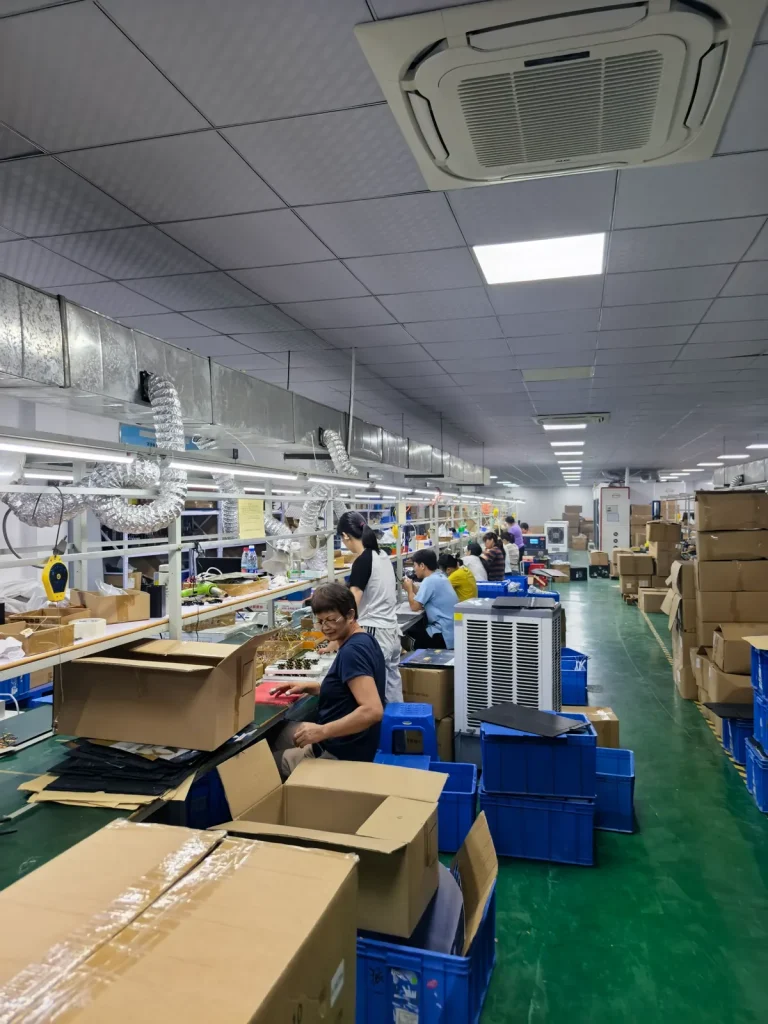
Paiyi Power is an OEM/ODM power adapter manufacturer based in China. The figures below are our own factory data, current as of September 2026.
| Item | Paiyi Power |
|---|---|
| Standard MOQ | 200 pcs per model on existing platforms |
| Engineering | In-house schematic, prototype and EMC pre-compliance |
| Sample lead time | 1–2 weeks |
| Production lead time | 5–6 weeks from order to shipment |
| Production lines | 4 |
| Employees | 50 |
| Monthly capacity | Up to 150,000 pcs |
| Pre-shipment inspection | 100% of units |
| Quality system | ISO 9001, with certification documents per market and model |
| Product range | USB PD 3.2 / SPR AVS GaN chargers (100W–165W), power adapters and custom power strips |
One thing we state plainly: our low MOQ applies to non-standard changes built on our existing power platforms. If your project needs a new platform or a new market certification, we quote the real MOQ, the real engineering time and the real timeline before you commit.
Frequently asked questions about non-standard power adapters
What is a non-standard power adapter?
It is a power adapter engineered to a spec no off-the-shelf model meets — an odd voltage or current, a custom connector, a specific form factor, a harsh environment, or a special certification.
Can you match an odd voltage like 13.5V or 19.5V?
Yes. Output voltage is set by the transformer and feedback design, so a technical factory can adapt a platform to a specific value rather than reselling a standard one.
Can you build a custom DC connector?
Yes. Barrel jacks, aviation (GX16/GX20), DIN, Molex and JST connectors are common, with the pinout and polarity locked at prototype stage.
Can you make a waterproof (IP-rated) adapter?
Yes. IP67 and IP68 are achieved with potting, sealed seams and cable glands, with the thermal design adjusted so heat is still dissipated.
Can the adapter work in extreme temperatures?
Yes, within the component envelope. Extended-temperature designs are verified across a −40°C to +85°C range with components de-rated for the margin.
What is the MOQ for a non-standard adapter?
200–500 pcs if the change stays on an existing platform (voltage, connector, cabling). New tooling or a new platform pushes the minimum into the thousands.
How long does a non-standard project take?
Samples in 1–2 weeks, production in 5–6 weeks for a platform-based change. New certification adds to the timeline depending on the lab and market.
Will it pass my market’s certification?
That is designed for, not hoped for. Pre-compliance EMC testing is done in-house before submission, so the design reaches the lab ready to pass rather than to be discovered.
Why choose a technical factory over a trading company for non-standard work?
A technical factory owns the schematic, the prototype and the pre-compliance testing in-house. A trader can only resell what a factory already makes, so a non-standard request is passed on to a third party with a delay and a margin.
Conclusion
Non-standard power adapter engineering is where a technical factory earns its place. The work — odd voltages, custom connectors, harsh environments, pre-compliance EMC — is exactly what catalogue suppliers cannot do, and exactly what makes a project work first time.
Specify the load precisely, brief the factory completely, and choose a partner that designs and tests in-house. That is the difference between an adapter that fits your device and one that only fits a spec sheet.
Sources and further reading
This article was written in September 2026. For safety, market-access and trade context, the following primary sources apply:
- European Commission — CE marking (LVD and EMC market access in the EU)
- IEC 62680-1-2:2024 (USB Power Delivery, IEC edition)
- UL Solutions (safety certification for adapters and power supplies)
- USB-IF — Compliance Program (PD and charger compliance)
- ICC — Incoterms 2020 rules (trade terms between factory and buyer)
Safety standards referenced in this article include IEC 62368-1 (AV/ICT equipment), IEC 60601-1 (medical electrical equipment) and IEC 60529 (IP ingress-protection ratings).
Related reading on Paiyi Power
- Low MOQ Power Adapter OEM/ODM
- USB PD 3.2: What Changes for Manufacturers and B2B Buyers
- Custom Power Strip Manufacturing
- GaN Chargers OEM Procurement Guide
- Industrial & Automation Power Supplies
- Energy Storage & BMS
- Contact Paiyi Power
Paiyi Power is a technical OEM/ODM manufacturer of power adapters, GaN chargers and custom power strips. Standard MOQ 200 pcs, 1–2 week samples, 5–6 week lead time, 100% pre-shipment inspection.
Talk to our team about your non-standard power adapter requirement.