
Drone Battery Charger OEM: 65W and 100W USB-C PD Power for Charging Hubs
Published: September 2026
Reading time: 11 min
Audience: drone accessory brands, charging-hub and dock makers, and OEM/ODM buyers specifying the USB-C power supply that sits upstream of a drone battery charging system
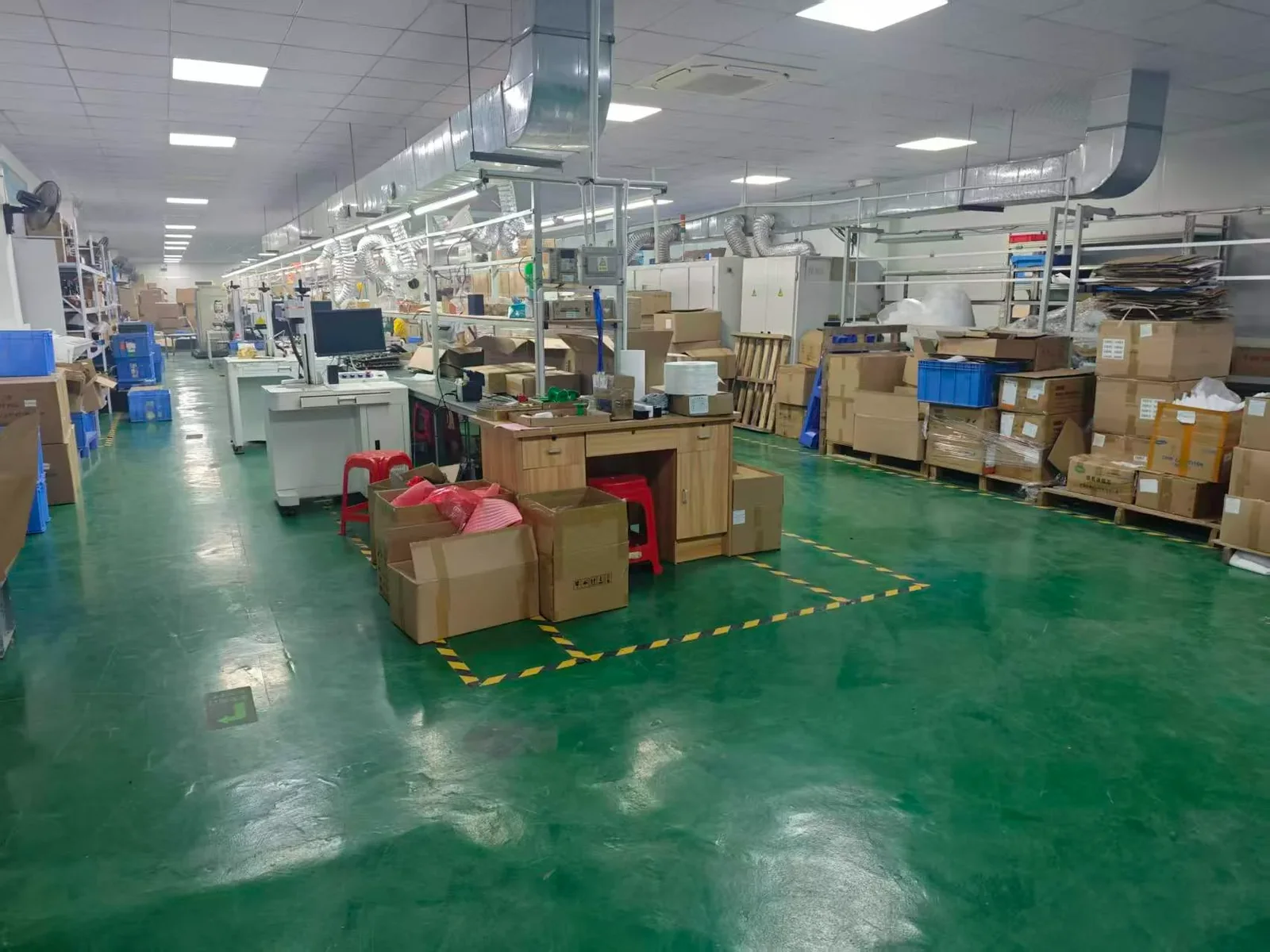
By Han — Paiyi Power, an OEM/ODM power supply manufacturer building high-power USB-C PD and GaN adapters from 5W to 240W, from 200 pcs per model.
Last updated: 21 September 2026.
Contents
Direct answer: what does a drone charging setup need?
A modern drone charging setup is a USB-C PD power supply feeding a charging hub that manages the battery packs. The supply is typically 65W or 100W, and the wattage is not cosmetic: the hub changes its charging behaviour depending on how much power it sees.
Above roughly 65W the hub can charge packs in parallel; below it, the hub falls back to charging them one after another, and a three-battery cycle that took just over an hour stretches out accordingly. That single dependency is the reason a drone charger is a specification problem rather than a commodity purchase.
This guide covers what to specify, and where the high-power USB-C technology you already know from laptop chargers applies. See what changed in USB PD 3.2 for the protocol background.
The architecture changed: drones now charge over USB-C PD
The most important change in this category is architectural, and it moved the power supply out of the drone bag and into the USB-C ecosystem.
- Charging hubs take PD input. A modern multi-battery hub accepts 5–20V over USB-C at up to 5A, which is the 100W ceiling of the standard power range. It then manages the packs itself.
- The wall adapter is a separate product. The hub often ships without one, and the brand either bundles a 65W or 100W USB-C adapter or expects the user to own one. Either way, the adapter is a specification the brand owns.
- The hub reads the input. Hubs commonly indicate input power directly — for example a red indicator above 100W, green above 65W, and off below that — because the input determines the charging strategy.
- So the power supply is now a mainstream high-power USB-C product, not a bespoke drone accessory. It is the same technology as a laptop adapter, applied to a different load.
That last point is what makes this category accessible: the electrical problem is one we already solve for laptops and multi-port chargers.
65W or 100W: why the number changes the behaviour
The difference between the two common ratings is not a marginal speed improvement; it changes what the hub is allowed to do.
| Input the hub sees | Typical hub behaviour | What the user experiences |
|---|---|---|
| 100W (20V / 5A) | Parallel charging, with balancing logic across packs | A three-pack cycle in a little over an hour |
| 65W class | Reduced parallel capability; some hubs switch to sequential | Noticeably longer recharge between flights |
| Below 65W | Sequential charging only, highest pack first | The product looks like it has a charging fault |
The commercial consequence is blunt: if you ship a 100W hub with a 65W adapter, you have built a product that underperforms its own specification, and the reviews will say the hub is slow. The adapter is not an accessory in this category; it is the half of the system that determines the headline number.
Holding 100W is harder than reaching it
Every adapter can reach 100W on a bench for a few seconds. The question is whether it holds 100W at 20V for the whole charging cycle, in a warm room, with the vent blocked by the user’s hand.
- Thermal droop changes the mode. If the adapter cannot sustain 100W and falls back to a lower contract, the hub re-reads its input and switches to a slower strategy mid-cycle.
- The result looks like a hub fault. The user sees charging that starts fast and then slows down, which is the hardest kind of fault to explain and the easiest to blame on the hub.
- Specify the sustained figure. Ask for the continuous rating at ambient temperature with a derating curve, not a peak number with no conditions attached.
- Check the 20V contract specifically. A charger that is generous at lower voltages but marginal at 20V will pass a casual test and fail in the field.
For a charging hub product, the honest specification line is “20V / 5A sustained at 40 °C ambient”, not “100W”.
Multi-port power sharing: a feature or a trap?
Multi-port adapters are attractive in this market because drone users carry a controller, a phone and a tablet as well as the batteries. But power sharing interacts badly with a hub if it is not designed for it.
- The hub gets less than it was promised. Plug a phone into the second port and the hub’s share drops, which can push it below the threshold that enables parallel charging.
- The user will not understand why. From their side, a full battery cycle suddenly took twice as long for no visible reason.
- Two ways to solve it. Either reserve a dedicated port that keeps its full rating regardless of the other ports, or publish an allocation table so the behaviour is documented rather than mysterious.
- Documentation is the cheap fix. A printed table on the box removes an entire category of support tickets, which is the same lesson as in why a 140W charger only charges at 100W.
For drone-specific products, a dedicated high-power port that cannot be degraded is usually the better product decision, even at some cost to the multi-port flexibility.
The cable is the hidden ceiling
In a 100W drone system the cable is a component with a specification, and shipping the wrong one silently halves the product’s performance.
- 5A and electronically marked. Reaching 100W at 20V requires a cable the charger can identify as capable of 5A. A lesser cable caps the system without any visible defect.
- Cables get lost. Drone users replace cables with whatever is in the bag, which means the system’s performance is periodically degraded by a user action nobody can see.
- Mark the bundled cable. A physical marking that identifies the rating is the cheapest way to keep the system performing as designed.
- Read the detail. 240W USB-C cable requirements covers the same constraints at higher power, and the logic is identical at 100W.
If you bundle a 100W adapter and a 3A cable, you have shipped a 60W product with a 100W label.
What the hub does on the battery side
Understanding the battery side matters because it explains why the input must be stable rather than merely sufficient.
- Voltage. Drone packs are lithium-polymer, most commonly 3S or 4S, so the hub’s battery-side output sits in the region of 12V to 17.2V.
- Current. Battery ports commonly deliver around 3.5A during charging and up to about 5A at peak, which on the input side is roughly the full 100W.
- Sequencing. The hub decides which pack charges when, and the better designs balance packs first so that all three finish close together.
- Protection. Over-voltage, over-current, over-charge, short circuit and temperature protection live in the hub — but they can only work with a stable input.
A hub with excellent protection logic and an unstable input is still a product with a bad reputation. The two halves have to be specified together.
Storage mode and long-term battery health
Storage mode is now a standard feature of good hubs, and it is worth understanding because it constrains the power supply in an unusual way.
- What it does. The hub brings packs to around 60% and holds them there, which is the state that minimises swelling and capacity loss in cells stored for weeks or months.
- It works in both directions. Packs above the target may need discharging, and packs below it need a controlled charge — so the hub is not simply passing power through.
- Why the supply cares. The charge current in storage mode is small but the behaviour is intermittent, and the supply sees a low, cycling load rather than a steady one. Light-load stability matters here.
- The marketing angle for a brand. Storage mode protects an expensive battery, so it is a genuine selling point — and it only works if the supply is stable at low load.
This is a good example of a feature whose cost sits in the power supply rather than in the hub’s firmware.
Field conditions: heat, dust and travel
Drone chargers live a harder life than laptop adapters, and the specification should reflect where they are actually used.
- Heat. Charging in a vehicle or in direct sun pushes ambient well beyond a comfortable room, and the adapter is usually the component with the least thermal margin.
- Dust and moisture. Field kits live in bags and on tailgates; the charger should tolerate realistic exposure, and the connector area is the vulnerable part.
- Travel. Wide-range input covering 100–240V is effectively mandatory, and a compact, single-piece design matters more than it does for a desk product.
- Vibration and impact. Cables and connectors take the wear; strain relief is worth specifying rather than assuming.
The practical specification: full rating at elevated ambient, wide-range input, and mechanical robustness of the cable and connector — not just wattage.
The 12V car charging variant
Charging from a vehicle is a core drone field use case, and it changes the input side of the problem entirely.
- Automotive input is 12–16V, not mains. A car charger has to work across the range a vehicle actually produces, including the higher end while the alternator is running.
- Transients are severe. A vehicle electrical system produces load-dump and other transients that a mains adapter never sees, so input protection is a real requirement rather than a formality.
- The output requirement is unchanged. The vehicle variant still has to hand the hub a stable 20V / 5A contract, so the converter has to boost from a nominal 12V to a 100W output.
- Two products, one chassis. A brand shipping both a wall and a car variant can use the same enclosure and much of the same design, which is worth planning from the start.
Automotive input is a distinct engineering case, and it is worth telling your supplier about it at the first enquiry rather than after the first sample.
Where PD 3.2 and AVS fit
Drone charging is a good example of a load that benefits from the efficiency improvements in the current USB Power Delivery revision rather than from more raw power.
- The load is long and steady. A charging cycle runs for an hour or more at close to full output, so efficiency and heat matter more here than in short-burst applications.
- Adjustable voltage reduces conversion loss. The revision that extended adjustable-voltage operation into the standard power range lets the supply tune its operating point, which is exactly what a sustained 60–100W load wants.
- Travelling packs benefit from consistent behaviour. Because the hub’s strategy depends on the input, a supply that holds its contract rather than hunting is worth more than one with a higher peak.
- The protocol detail is in the cluster. We cover the mechanics in SPR AVS versus PPS, and the negotiation behaviour in cable requirements for high power.
We design to the PD 3.2 specification including SPR AVS. To be precise about what that means: we build to the specification, and certification status varies by SKU and production batch, with earlier units certified to the prior revision. We do not claim USB-IF certification or a TID, and any brand shipping under its own name should plan certification per model and market.
Certification: what applies
For a drone charging product the certification picture has two halves, and conflating them causes delay.
- The power supply is a mains-connected IT product: IEC/EN 62368-1 for safety, FCC Part 15 for the US market, CE and CB for Europe and international schemes.
- The battery and the hub are separate products with their own obligations, including transport and battery regulations that apply to the packs rather than to the charger.
- The hub’s safety testing uses the recommended charger. Where the charging system is evaluated as a system, the test uses the combination the manufacturer specifies — which means a charger substitution can invalidate work the brand has already done.
- Keep change control in writing. This is the same discipline we describe in the OEM agreement guide, and in this category it protects a certification rather than only a specification.
Our position is consistent across the range: we build to the applicable safety and power specifications, and the certificates we hold are CE, CB, FCC and ISO 9001. We do not claim approvals we do not hold for every model, and the product-level filing belongs to the brand.
What to put in the RFQ
These lines turn a vague request for “a 100W charger” into something a supplier can engineer and quote against.
- The hub’s input threshold — the wattage at which its behaviour changes, and what it does on either side.
- Sustained output at ambient, for example 20V / 5A at 40 °C, with a derating curve.
- Port configuration and whether any port may be degraded by another in use.
- The cable — rating, marking and whether it is bundled.
- Input variant — mains, vehicle, or both — and the operating range for each.
- Light-load behaviour, because the storage mode runs at low current and cycling load.
- Certification and change control, including who owns the product filing.
Our sample evaluation checklist covers how to test the first article against these points.
Drone battery charger OEM specification table
| Parameter | Typical for drone charging systems | Note |
|---|---|---|
| Output rating | 65W or 100W USB-C PD; 20V / 5A at the top of the range | The rating determines the hub’s charging strategy |
| Sustained capability | Full contract held at elevated ambient, with a derating curve | Thermal droop silently changes the hub’s mode |
| Protocol | Designed to USB PD 3.2 including SPR AVS | Efficiency matters because the load is steady for an hour |
| Cable | 5A and electronically marked, bundled and marked physically | The most common silent performance cap |
| Ports | One dedicated high-power port, or a published allocation table | Sharing can push the hub below its fast-charge threshold |
| Battery side (in the hub) | 12–17.2V, around 3.5A with peaks near 5A | Explains why the input must be stable, not merely adequate |
| Storage mode | Around 60% target, charge or discharge as needed | Needs stability at low, cycling load |
| Input variant | 100–240V mains; separate 12–16V vehicle variant | Vehicle input sees transients mains never produces |
| Standards | IEC/EN 62368-1, FCC Part 15, CE and CB by market | The hub and packs carry their own obligations |
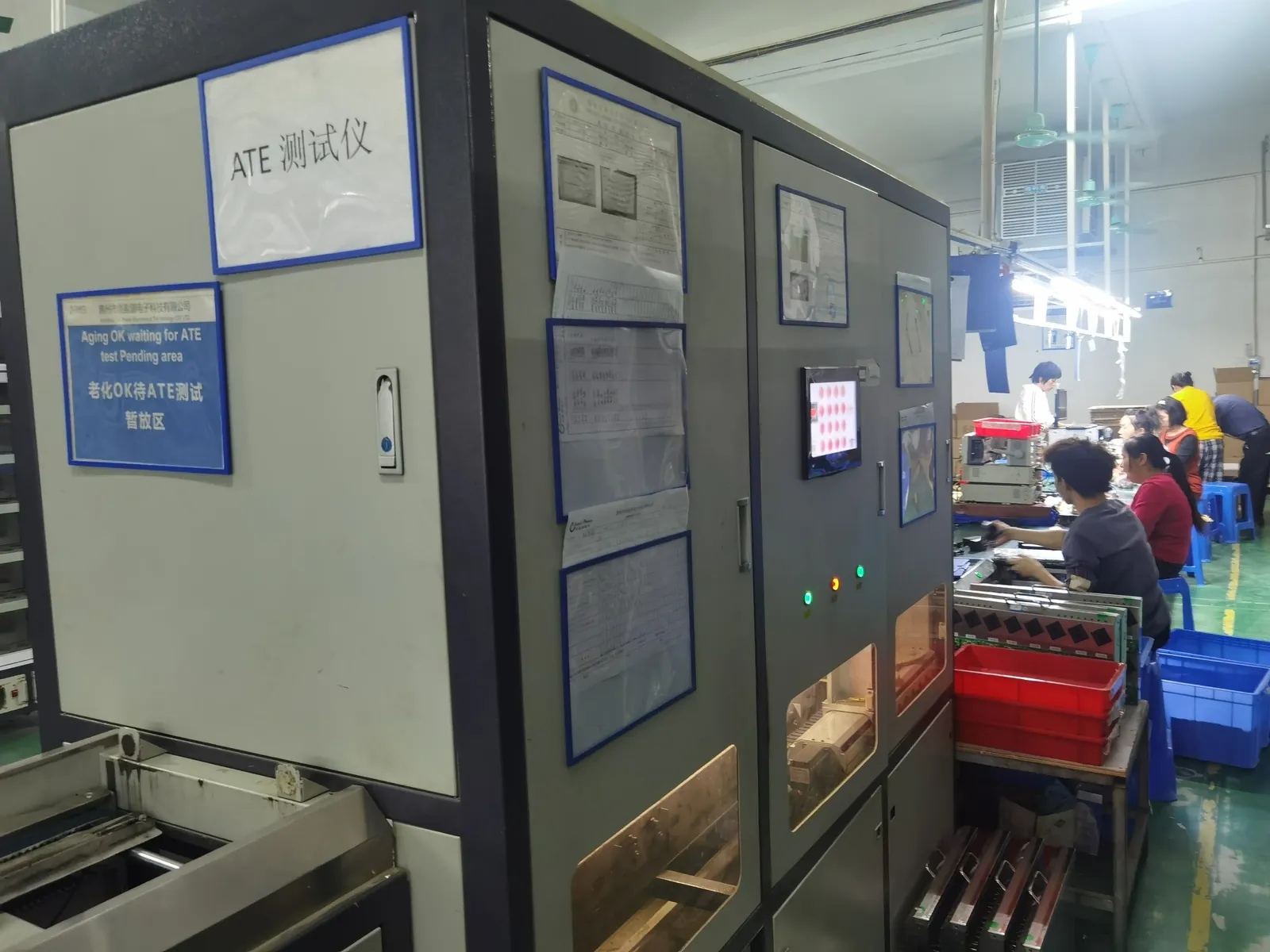
| Reliability | 100% ATE + burn-in; written change control | A silent change can invalidate a system-level test |

Frequently asked questions
What power supply does a drone charging hub need?
A USB-C PD supply rated 65W or 100W — 20V at 5A at the top of the range. The wattage matters because the hub changes its charging behaviour based on how much power it sees, and a lower input makes a three-battery cycle noticeably longer.
Why does 65W versus 100W change the charging behaviour?
Because the hub uses the input level to decide its strategy. At higher input it can charge packs in parallel with balancing logic; below the threshold it falls back to charging them sequentially, which is much slower across three packs.
Why does my hub slow down part way through charging?
Usually thermal droop in the adapter. If the supply cannot hold 20V / 5A and drops to a lower contract, the hub re-reads its input and switches to the slower strategy mid-cycle. Specify a sustained figure at ambient, not a peak figure.
Does the USB-C cable matter at 100W?
Yes — it is the most common silent cap in the system. Reaching 100W requires a 5A cable with electronic marking that the charger can identify. A lesser cable limits performance with no visible defect, and users replace cables without knowing the consequence.
Should I offer a multi-port charger with a drone hub?
Only if one port keeps its full rating regardless of the others, or if you publish the allocation table. A shared budget can push the hub below its fast-charge threshold, and the user will experience it as an unexplained slowdown.
How much current does the hub draw from the batteries?
Drone packs are normally 3S or 4S at 12–17.2V, charged at around 3.5A with peaks near 5A. That maps to roughly the full 100W on the input side, which is why the supply has to be stable rather than merely sufficient.
What is storage mode and why does it matter for the charger?
It holds packs near 60% for long-term storage, which prevents swelling and capacity loss. It runs at low, cycling current in both directions, so the supply has to behave well at light load — a detail that is easy to overlook.
Can the same charger work in a car?
Not the same unit — a vehicle variant needs a 12–16V input range and transient protection that a mains adapter does not have. The output requirement is unchanged, so plan the two variants together and reuse the enclosure.
What MOQ and lead time apply for drone chargers?
From 200 pcs per model at Paiyi Power, with samples in about a week and first production 5–6 weeks after sample approval. We design to the PD 3.2 specification including SPR AVS and do not claim USB-IF certification or a TID; certification status varies by SKU and batch. See also GaN adapters beyond phone chargers.
Sources
- USB-IF — USB Power Delivery specification, including the standard power range
- IEC — 62368-1 safety for IT and audio/video equipment
- FCC — Part 15 rules (Class A / Class B digital devices)
- UL — safety certification for power supplies and battery charging systems
- DJI — published charging hub and adapter specifications used as the reference for this article
Related on this blog: 140W charger only charging at 100W, 240W USB-C cable requirements, SPR AVS vs PPS, GaN power adapters beyond phone chargers.