
Access Control Power Supply OEM: Specifying Power for Electric Strikes, Maglocks, Readers and Backup Batteries
Published: September 2026
Reading time: 10 min
Audience: access control and lock brands, security integrators, door hardware OEMs and procurement teams sourcing filtered and regulated power supplies with battery backup
By Han — Paiyi Power, an OEM/ODM power supply manufacturer and access control power supply OEM partner building custom and modified-standard supplies from 5W to 240W, from 200 pcs per model.
Last updated: 15 September 2026.
Contents
Direct answer: what power supply does access control need?
Access control is powered by a filtered, regulated supply with a sealed lead-acid battery on the same output, usually 12V DC or 24V DC, sized to hold the locks locked and the readers alive for a defined standby period after mains failure. Electric strikes and electromagnetic locks are the load that shapes everything: strikes draw a short high inrush when they release, maglocks draw continuous current the entire time the door is locked, and both are unforgiving of a supply that cannot back them with a battery.
For any team choosing an access control power supply OEM partner, the three specifications that decide whether a building passes commissioning are battery-backed standby time, momentary current capability for lock inrush, and fire-alarm release behaviour — not the continuous amperage printed on the label.
Get those three right and the door opens when it should, stays locked when it should, and unlocks when the fire panel tells it to. At Paiyi Power we build these from 200 pcs per model, with samples in about a week and first production in 5–6 weeks after approval.
Why access control power is its own discipline
Every other category in this blog powers a device that stops working when the supply fails. Access control power decides whether a building can be left, and whether it can be secured. Four consequences follow:
- It is a life-safety circuit. On the egress side, a locked door that will not release is a safety incident, not a service call. That is why fail-safe design and fire-alarm release exist at all.
- The load is mixed and lumpy. One output may feed a maglock holding 500 mA continuously, a reader idling at 100 mA, and a strike that yanks several amps for a fraction of a second.
- The battery is part of the power supply, not an accessory. The supply has to charge it, supervise it, protect it from deep discharge and hand over to it seamlessly.
- Commissioning fails late. A supply that is undersized on inrush or battery runtime usually looks fine on the bench and fails at the inspection or on the first power cut.
The label number is the wrong place to start.
That is why specifying access control power on continuous amperage alone is the most expensive mistake in this category.
The architecture: supply, battery, lock
Almost every system reduces to four blocks, and the specification is really about how they share one output:
- The supply — filtered and regulated, usually with a dedicated lock output and a separate auxiliary output for readers and controllers.
- The backup battery — a sealed lead-acid pack on the lock output, charged and supervised by the supply.
- The lock — an electric strike, a maglock or a bolt, each with a different current signature.
- The control layer — a reader, a controller, a request-to-exit device and a door contact, which add a small but non-zero standing load.
The design question is always the same: which loads must survive a power cut, and which may drop? Readers and controllers are usually allowed to reset; the lock output is not. Splitting the outputs is what makes that possible.
Fail-safe vs fail-secure
This single decision drives the supply, the battery and the fire interface, so it should be settled before anything is ordered.
| Aspect | Fail-safe | Fail-secure |
|---|---|---|
| Behaviour on power loss | Door unlocks | Door stays locked |
| Typical hardware | Electromagnetic locks (maglocks), some bolts | Most electric strikes, motorised bolts |
| Current profile | Continuous while locked — the battery must hold it | Momentary inrush on release; near-zero while locked |
| Egress | Naturally free on power loss | Requires mechanical egress (exit device, REX, mechanical override) |
| Why it matters to the supply | Runtime is a safety number, not a convenience number | Inrush headroom and per-output protection are the design drivers |
The practical rule: decide the failure mode first, then buy the supply that supports it. A fail-safe door without adequate battery runtime is a security hole; a fail-secure door without mechanical egress is a safety problem.
Voltage: 12V or 24V?
Both are common, and the choice is usually about distance and lock type rather than preference:
- 12V — the traditional choice for strikes and readers, and the easiest to back with a single 12V lead-acid battery.
- 24V — preferred for maglocks and long cable runs, because the current is halved and voltage drop along the door loop is roughly a quarter of the 12V case. Note the detail that catches people out: 12V and 24V locks are not interchangeable, and a 12V lock on 24V is a warranty claim, not a performance upgrade.
- Mixed systems — a 24V supply feeding 12V locks through converters adds a failure point; if the building is 24V, specify 24V hardware throughout.
When in doubt, 24V for locks and 12V for readers is a workable split, but it means two outputs and a clear wiring schedule.
Strikes, maglocks and inrush
The lock is the reason an access control supply cannot be sized like a generic adapter, because the current profile is nothing like a steady load.
| Lock type | Typical current | What the supply must handle |
|---|---|---|
| Electric strike | Momentary; peak several times the hold rating | Short-duration inrush without sagging the reader output |
| Maglock (600 lb class) | Continuous, roughly 0.5 A at 12V / 0.25 A at 24V each | Battery runtime sized for every lock on the output |
| Motorised bolt | Higher peak, short duration | Peak headroom plus protection so a stalled bolt does not brown out the system |
A lock is a pulsed load wearing a steady label.
Two habits prevent most field problems: give locks their own output so strike inrush cannot disturb the reader, and specify momentary current capability rather than assuming a supply sized for continuous load can absorb a strike.
Backup batteries and charging
The battery is where a cheap supply and a proper access control supply look identical on the label and behave nothing alike in a building.
- Chemistry and format. Sealed lead-acid (SLA) is still the default in 12V/7Ah and similar packs, because it is cheap, tolerates float charging and is easy to supervise.
- Charging. The supply must hold the pack on a correct float voltage for its chemistry; overcharging dries it out, undercharging leaves it permanently short of capacity.
- Low-battery cutoff. A deep-discharged SLA may not recover, and some locks must never be left in an indeterminate state. A defined cutoff protects both the battery and the building’s expectations.
- Runtime. Standby time is a calculated number — lock count x hold current x hours — and it is usually specified by the project or by the applicable standard, not chosen by feel.
- Supervision and reporting. Mains-fail, battery-fail and low-battery conditions should be available as contacts so the panel can report them instead of the fault being discovered by a person who cannot get in.
Ask for the runtime calculation in writing. A supplier who cannot show it is guessing.
Everything else on the supply
The lock is the headline, but the rest of the door adds up, and forgetting it is how systems end up short:
- Readers and keypads — a small continuous load each, and they usually want a clean, regulated 12V.
- Request-to-exit and door contacts — tiny loads, but they are part of the circuit that must keep working.
- Sounders and strobes — surprisingly heavy momentary loads; treat them like strikes.
- Exit devices and rex — mechanical, but they define whether fail-secure is acceptable at all.
The discipline is to write a load schedule before choosing the supply, then add margin on top. Twenty percent headroom on the continuous total is a reasonable starting point; the momentary figure needs its own check.
Wiring, voltage drop and supervision
Door loops are long, thin and often pulled through a hinge, which makes voltage drop and supervision the two wiring questions that matter:
- Voltage drop. A maglock at the end of a 30 metre run on thin cable may see well below its rated voltage and hold weakly, which is a security failure that looks like a lock defect. 24V, thicker cable and a documented gauge all help.
- Supervised circuits. Many access control supplies are specified with supervised outputs and end-of-line resistors so an open or shorted lock circuit is reported rather than silently ignored.
- Per-output protection. Fuses or PTC devices per output mean one failed lock does not take down the rest of the door — and make the fault findable.
Documenting the cable gauge on the as-built drawings prevents a category of commissioning arguments.

Outdoor and gated entry
Gate and perimeter entry add environmental requirements that an indoor cabinet never sees:
- Enclosure rating. Where the supply sits outside, IEC 60529 defines the IP code; IP65 or better is the usual expectation, and potting removes the internal air that condenses as the cabinet heats and cools.
- Surge. Long runs to a gate and nearby metal make surge immunity a real requirement rather than a formality; specify the IEC 61000-4-5 test level explicitly.
- Thermal. A sealed gate cabinet in direct sun runs far above ambient, so the supply needs a rating at temperature and a derating curve — the same discipline we describe for CCTV camera power supplies and digital signage.
It is also worth specifying UV-resistant cabling; standard PVC jacket in a gate cabinet ages faster than anyone expects.
Fire alarm coordination
In most jurisdictions, electrified locking hardware must release on a fire alarm condition, and this is a code requirement rather than a design preference.
The consequence for the supply is concrete: it must accept an external release input that drops lock power without breaking the battery-backed auxiliary output feeding readers and the panel.
- Separate release input — the fire interface must be able to cut the lock output on its own.
- Do not release everything — dropping the whole supply takes the panel down and can leave the door in an undefined state.
- Document the logic — which output drops, which stays, and how the fail-safe default is achieved.
This is the requirement that stays invisible until inspection day.
Get this wrong and the building fails inspection; get it right and it is invisible for the life of the installation.
Certifications: what actually applies
Access control supplies sit under industry-specific standards that generic adapters never touch:
- UL 294 covers access control system units, which is the standard buyers in North America usually mean when they ask for a “listed” supply.
- UL 603 covers power supplies for burglar-alarm systems and brings its own standby requirements; alarm-grade supplies are a different product from a generic adapter.
- EN 50131-6 is the European counterpart for intruder alarm power supplies, and specifies standby classes and supervision.
- Safety baseline — IEC/EN 62368-1 for the supply itself, with Class 2 / LPS limits enabling power-limited wiring where the code allows it.
- EMC — FCC Part 15 in the US, with Class B for residential and Class A for commercial installations.
We certify per model and per market rather than claiming one certificate covers everything; certification by country explains which schemes transfer and which need local registration.
Access control power specification table
| Parameter | Typical for access control | Note |
|---|---|---|
| Output | 12V DC or 24V DC, filtered and regulated | Locks and readers usually want separate outputs |
| Duty cycle | Continuous, 24/7, with battery on the lock output | Standby time is a calculated figure |
| Momentary capability | Rated for strike and sounder inrush, not just hold current | Where undersized supplies fail at commissioning |
| Battery | SLA on the lock output, float charged, low-voltage cutoff | Battery is part of the supply, not an add-on |
| Supervision | Mains-fail, battery-fail and low-battery contacts | Faults should be reported, not discovered |
| Fire release | Dedicated input drops lock output only | Code requirement, not a feature |
| Protection | Fuse or PTC per output; surge immunity where outdoor | One lock failure should not take the door down |
| Standards | UL 294, UL 603, EN 50131-6, IEC 62368-1 | Industry-specific, not adapter-grade |
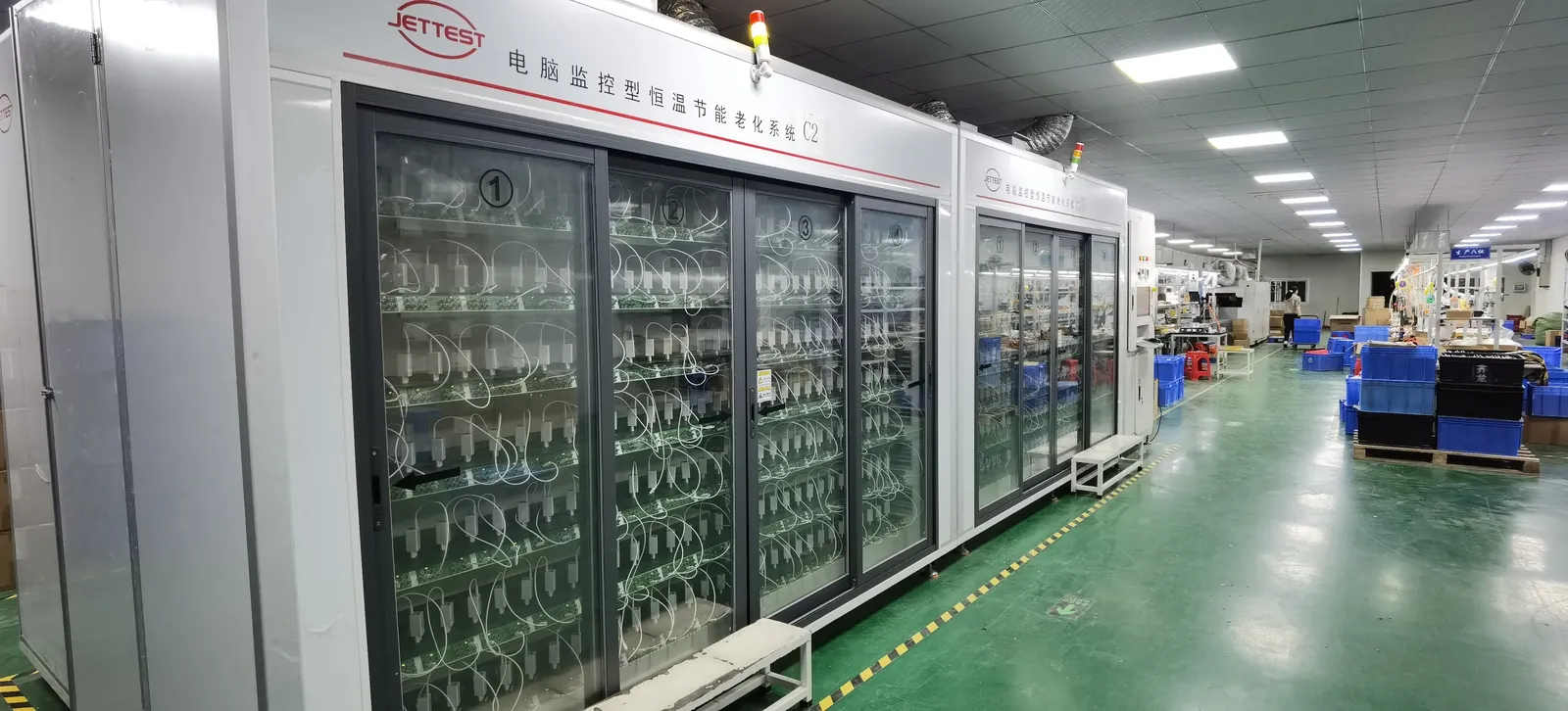
| Reliability | 100% ATE + burn-in; written change control | Fleets outlive product cycles |

Frequently asked questions
What voltage do access control systems use — 12V or 24V?
Both, and the choice is usually about lock type and cable distance. 12V suits strikes and readers and is easy to back with a single lead-acid battery; 24V suits maglocks and long door loops because the current is halved. The two are not interchangeable at the lock.
What is the difference between fail-safe and fail-secure?
Fail-safe unlocks on power loss; fail-secure stays locked. Maglocks are typically fail-safe; most electric strikes are fail-secure and therefore need mechanical egress. Decide which one the door must be before choosing the supply.
How do I calculate backup battery runtime?
Multiply the lock-hold current by the number of locks, add the standby loads you intend to keep alive, and multiply by the required hours. Ask for the calculation in writing — and note the runtime someone must meet is usually set by the project or the applicable standard, not by preference.
How much current does a strike or maglock draw?
A maglock draws continuously while locked — roughly 0.5 A at 12V or 0.25 A at 24V per 600 lb class unit — while a strike draws a short peak several times its hold rating. That difference is why locks deserve their own output.
Can I power locks and readers from the same supply?
Yes, but not from the same output if you care about reliability. Separate outputs mean strike inrush cannot disturb the reader, and one failed lock does not take the door down. It also makes per-output fusing possible.
Which certifications apply to access control power supplies?
UL 294 for access control system units, UL 603 for alarm power supplies, EN 50131-6 in Europe, with IEC/EN 62368-1 as the safety baseline. An access control power supply OEM should certify per model and market rather than claim a single universal certificate.
How do I stop maglock inrush from browning out the system?
Give the locks a dedicated output, specify momentary current capability rather than continuous, and add per-output protection. Inrush is a fraction of a second, but it is where an undersized supply reveals itself.
What does the fire alarm need from the supply?
A dedicated release input that drops the lock output without cutting the battery-backed auxiliary output. That way the doors release as required while the panel and readers stay alive. It is a code requirement, so it belongs in the specification from day one.
What MOQ and lead time apply for custom access control power supplies?
From 200 pcs per model at Paiyi Power, with samples in about a week and first production 5–6 weeks after sample approval. An access control power supply OEM should also fix battery, supervision and release behaviour before tooling; use our sample evaluation checklist and the OEM agreement guide for change control.
Sources
- UL — 294 access control system units, 603 alarm power supplies
- NFPA — 101 Life Safety Code (egress and electrified locking hardware)
- IEC — 62368-1 safety and 60529 IP codes
- FCC — Part 15 rules (Class A / Class B digital devices)
- Security Industry Association — access control standards and guidance
Related on this blog: CCTV camera power supply OEM, digital signage power supply OEM, LED power supply OEM, why power adapters fail.