
Importing Power Supplies into Brazil: INMETRO, ANATEL, NBR 14136 and the 127V/220V Question
Published: September 2026
Reading time: 11 min
Audience: power supply and charger brands, importers, distributors and procurement teams planning to sell power products in Brazil
By Han — Paiyi Power, an OEM/ODM power supply manufacturer working with brands and importers on market-access requirements, building custom and modified-standard supplies from 5W to 240W, from 200 pcs per model.
Last updated: 15 September 2026.
Contents
Direct answer: what does importing power supplies into Brazil require?
Importing power supplies into Brazil requires three things beyond the product itself: INMETRO conformity certification for electrical safety, NBR 14136 plugs on anything that plugs into a Brazilian outlet, and universal input covering both 127V and 220V at 60 Hz. A Brazilian legal entity must hold the certification, and if the product contains radio or telecom functions, ANATEL homologation is required as well.
The order matters. Market access is decided in the design phase, not at the port, and the two are expensive to swap. A product engineered without the Brazilian plug, without the right marking space and without the voltage range will need rework before it can clear customs.
This guide sets out what actually has to be true, where the published guidance is contradictory, and how to plan the timeline. At Paiyi Power we build these from 200 pcs per model, with samples in about a week and first production in 5–6 weeks after approval.
Two regulators, not two options
The most common mistake in planning a Brazilian launch is treating INMETRO and ANATEL as alternatives, as though a product needs one or the other. They are not alternatives, and they do not overlap in purpose.
| Aspect | INMETRO | ANATEL |
|---|---|---|
| What it regulates | Electrical safety, performance and energy efficiency of products | Telecom and radio equipment, and spectrum use |
| Ministry | Development, industry, trade and services | Communications |
| Applies to power supplies | Yes — adapters and chargers are in the compulsory scope | Only where radio or telecom function is present |
| Certificate holder | A Brazilian legal entity | A Brazilian legal representative |
| Marking | INMETRO mark plus the certification body’s number | ANATEL mark plus the approval number |
The practical reading: a plain power supply is an INMETRO product; a product with wireless or telecom function is both. A charger with Bluetooth is not an INMETRO charger that also happens to have a radio — it is a product that needs both approvals, and the ANATEL path has its own laboratory testing and its own local representative.
What INMETRO covers for power supplies
INMETRO operates Brazil’s conformity assessment system, and power supplies, battery chargers and adapters sit inside the compulsory scope rather than the voluntary one.
- Compulsory certification. The product must be certified before it can be legally sold, and uncertified goods can be held at customs or barred from the market.
- Testing at an accredited laboratory. Safety and EMC testing is carried out through the conformity assessment route, and the technical file has to match what is actually shipped.
- Factory quality system. Depending on the certification scheme, the manufacturing site is assessed as well, which is why a supplier with a documented quality system and history of audits moves faster.
- Marking. The product carries the INMETRO mark and the certification body’s identifier, which means the nameplate artwork is a certification deliverable — not a last-minute design task.
- Maintenance. Certification runs on a validity period with surveillance, so the certificate is an ongoing obligation rather than a one-off purchase.
The consequence for a brand is straightforward: any change to the design or the components has to be assessed against the certified configuration. Silent substitutions are a certification risk in every market, and in Brazil they threaten the certificate itself.
When ANATEL applies
ANATEL regulates telecommunications and radio frequency equipment. Its rule is simple to state and easy to misapply.
- The trigger is function, not category. A product that connects to telecom networks or intentionally radiates radio frequency falls under ANATEL. A product that does neither usually does not.
- Accessories can be caught. Some accessories designed for equipment that requires ANATEL approval — power adapters and chargers among the examples cited in market guidance — may be drawn into scope themselves.
- Local representation is mandatory. A foreign manufacturer cannot hold ANATEL certification directly; a Brazilian legal representative assumes responsibility for the approved product.
- Certification has its own clock. ANATEL approval runs on its own validity period and renewal cycle, independent of the INMETRO certificate, so the two timelines have to be planned together.
For a product line with both wired and wireless variants, the practical answer is to plan the wireless variants on the longer path and not assume the wired approval covers them.
The phone-charger question nobody answers consistently
Here is the uncomfortable part, and it is worth saying plainly because it costs people money.
Published guidance on whether a plain phone charger needs ANATEL approval is genuinely inconsistent. Some sources state that an ordinary USB charger with no radio function needs INMETRO only, because ANATEL is triggered by radio and telecom function. Others list chargers among the accessory categories that fall under ANATEL’s terminal-equipment scope, precisely because they are sold as phone accessories.
Two things follow from that, and both are practical rather than regulatory.
- Do not accept a generic answer from a supplier or a blog. Determine the classification for your specific product, function by function, with a certification body in Brazil.
- Budget for the possibility. If your product could reasonably be classified under both, plan the timeline and the cost for both, and be pleasantly surprised if only one is required. The reverse position is a shipment sitting at a port.
Being honest about this is more useful than quoting a rule that may not apply to your product. Anyone who gives you a confident one-line answer about every charger is guessing.
Who holds the certificate
This is the commercial detail that decides how much leverage you have after launch, and it is usually discovered too late.
A Brazilian legal entity must hold the certification. If the certificate is held by your distributor or importer, then your right to sell the product in Brazil depends on that relationship continuing.
- Certificate holder means control. Change distributor, and you may need to re-certify under a new holder — with the cost and time that implies.
- Decide the holder deliberately. Brands with their own Brazilian entity usually want to hold the certificate themselves; brands entering through a distributor need to understand what they are handing over.
- Whatever the arrangement, write it down. Who owns the technical file, who may communicate with the certification body, and what happens on termination. These are contract terms, in the same family as the clauses covered in the OEM agreement guide.
- It also binds your supplier’s behaviour. Change control matters more here than in any other market, because a component change may invalidate a certificate held in someone else’s name.
Treat certificate ownership as a commercial asset from the first conversation, not as paperwork to sort out after the first container.
The standards that actually apply
Brazilian requirements are built on IEC standards adopted as ABNT NBR documents, with distinctly Brazilian additions.
- Safety. The ABNT NBR IEC 62368-1 series is the current hazard-based standard for IT, audio/video and communication equipment, replacing the older 60950-1 generation that many products were historically certified against.
- EMC. Emissions and immunity testing forms part of the conformity assessment, and the level assumed must match where the product will actually be used.
- Energy efficiency. Efficiency and standby requirements sit alongside safety in Brazilian conformity programmes, and they are a labelling and compliance issue rather than an engineering afterthought.
- Plug and interface standards. The Brazilian plug standard is its own document rather than an imported one, which is why it must be specified explicitly.
Because the standards are national adoptions rather than the international documents themselves, quoting an IEC test report is not the same as holding Brazilian certification. The reports may be usable as a starting point; the certificate is still a Brazilian process.
NBR 14136: the plug you must ship
Brazil has its own plug standard, and shipping the wrong one is one of the simplest ways to stop a shipment.
- NBR 14136 is the Brazilian plug. It uses round pins in a configuration specific to Brazil, similar in principle to the international IEC 60906-1 design but implemented as a national standard. The older flat-pin style that many exporters assume still sells is no longer the accepted configuration for new products.
- There are current ratings. The standard covers more than one rating class, and the plug must match what the product actually draws.
- It is a tooling and inventory decision. Plugs affect moulds, cables and stock-keeping, which is why plug availability should be confirmed early rather than specified on the purchase order.
- It interacts with certification. The plug and the nameplate are part of the certified configuration, so changing the plug after certification is not a packaging change.
Do not treat the plug as a line item your supplier can substitute quietly. In Brazil it is part of market access, and we cover the wider version of that problem in certification by country.
127V or 220V?
Brazil uses both voltages, and they can exist in the same city, sometimes in the same building. The nominal supply is 60 Hz, and the two common voltages are 127V and 220V rather than the 110V and 230V used elsewhere.
- Universal input is effectively mandatory. A product designed for a single voltage cannot be sold nationally without a regional stock-keeping split, which most brands would rather avoid.
- The nameplate must match the claim. Rated input range and frequency are part of the marking requirements, and the certified configuration is what inspectors compare against.
- The plug and the voltage are separate decisions. Both must be right, and one does not imply the other.
In practice this is the least painful Brazilian requirement to design for, because a wide-range input covers both voltages at no meaningful cost. It becomes painful only when a product was designed for a single-voltage market and has to be reworked.
The tax structure on a commercial import
Import cost is usually modelled badly, because the taxes are not a single percentage and the state tax is calculated in a way that surprises first-time importers.
| Component | Level | Why it matters |
|---|---|---|
| Import duty | Federal | Rate depends on the product classification |
| Industrialised products tax | Federal | Adds to the landed cost base |
| Social contributions | Federal | Part of the standard import calculation |
| State VAT | State | Varies by state and is calculated on a grossed-up basis |
| Freight and insurance | — | Forms part of the customs value, not a separate cost |
Two warnings worth more than the table. First, the state tax is calculated “por dentro” — it is included in its own base rather than applied on top of it, which makes the effective rate higher than the headline number suggests and catches out anyone modelling it as a simple addition. Second, Brazilian tax rules have been under reform, so any figure quoted in an article should be confirmed with a customs broker for your classification before it goes into a price list.
We are deliberately not quoting headline percentages. They change, they vary by state and classification, and a wrong number is worse than no number when it is feeding a quotation.
NCM classification matters more than you think
Every imported product is classified under a Brazilian tariff code, the NCM, and the classification drives the duty rate and several other obligations.
Power supplies and adapters generally sit within the static converter family of the tariff, and the detailed code depends on the product’s function and construction rather than its marketing name. A mistake in classification is not merely a duty dispute: it affects the whole tax calculation, the licensing needed, and the product’s ability to clear.
Two practical points follow. First, settle the NCM with your customs broker before you finalise a landed-cost model, because the same product classified two different ways can produce very different numbers. And second, keep the classification consistent between shipments: an inconsistent declaration invites far more scrutiny than a higher rate honestly declared. The same HS family is discussed in our guide to shipping power adapters from China.
Planning the timeline
Brazil is not slow because the regulators are slow; it is slow when the sequence is wrong. Planned properly, the work overlaps.
- Design for the market first. Plug, voltage range, marking space and nameplate artwork are decided before tooling, because changing them later invalidates work.
- Appoint the local entity early. The certificate holder has to exist before the process can start, and this is often the step that slips.
- Run certification in parallel with production preparation. Certification lead time is the long pole, and it starts from a locked design rather than a finished shipment.
- Lock change control before the first batch. The most common avoidable delay is a component substitution between the certified sample and mass production.
- Budget samples deliberately. Certification consumes samples, and a shortage at a testing milestone costs weeks, not days.
For the manufacturing side of the same schedule, see how we set up sample evaluation so that the approved sample and the certified configuration agree.
What to ask your supplier
These are the questions that separate a supplier who has shipped into Brazil from one who has not. Ask them before quoting a price list, not after.
- Which plug configuration do you build, and is NBR 14136 available? If the answer is vague, the plug will be a problem.
- What input range does the certified configuration cover? The answer should be a wide range, not a single voltage.
- Can the nameplate carry the marks and the responsible-party information Brazil requires? Marking space is a design decision.
- Will you hold the design freeze for the certified configuration? Silent substitutions break certification.
- What documentation can you provide for a certification application? Technical file, component list, and test evidence from a recognised laboratory.
- Who is responsible for the Brazilian certificate? The answer tells you whether you control your own market access.
We are explicit about where we stand on certification claims: we build to the applicable safety and power specifications, and certification status varies by model and by market. For Brazil specifically, we do not claim INMETRO or ANATEL approval on every model — the certificate is per model, and it is held by a Brazilian entity. See also our low-MOQ sourcing guide and cost transparency guide if you are pricing a first Brazilian launch.
Brazil market-access specification table
| Parameter | What Brazil requires | Note |
|---|---|---|
| Electrical safety certification | INMETRO conformity certification | Adapters and chargers are in the compulsory scope |
| Radio or telecom function | ANATEL homologation in addition | Triggered by function, not by product category |
| Plug | NBR 14136 | Part of the certified configuration |
| Input voltage | Wide range covering 127V and 220V at 60 Hz | Both voltages coexist nationally |
| Safety standard | ABNT NBR IEC 62368-1 series | National adoption, not the international document |
| Certificate holder | A Brazilian legal entity | Decides who controls market access |
| Marking | Certification mark and body identifier on the product | Nameplate artwork is a certification deliverable |
| Taxes | Federal duties plus state VAT on a grossed-up basis | Confirm current rates and NCM with a customs broker |
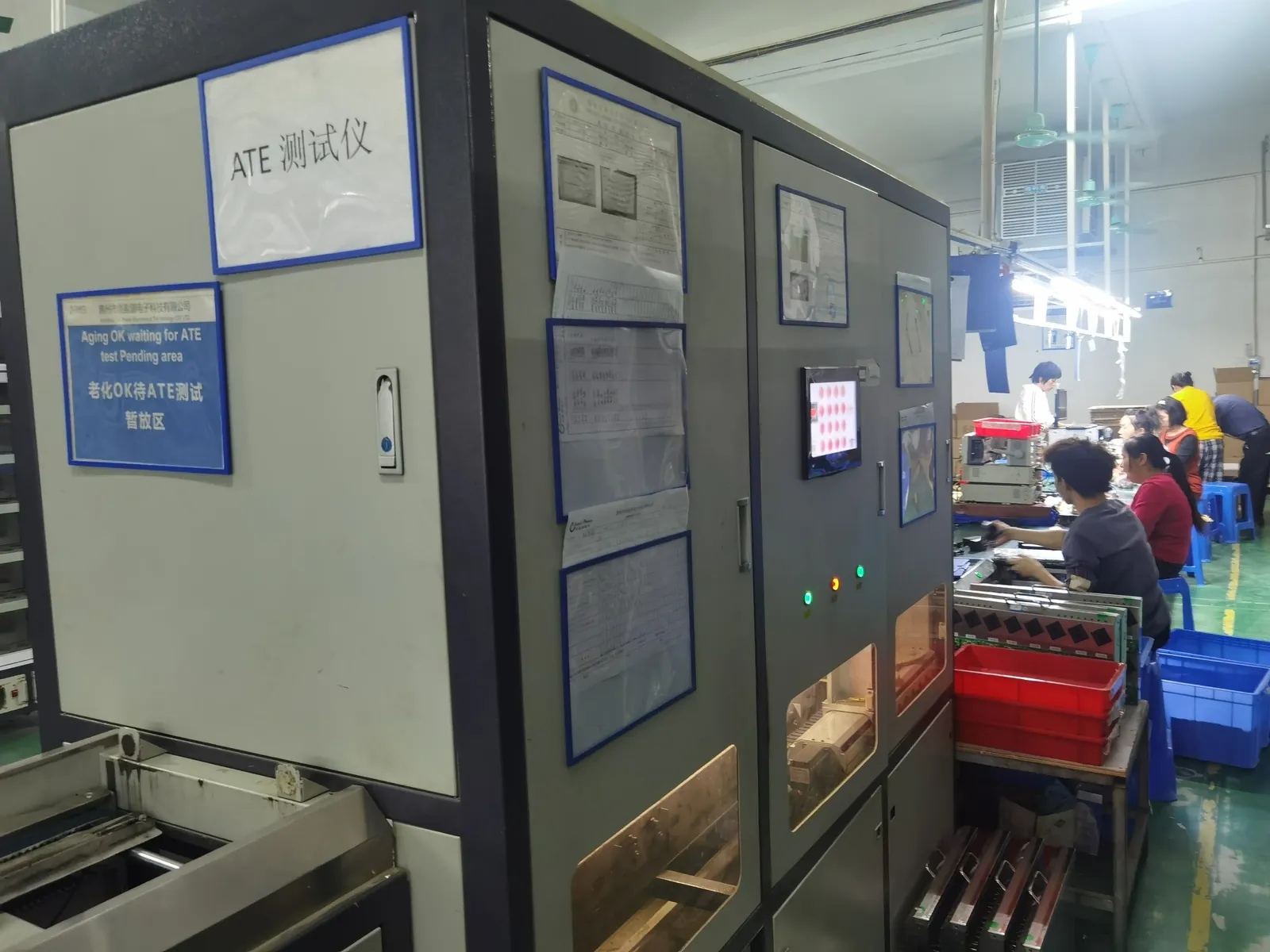
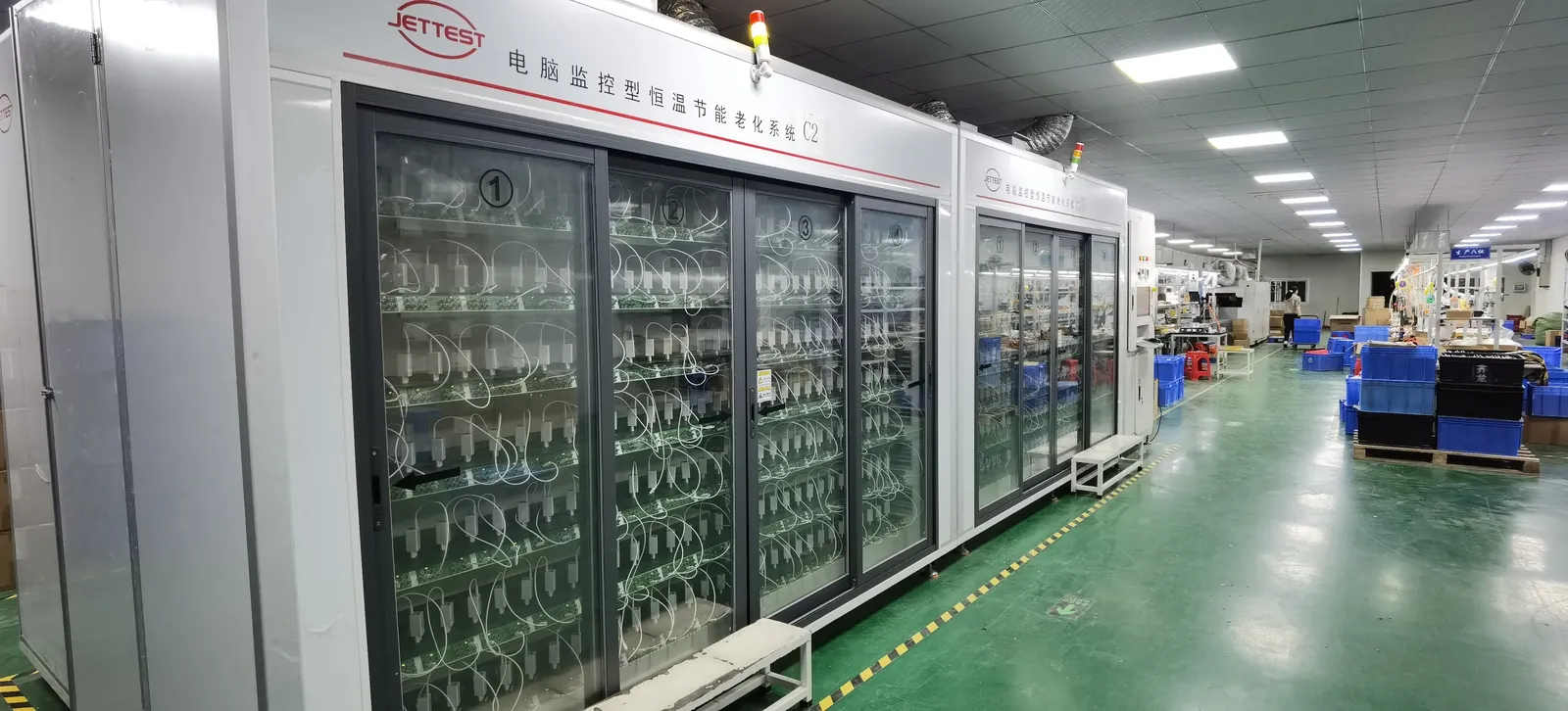
| Reliability | 100% ATE + burn-in; written change control | Change control protects the certificate |
Frequently asked questions
Does a power supply need INMETRO certification in Brazil?
Yes — power supplies, chargers and adapters fall inside INMETRO’s compulsory certification scope. Certification involves testing and, depending on the scheme, assessment of the manufacturing site, and the product must carry the certification marking.
Do I also need ANATEL approval?
Only if the product has radio or telecom function. A plain power supply does not; a charger with Bluetooth or Wi-Fi does, and it then needs both approvals on separate timelines.
Does a phone charger need ANATEL certification?
Published guidance on this is inconsistent, and you should not rely on a general answer. Some sources treat chargers as accessories within ANATEL’s terminal-equipment scope, others apply ANATEL only where radio function exists. Confirm the classification for your specific product with a Brazilian certification body, and budget for both if it is plausible.
Who can hold the INMETRO certificate?
A Brazilian legal entity. A foreign manufacturer cannot hold it directly, which means the holder — whether your own Brazilian company, a distributor or a representative — controls your market access. Decide it deliberately and write down what happens on termination.
Which plug does Brazil require?
NBR 14136, the Brazilian plug standard. It is a national standard rather than an imported one, it comes in more than one current rating, and it forms part of the certified configuration — so it cannot be substituted later without consequence.
Is 127V or 220V correct for Brazil?
Both are used nationally, at 60 Hz. The practical answer is a wide-range input covering both, because a single-voltage product forces a regional stock split that most brands would rather avoid.
Can we use our existing IEC test reports?
They may be a useful starting point, but they are not Brazilian certification. Brazil adopts the international standards as national documents with its own conformity process, so the certificate is a Brazilian procedure regardless of what testing already exists.
How long does Brazilian market access take?
The certification is usually the long pole, and it starts from a locked design rather than a finished shipment. Appoint the local entity early, keep the design frozen, and budget samples for testing; the schedule is usually set by sequence rather than by regulator speed.
What MOQ and lead time apply for Brazilian programmes?
From 200 pcs per model at Paiyi Power, with samples in about a week and first production 5–6 weeks after sample approval. Certification status varies by model and by market, and we do not claim INMETRO or ANATEL approval for every model — the Brazilian certificate is per model and held by a Brazilian entity.
Sources
- INMETRO — Brazilian conformity assessment and compulsory certification
- ANATEL — telecommunications and radio equipment homologation
- ABNT — Brazilian standards, including NBR 14136 and the NBR IEC series
- IEC — 62368-1 safety standard adopted in Brazil as ABNT NBR IEC
- Receita Federal — Brazilian import taxation and customs procedures
Related on this blog: power adapter certification by country, shipping power adapters from China, power adapter OEM agreement guide, low MOQ power adapter OEM/ODM.