

GaN Charger OEM 100W+: The Complete Selection Guide
Published: September 2026
Reading time: 14 min
Audience: Brand owners and procurement leads sourcing a GaN Charger OEM 100W+ for 100W–140W multi-port builds, who need a selection checklist that separates a real GaN OEM from a trading desk relabeling a reference design.
By Han — Paiyi Power, a Huizhou-based power supply OEM/ODM (GaN chargers 5W–240W, designed to USB PD 3.2 with SPR AVS) that holds CE/CB/FCC/RoHS/ErP and ISO 9001, at MOQ 200 pcs per model. When you brief a GaN Charger OEM 100W+, the spec sheet is only half the story — the other half is whether the factory owns the build.
Last updated: 28 September 2026.
Contents
Direct answer: how to choose a GaN Charger OEM 100W+
Choosing a GaN Charger OEM 100W+ comes down to five checks: the GaN topology and the PD 3.2 (SPR AVS) controller, the thermal proof at full load, the multi-port power-sharing logic, the safety and EMC certs tied to your exact model, and the factory’s owned process — manual assembly, 100% ATE, burn-in. A real GaN Charger OEM 100W+ shows you the pilot data and the line; a trading desk shows you a render. This guide walks the full selection, from the spec brief to the first production lot, so the 140W build you approve is the build you receive at volume.
Why a GaN Charger OEM 100W+ beats a 65W charger
A 65W GaN charger covers a thin-and-light laptop; a GaN Charger OEM 100W+ covers the 140W creator laptop, the two-laptop workstation, and the bundled travel kit your brand can actually premium-price. The jump from 65W to 140W is not a bigger heatsink — it is a different power stage, more GaN die, a tighter thermal envelope, and PD 3.2 SPR AVS to hold 28V cleanly. If your product brief says “charge anything,” a GaN Charger OEM 100W+ is the right partner, because the 65W design simply cannot deliver the single-port peak your customers will test on day one.
The commercial case is just as clear. A GaN Charger OEM 100W+ build carries a higher bill of materials but a stronger margin and a clearer differentiation story than another 65W me-too SKU. Buyers in the EU, Brazil and North America are consolidating chargers; one 140W unit replaces two. Specifying with a GaN Charger OEM 100W+ also future-proofs the SKU against the next laptop refresh, so the tooling you pay for this year still sells next year without a re-spin.
Specs to brief your GaN Charger OEM 100W+
The fastest way to waste a GaN Charger OEM 100W+ engagement is a vague brief. Hand the factory a frozen spec, not a wish list: total output, port mix, input range, target case temperature, and the regional protection your market needs. The table below is the brief template we send to our own buyers before the first sample, because a precise brief is what turns a quote into a shippable 140W build instead of a sixth round of prototypes that all miss the same number.
| Parameter | What to specify | Why it matters |
|---|---|---|
| Total output & ports | 100W–140W, 2C1A or 3C | Sets the GaN stage count |
| PD 3.2 SPR AVS | Required above 100W | Enables 28V EPR + AVS |
| Input range | 100–240V, 50/60Hz | One global SKU |
| Thermal budget | Max case temp at 140W | Drives the enclosure |
| Connector | Fixed or interchangeable | Regional compliance |
GaN topology a GaN Charger OEM 100W+ should use
The topology is the heart of a GaN Charger OEM 100W+ build. At 140W the right answer is usually a two-stage design: a PFC front end followed by a high-frequency GaN DC-DC, often with a quasi-resonant or active-clamp flyback per port. A competent GaN Charger OEM 100W+ explains the stage count and the magnetics choice, not just the watt number. Ask which GaN device family sits on the board and how the layout keeps switching noise off the USB-C CC line, because that is where cheap 140W chargers fail compliance.
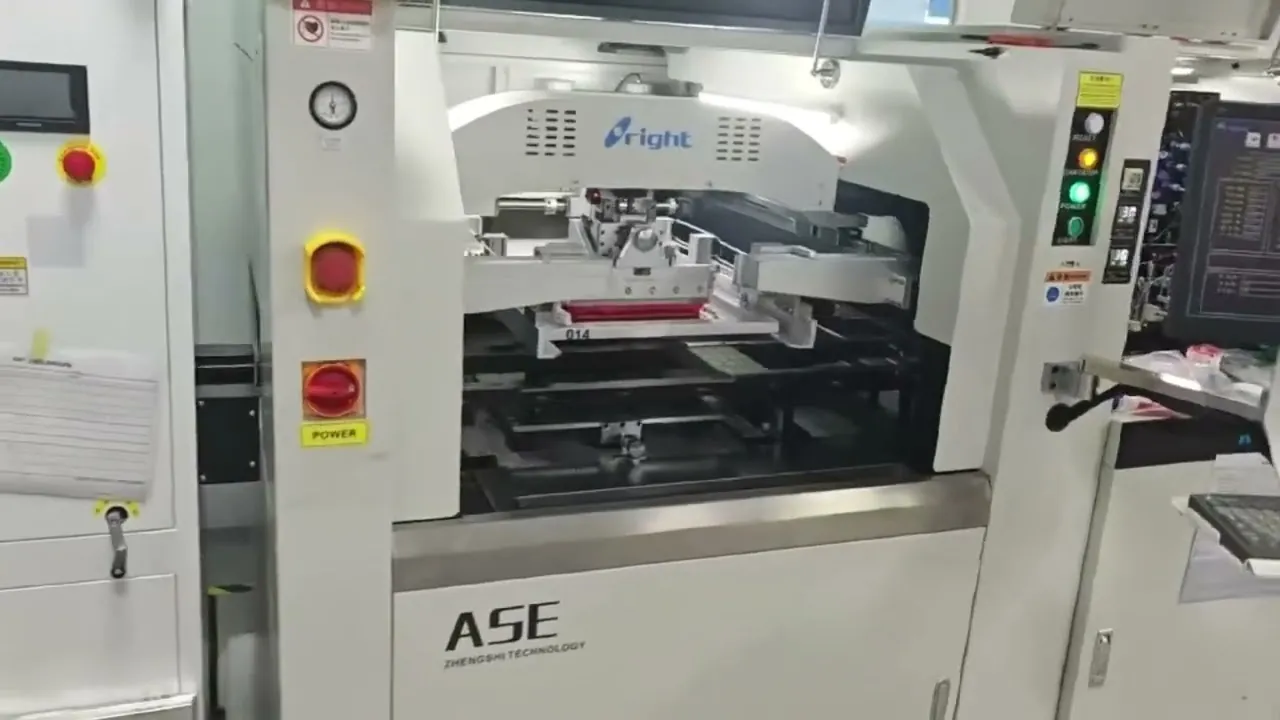
Do not let a GaN Charger OEM 100W+ quote you a single-stage 65W topology scaled up; it will run hot and drift. The PFC stage matters at 140W for power-factor and harmonics, and the DC-DC stage matters for efficiency and ripple. A factory that walks you through both, with the actual BOM and the loss budget per stage, is proving it owns the design. One that hands you only a marketing block diagram is relabeling someone else’s reference, and you will inherit the parts it could not tune.
USB PD 3.2 SPR AVS in a GaN Charger OEM 100W+ build
Above 100W, USB PD 3.2 with SPR AVS is the spec that lets a GaN Charger OEM 100W+ deliver 28V at up to 140W and hold the voltage under load. We design our 140W builds to the USB PD 3.2 specification with SPR AVS; we do not claim a USB-IF certification we cannot show a TID for. A buyer should ask the GaN Charger OEM 100W+ for the negotiated PDO table and an AVS sweep, because a charger that “supports PD 3.2” on paper but sags at 28V is a returns machine in the field.
The AVS (Adjustable Voltage Supply) part is what matters for a GaN Charger OEM 100W+: it lets the source track the laptop’s request between fixed PDOs, so the cable and connector stay within rating while the wattage climbs. Ask for the AVS range and the slew rate the controller enforces. A factory comfortable showing the negotiation trace is proving the firmware; one that changes the subject is proving it bought a module and hoped. SPD and EPR are the reason a GaN Charger OEM 100W+ engagement is harder than a 65W one, and the trace is the proof.
Thermal design a GaN Charger OEM 100W+ must prove
Thermals decide whether a 140W charger survives year three or cooks in month six. A serious GaN Charger OEM 100W+ shows you a thermal map at full load: case temperature, hotspot on the GaN device, and the enclosure’s ability to shed heat without a fan. Ask for the steady-state temperature after a 140W burn-in window, not the number at plug-in. A charger that hits 28V but crosses its rated case temp is a safety and reliability failure waiting for your brand name on the box.
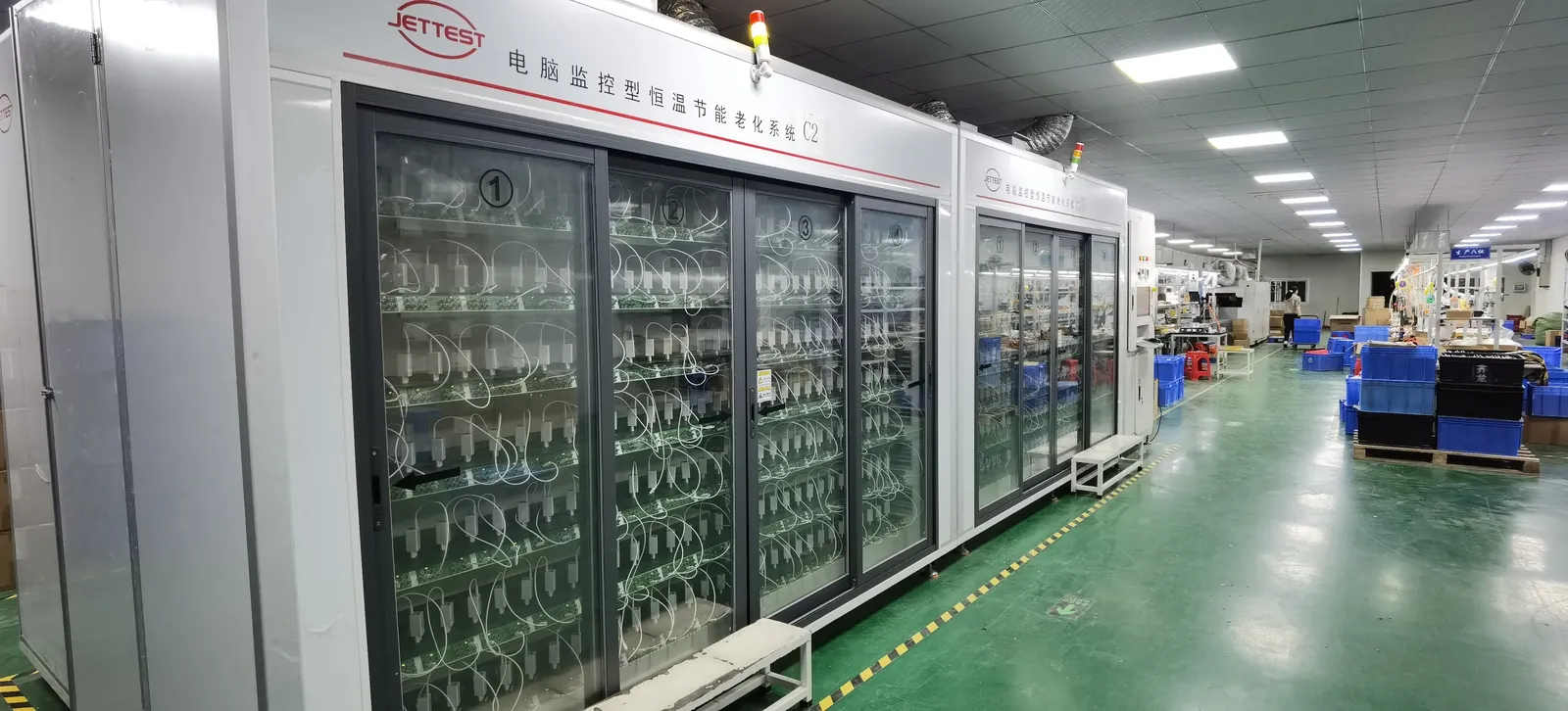
For a GaN Charger OEM 100W+, the thermal answer is usually a metal-faced enclosure, a bonded heatsink, and careful placement of the AC-DC and DC-DC stages. Ask what the factory changed between the 65W and 140W enclosure, because “same box, bigger chip” is not a thermal design. A GaN Charger OEM 100W+ that shows you the enclosure revision and the recorded case-temperature log is proving it engineered the wattage, not just spec’d it.
Multi-port power sharing for a GaN Charger OEM 100W+
Most GaN Charger OEM 100W+ builds are multi-port, and the power-sharing logic is where good factories separate from bad. A 140W 2C1A unit must decide what happens when both USB-C ports pull hard: does it hold 140W on one and idle the other, or split 65W/65W? The table below maps the common configs a GaN Charger OEM 100W+ should offer, so you can pick the sharing rule that matches how your customers actually plug in, instead of discovering the limit in a review.
| Config | Total power | Best for |
|---|---|---|
| 2C1A | 100W | Travel, laptop + phone |
| 3C | 140W | Studio, multi-laptop |
| 2C + DC barrel | 120W | Industrial, kiosk |
| 1C + magnetic | 100W | Wall, furniture fit |
The sharing rule a GaN Charger OEM 100W+ ships must be deterministic and documented, not “it figures it out.” Ask for the port-matrix table the firmware enforces, and test it: plug two laptops and read the negotiated watts. A factory that gives you the matrix in the pilot report is proving the logic; one that says “it balances automatically” is hiding a rule it never validated. Multi-port is the feature reviewers test first, so a GaN Charger OEM 100W+ must get it right before volume.
Safety and EMC a GaN Charger OEM 100W+ must clear
A 140W charger is a higher-energy source than a 65W one, so the safety and EMC bar is stricter. A GaN Charger OEM 100W+ must clear isolation (hipot), creepage and clearance at the 28V rail, and conducted and radiated emissions under IEC 62368-1 and the regional EMC rules. Ask which standard governs your exact model and request the test report, not a logo. A vague “certified” claim without a PDF is a flag, because customs and retailers will demand the same papers at shipment, and your brand pays the fine.
EMC is where scaled-up 140W designs fail, because the faster GaN switching throws more noise. A competent GaN Charger OEM 100W+ shows you the pre-compliance scan and the fixes it made — snubbers, shielding, filter placement — rather than a clean cert it bought on a different layout. Ask whether the CB report covers the exact 140W SKU or a 65W sibling; a cert that does not match the watt class is not a cert for your product. The safety and EMC story is the one a GaN Charger OEM 100W+ must tell with documents, not adjectives.
Prototype to pilot with a GaN Charger OEM 100W+
The prototype step is where a GaN Charger OEM 100W+ earns trust or loses it. Expect a functional sample in about 7 days, then a pilot run that freezes the BOM and sets the test limits. The pilot is not a bigger sample — it is the lot that defines what “consistent” means for every unit after it. A GaN Charger OEM 100W+ that treats the pilot as the moment to lock the build is one you can scale; one that keeps tuning into mass production is handing you drift you did not approve.

During the pilot, ask the GaN Charger OEM 100W+ for the ATE band set at that run and the first burn-in reject rate. Those two numbers become your acceptance baseline for the production order. A factory that shows you the pilot lot’s spread and the rework log is proving the process is in control; one that shows you a single golden sample is showing you the one unit it could make. The pilot is the contract for consistency, and a GaN Charger OEM 100W+ should treat it that way.
Production consistency a GaN Charger OEM 100W+ owes you
Consistency is the difference between a charger that works and a brand that lasts. A GaN Charger OEM 100W+ owes you 100% ATE on every unit — output, ripple, regulation, protection trip, and hipot at load — with a fixed pass/fail band set at the pilot. Ask for the recent lot data: mean, spread, and reject rate per station. A tight spread and a low, steady reject rate mean the process is in control; a wide or jumpy spread means your order inherits the drift the factory never caught.
The strongest signal from a GaN Charger OEM 100W+ is a data log, not a certificate. Ask to meet the QC lead and read the incoming-inspection record for the partnered SMT step, because that is where a 140W build is won or lost. A factory that volunteers its weakness — “we partner SMT, here is our incoming gate” — is more trustworthy than one that overclaims a line it does not own. Consistency is what a GaN Charger OEM 100W+ proves with records, and the records are what protect your 50,000th unit.
The SMT step at a GaN Charger OEM 100W+
Most power supply OEMs, including Paiyi Power, do not own an SMT line — they hold a stake in a Tier-1 SMT partner (Fuji NXT / M3S) and own the rest. A GaN Charger OEM 100W+ must verify the handoff, not assume it. Ask to see the incoming-inspection record for the PCBA: X-ray or AOI evidence, BOM verification against the frozen list, and the lot-rejection rule. The partnered line is fine if the incoming gate is real; it is a risk only when the factory trusts the partner blindly.
Be precise in your notes: call a partnered line a “Tier-1 SMT partner,” never “our SMT factory,” or the claim collapses under your own customer’s audit. A GaN Charger OEM 100W+ that answers the SMT question with the partner’s name and its own incoming check is honest; one that claims ownership of a line it does not hold is misrepresenting capacity. The accurate phrasing — “the SMT line a GaN Charger OEM 100W+ holds a stake in” — is what you want in writing, because it survives the second audit your own buyer runs on you.
Field returns and warranty a GaN Charger OEM 100W+ owns
A 140W charger that fails in the field is an expensive return, so the warranty stance a GaN Charger OEM 100W+ takes tells you how much it trusts its own build. Ask who owns the failure analysis, what the RMA turnaround is, and whether the factory keeps a retained sample from each lot for comparison. A factory that keeps the pilot lot and the production lots side by side can trace a return to a specific change; one that “looks into it” with no sample is guessing with your brand.
The field-return discipline a GaN Charger OEM 100W+ shows should mirror its incoming gate: a logged failure mode, a corrective action, and a change-control note if a part shifted. Ask for the last quarter’s return reasons and what changed afterward. A factory that closes the loop is one you can scale with; one that replaces units and moves on is exporting its drift to your customers. Warranty is the long tail of consistency, and a GaN Charger OEM 100W+ should own it as part of the build, not as a separate cost center.
MOQ and lead time with a GaN Charger OEM 100W+
A GaN Charger OEM 100W+ engagement should state MOQ and lead time in writing before you commit tooling. A typical competent OEM runs around four lines, up to 150,000 units a month, an MOQ near 200 pcs per model, and a realistic 5–6 week lead after an approved sample. The table below is the capacity frame we give buyers, so the number you approve is the number you get, and the floor you can visit matches the claim you were quoted.
| Item | Paiyi standard | Note |
|---|---|---|
| MOQ | 200 pcs / model | Half-custom 500–1000 |
| Lead time | 5–6 weeks | After approved sample |
| Capacity | 150,000 / mo, 4 lines | Realistic, not peak |
| Sample | 7 days | Functional, not golden |
If a GaN Charger OEM 100W+ quotes a two-week lead on a custom 140W build, treat it as a modified-standard unit mislabeled or a fantasy. Ask for the current backlog and the last three orders’ actual ship dates versus quoted. A factory with a tight, honest backlog record is one you can rely on; one with vague dates is one whose promises will slip into your launch window. MOQ and lead time are planning inputs, not sales points, and a GaN Charger OEM 100W+ should hand you both as facts.
How Paiyi Power runs a GaN Charger OEM 100W+ build
For transparency, here is how Paiyi Power runs a GaN Charger OEM 100W+ build. We are a Huizhou-based power supply OEM/ODM (founded Shenzhen 2015, Huizhou plant 2019, ~50 people) building GaN chargers 5W–240W, designed to USB PD 3.2 with SPR AVS. SMT runs at the Tier-1 factory we hold a stake in (Fuji NXT / M3S); the board returns to Huizhou for incoming inspection, manual assembly, 100% ATE and burn-in. We hold CE, CB, FCC, RoHS, ErP and ISO 9001, and our 140W builds are never claimed as USB-IF certified without a TID we can show.
On a GaN Charger OEM 100W+ project we hand you the frozen BOM, the pilot-set test limits, and the model-specific CB/CE/FCC/RoHS/ErP PDFs before the call. You can walk the assembly, QC, ATE and burn-in lines live or by video, meet the QC lead, and read the incoming-inspection record for the partnered SMT step. MOQ starts at 200 pcs per model, capacity runs to 150,000 units a month across four lines, and lead time is a realistic 5–6 weeks. We name the partnered line precisely, because an honest build is the start of a supply relationship you can scale to six figures.
Frequently asked questions
These are the GaN Charger OEM 100W+ questions buyers ask most, answered without the sales gloss.
What does a GaN Charger OEM 100W+ actually build for you?
A GaN Charger OEM 100W+ builds the full power stage — PFC front end, GaN DC-DC, PD 3.2 controller, magnetics, enclosure and the multi-port sharing logic — and owns assembly, 100% ATE and burn-in. It is not a relabel: the factory freezes the BOM at pilot, sets the test band, and ships to that baseline. The value is the thermal and EMC engineering that keeps 140W safe at volume, which a trading desk cannot tune. A real GaN Charger OEM 100W+ shows you the pilot data and the line, not just a render.
Is USB PD 3.2 (SPR AVS) required above 100W?
For a clean 140W single-port peak, yes — SPR AVS is what lets a GaN Charger OEM 100W+ hold 28V and track the laptop’s request between fixed PDOs. We design our 140W builds to the USB PD 3.2 specification with SPR AVS; we do not claim a USB-IF certification without a TID we can show. Ask the GaN Charger OEM 100W+ for the negotiated PDO table and an AVS sweep, because a charger that sags at 28V is a field-return waiting to happen.
How should multi-port power be shared at 100W+?
The sharing rule must be deterministic and documented. A 140W 2C1A unit should hold 140W on one port when the other is idle, then split by a fixed matrix when both pull. A GaN Charger OEM 100W+ should give you the port-matrix the firmware enforces and let you test it with two laptops. “It balances automatically” is not an answer; the matrix is. Multi-port is the feature reviewers test first, so the GaN Charger OEM 100W+ must get it right before volume.
What thermal proof should a GaN Charger OEM 100W+ show?
Steady-state case temperature and the GaN hotspot after a 140W burn-in window, plus the enclosure revision versus the 65W version. A GaN Charger OEM 100W+ that shows a thermal map at full load is proving it engineered the wattage; one that quotes only plug-in temperature is hiding drift. Ask for the recorded case-temperature log from the pilot lot. Thermals decide whether the charger survives year three, and the GaN Charger OEM 100W+ must prove them with data, not adjectives.
Do I need my own SMT line for a 100W+ GaN build?
No. Most OEMs, including Paiyi Power, hold a stake in a Tier-1 SMT partner (Fuji NXT / M3S) and own the rest. What a GaN Charger OEM 100W+ must prove is the incoming-inspection gate for the PCBA: AOI or X-ray, BOM verification, lot-rejection rule. Call it a “Tier-1 SMT partner,” never “our SMT factory.” The partnered line is fine if the gate is real; the honest phrasing is what survives your own customer’s audit.
What certs must a GaN Charger OEM 100W+ hold?
The certificates tied to your exact 140W model: CB (IECEE) report, CE declaration, FCC and RoHS/ErP paperwork, and ISO 9001, with matching model numbers and dates. A competent OEM holds CE/CB/FCC/RoHS/ErP and ISO 9001 as standard; UL/ETL/UKCA are buyer-funded. The governing safety standard is IEC 62368-1. Any vague “certified” claim without a PDF is a flag, because customs and retailers will demand the same papers at shipment.
How is production consistency proven at volume?
With 100% ATE on every unit — output, ripple, regulation, protection trip, hipot at load — and a fixed pass/fail band set at the pilot. A GaN Charger OEM 100W+ should show recent lot data: mean, spread, reject rate per station. A tight spread and a steady low reject rate mean the process is in control; a wide or jumpy spread means your order inherits drift. The data log, not the certificate, is the proof a GaN Charger OEM 100W+ owes you.
What MOQ and lead time is realistic for 100W+ GaN?
A typical competent OEM runs about four lines, up to 150,000 units a month, MOQ near 200 pcs per model, and a realistic 5–6 week lead after an approved sample. If a GaN Charger OEM 100W+ quotes two weeks on a custom 140W build, treat it as a mislabeled standard unit or a fantasy. Ask for the current backlog and the last three orders’ actual ship dates. Capacity and lead time are facts a GaN Charger OEM 100W+ should hand you in writing.
How does Paiyi Power handle a GaN Charger OEM 100W+ build?
We are a Huizhou OEM/ODM (Shenzhen 2015, Huizhou 2019, ~50 people) building GaN 5W–240W to USB PD 3.2 with SPR AVS. SMT runs at the Tier-1 line we hold a stake in; the board returns for incoming inspection, manual assembly, 100% ATE and burn-in. We hold CE/CB/FCC/RoHS/ErP and ISO 9001, show model-specific cert PDFs, and name the partnered line precisely. MOQ starts at 200 pcs per model, capacity to 150,000/month, lead 5–6 weeks — an honest GaN Charger OEM 100W+ build you can scale.
Sources
- IEC — IEC 62368-1 (audio/video/ICT equipment safety)
- USB Implementers Forum — USB Power Delivery specification
- Energy Star — External Power Supplies program
- ISO — ISO 9001 (quality management systems)
- IECEE — CB Scheme (global certification for electrical equipment)
Related reading
- High-power charging: premium ODM for 100W–140W GaN
- Custom power supply manufacturer: the complete OEM process guide
- Power supply factory audit: 12-point complete checklist
- Inside Paiyi Power: R&D to 100% inspection
- Certifications we hold (CE/CB/FCC/RoHS/ErP, ISO 9001)
- Power solutions by application