Custom Medical Power Supply: A Selection Guide for Medical Device OEMs
Published: September 2026
Reading time: 9 min
Audience: medical device OEMs, R&D engineers, and procurement teams specifying power supplies for patient monitors, ventilators, diagnostic imaging, and home-care equipment
By Han — Paiyi Power, a power adapter manufacturer building custom and modified-standard supplies to IEC 60601-1 design requirements, including low-leakage and 2×MOPP isolation builds.
Last updated: 8 September 2026.
Contents
Direct answer: when does a medical device need a custom power supply?
When the device touches a patient, or when the leakage, EMC or mechanical envelope of a catalogue adapter will not clear your regulatory filing. A standard CE-marked adapter is often sufficient for equipment that sits away from the patient and has no applied part. Once you have an applied part, a cardiac (CF) classification, a tight leakage budget, a fanless sealed enclosure, or a hospital EMC environment to survive, a custom medical power supply stops being a preference and becomes the cheapest route to compliance. The decision really turns on four things: MOPP isolation, applied-part classification, leakage current, and EMC — all four are explained below, with the point at which each one forces you off the shelf.

Why the power supply is a regulated component, not an accessory
In consumer electronics the adapter is a commodity bought last and swapped freely. In medical devices it is part of the safety case. The supply determines leakage current, contributes to EMC behaviour, sets the thermal profile of the enclosure, and appears by name in your technical documentation. Change it after approval and you may trigger a re-assessment. That is why device teams specify the supply early and freeze it — and why the supplier’s documentation matters as much as the unit itself.
IEC 60601-1 in practice: MOOP and MOPP
IEC 60601-1 is the general safety standard for medical electrical equipment. Its isolation concept is expressed in Means of Protection, and the distinction that drives design is between protecting the operator and protecting the patient.
| Term | Protects | Typical requirement |
|---|---|---|
| MOOP (Means of Operator Protection) | The user or operator | Comparable to ordinary IT equipment insulation |
| MOPP (Means of Patient Protection) | The patient | Stricter; patient-connected designs generally require two independent means (2×MOPP) |
In practice, a patient-connected design calls for 2×MOPP between the mains and the patient connection, which means reinforced insulation and a correspondingly higher dielectric withstand than a commercial adapter is built for. Confirm the exact withstand voltage against your working voltage and the edition of the standard you are filing to; do not lift a figure from a datasheet written for IT equipment.
Applied parts: B, BF and CF
The applied part is the portion of the device that contacts the patient. Its classification sets how much leakage current is tolerable.
- Type B — body contact, generally not conductive and not patient-connected in a way that carries current; the least stringent.
- Type BF — “body floating”; an isolated applied part, common on patient monitors and ultrasound. Patient leakage limits are tighter than B.
- Type CF — “cardiac floating”; for devices that may contact the heart directly, such as ECG and defibrillator-adjacent equipment. This is the tightest category by a wide margin.
The practical consequence: a supply comfortably compliant for a BF monitor can be unusable for a CF design purely on leakage. Decide the applied-part classification before selecting the supply.
Leakage current: the number that decides the design
Leakage is the specification that most often eliminates catalogue adapters. The figures below are illustrative of the relative severity; the governing limits come from the edition of IEC 60601-1 you file to and must be read from your own test report.
| Applied part | Relative patient leakage budget | What it means for the supply |
|---|---|---|
| Type B | Most permissive | Many standard adapters qualify |
| Type BF | Roughly an order of magnitude tighter than B | Low-leakage design usually required |
| Type CF | Tightest, typically tens of microamps and below | Purpose-built low-leakage supply; standard parts rarely qualify |
Leakage is a property of the whole assembly, not just the adapter: cable type, length, filtering and the end equipment all contribute. Ask your supplier for leakage measured with your cable and, ideally, in your enclosure.
EMC in the hospital environment: IEC 60601-1-2
The collateral standard IEC 60601-1-2 governs electromagnetic compatibility for medical equipment, and it is stricter than commercial EMC in both emissions and immunity. Hospitals are dense RF environments: electrosurgical units, RFID, wireless telemetry and staff handsets all coexist. A supply that passes EN 55032 for office equipment can still fail medical immunity testing, and switching adapters are a common source of both radiated emissions and conducted disturbance.
Plan for EMC as a system test. Mitigations include a medically rated supply with appropriately filtered output, correct cable shielding and routing, and early pre-compliance testing rather than a single pass at the end.
Three levels of customisation
“Custom” is not a single thing. Most projects fall into one of three tiers, and picking the right tier is the fastest way to control cost and lead time.
| Level | What changes | Best for |
|---|---|---|
| 1. Modified standard | Existing platform; new label, connector, cord length, colour | Fastest route, lowest tooling cost |
| 2. Value-add engineering | Output tuning, lower leakage, enhanced filtering, mechanical changes | Most medical projects |
| 3. Full custom | New topology, unique enclosure, bespoke compliance case | High volume or genuinely unusual requirements |
When a standard adapter is genuinely enough
Not every medical product needs a bespoke supply. A standard medical-grade adapter is usually adequate when the device has no patient-connected applied part, sits in a low-risk environment, has ordinary EMC requirements, and the mechanical and thermal envelope is unconstrained. Common failure points for standard parts, though, are:
- Leakage above your applied-part budget.
- Insufficient MOPP for patient-connected use.
- EMC immunity that fails in a hospital RF environment.
- Enclosure and thermal limits in a sealed or fanless device.
- Connector, cable or strain-relief that does not survive hospital cleaning and handling.
- Documentation gaps — no model-specific report, or no change-control commitment.
What you can customise
Electrical
Output voltage and tolerance, current rating, low-leakage design, hold-up time, inrush behaviour, and multi-output configurations.
Mechanical
Enclosure dimensions and shape, desktop versus wall-mount, connector type and orientation, cable length and strain relief, and mounting features.
Environmental
Operating temperature range, sealed or fanless operation, ingress protection, altitude rating, and resistance to cleaning agents.
Compliance
Target insulation (2×MOPP), leakage category, EMC performance, and the specific set of approvals and reports required for your markets.
GaN in medical power supplies
GaN is not a medical feature, but its properties suit medical constraints. Lower switching losses mean less heat, which matters in a sealed fanless enclosure; higher efficiency allows a smaller supply at the same output; and the reduced thermal load helps long-life designs. Where GaN is most useful in medical equipment is exactly where it is useful industrially: sustained load in a confined space. See GaN power adapters beyond phone chargers for the underlying physics.
Reliability: MTBF, component life and what to ask for
Every supplier quotes MTBF; almost none quote it on the same basis. A predicted MTBF figure depends on the methodology, the assumed ambient temperature, and the electrical stress — so it is only comparable when all three are stated. More useful in practice:
- Electrolytic capacitor life at your operating temperature, since that component usually sets the practical life of a supply.
- Derating curve — continuous output versus ambient temperature.
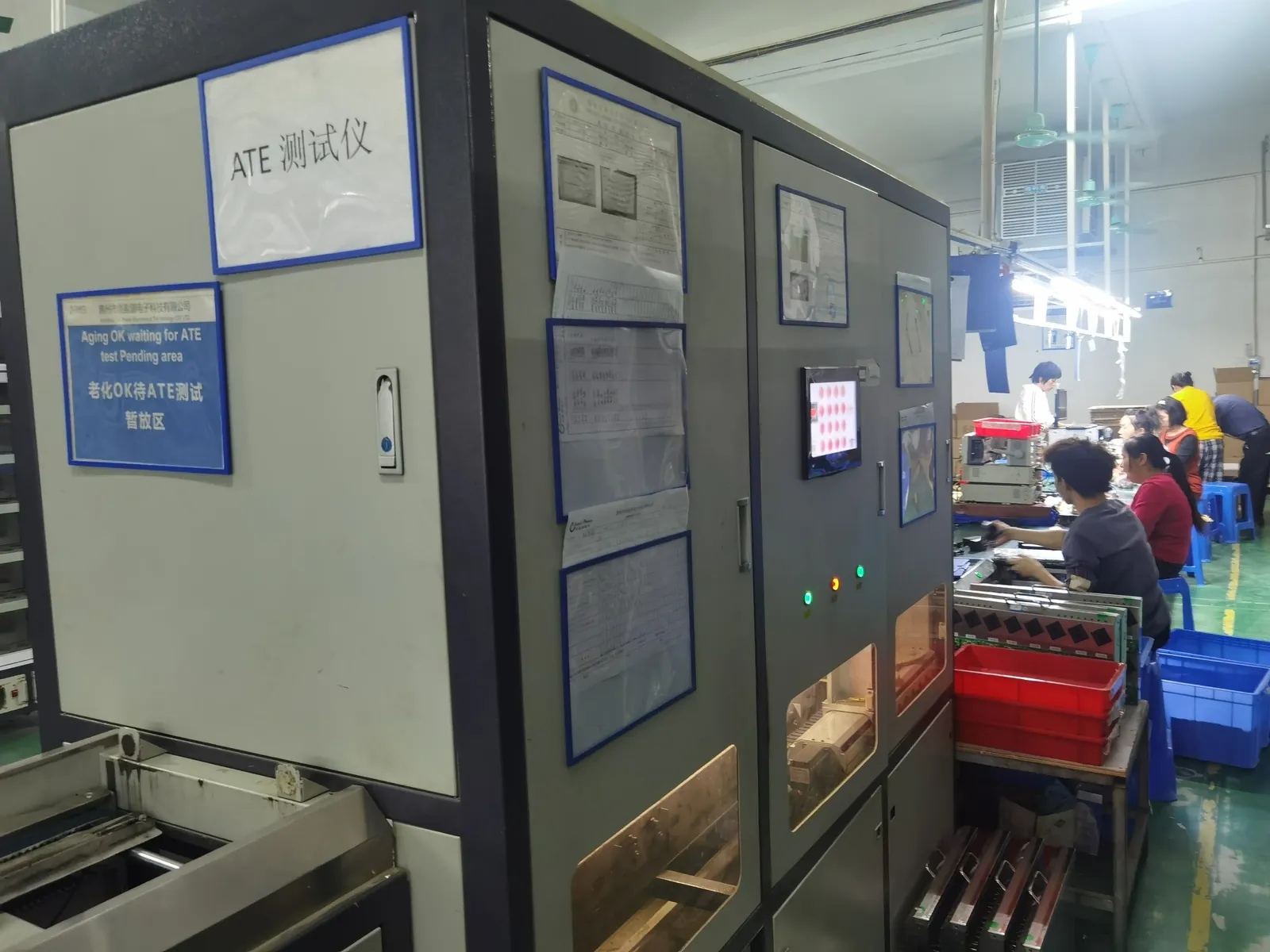
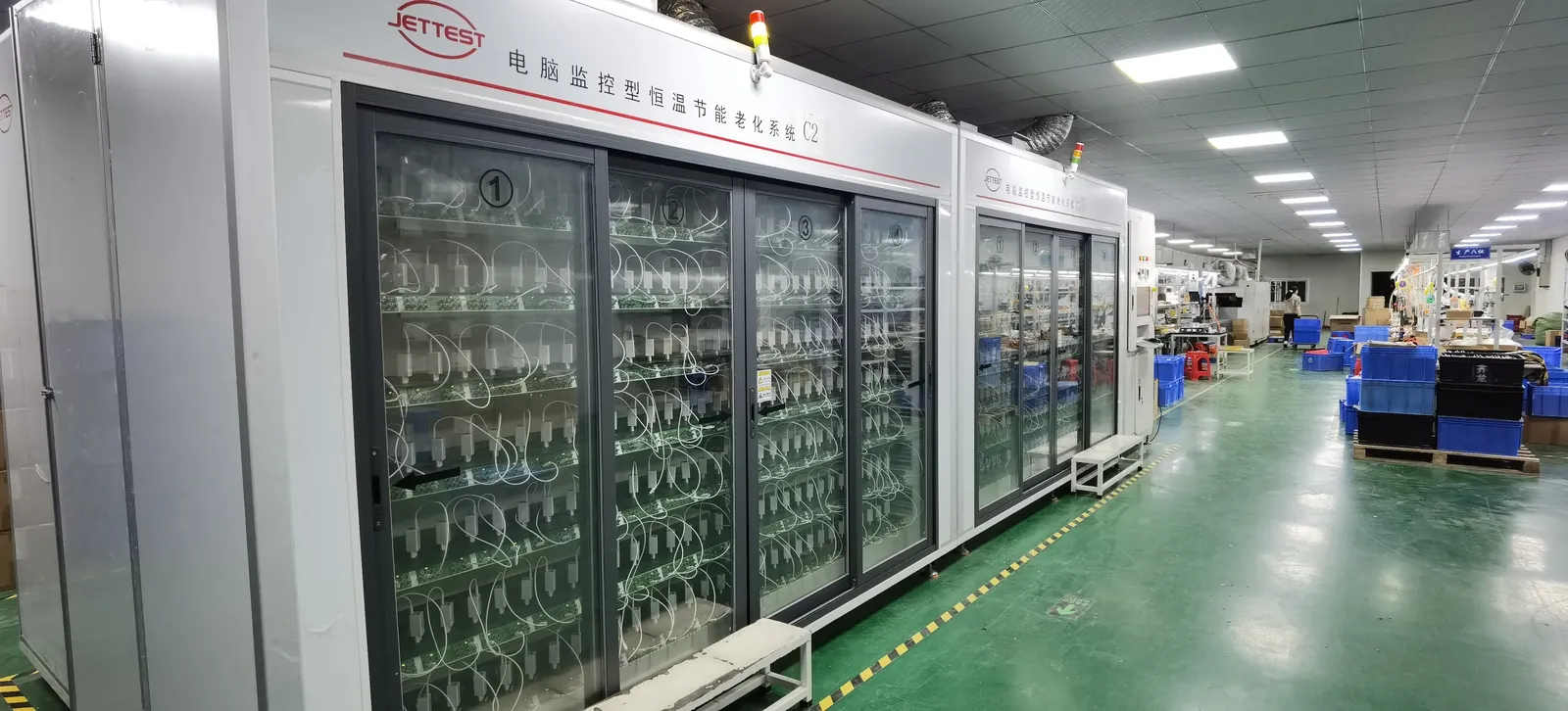
- Burn-in policy and what percentage of units receive it.
- Change-control commitment: written notice before any component or design change, because an unannounced change can invalidate your filing.
Documentation and certification you should receive
- A model-specific test report for safety, not a family certificate.
- Leakage current measurements taken with your cable configuration.
- EMC test evidence against IEC 60601-1-2.
- Insulation diagrams showing creepage, clearance and the MOPP path.
- Certificates with verifiable numbers; Paiyi Power holds CE, CB, FCC and ISO 9001.
- A written change-control and traceability commitment.
Efficiency rules still apply to external supplies in most markets; see external power supply efficiency standards for DOE Level VI and EU ErP thresholds.
The custom development process, step by step
- Requirements freeze — output, applied-part class, leakage budget, environment, target approvals, volume.
- Feasibility and tier selection — modified standard, value-add, or full custom.
- Engineering proposal with a written specification and quotation.
- Sample build and bench characterisation.
- Pre-compliance testing for safety and EMC, with corrective action if needed.
- Formal certification at an accredited laboratory.
- Pilot run, then production with change control in place.
How to choose an OEM partner: checklist
| Question | Why it matters |
|---|---|
| Do you hold a medical device QMS such as ISO 13485? | Indicates a system built for regulated supply, not just ISO 9001 |
| Can you show a model-specific 60601-1 report? | Family or generic certificates do not cover your SKU |
| Will you commit to change control in writing? | Silent component changes can invalidate your filing |
| Is EMC addressed at design stage or only at the lab? | Late EMC failures are the most common schedule risk |
| What is the MOQ and how is low volume handled? | Device programmes often start small; big OEMs decline them |
| Can you supply spare parts for the device’s service life? | Medical products outlive consumer product cycles |
Paiyi Power builds custom and modified-standard medical adapters with MOQ from 200 pcs per model, 5–6 week first-production lead time, ISO 9001 quality system, and 100% inspection before shipment. Certification is handled per model, and we supply the model-specific report rather than a generic claim. If you are weighing supplier types, see manufacturer vs trading company vs big OEM; for non-medical custom work, see non-standard power adapter engineering.
Frequently asked questions about medical power supply
When is a custom medical power supply necessary?
When patient contact, leakage, EMC or enclosure constraints rule out a catalogue part. If the device has a BF or CF applied part, plan on custom or a modified-standard low-leakage design.
What is the difference between MOOP and MOPP?
MOOP protects the operator; MOPP protects the patient. Patient-connected designs generally require 2×MOPP, meaning two independent means of protection and reinforced insulation.
What do B, BF and CF mean?
Applied-part classifications. B is least stringent, BF is an isolated (“floating”) body-contact part, and CF is cardiac floating — the tightest leakage category by a wide margin.
How low does leakage current need to be?
It depends on your applied-part classification and the edition you file to. CF designs sit in the tens of microamps or below; BF allows roughly an order of magnitude more. Take the number from your own test report.
Does a medical adapter still need EMC testing?
Yes, to IEC 60601-1-2. It is stricter than commercial EMC on both emissions and immunity, and the supply is a common contributor to failures.
Can a standard adapter be modified instead of fully custom?
Often yes. A modified standard — new connector, cord, label and tuned output — is the fastest and cheapest tier, and covers many programmes.
Does GaN help in medical equipment?
Yes, mainly thermally. Lower losses mean less heat, which is what makes a sealed or fanless medical enclosure viable at higher power.
What MOQ applies to a custom medical adapter?
From 200 pcs per model at Paiyi Power, which suits device programmes that a large OEM would decline.
How do I avoid a silent design change breaking my approval?
Get change control in writing. Require advance notice of any component or design change, and keep the model-specific report tied to a revision.
Sources
- IEC 60601-1 and IEC 60601-1-2 — medical electrical equipment safety and EMC
- ISO — ISO 9001 quality management systems
- U.S. FDA — Medical devices
- European Commission — Medical device sector (MDR)
- USB-IF — USB Power Delivery for USB-C powered medical devices