
OEM Charger MOQ, Sampling and Lead Time: 3 Numbers to Get Right
Published: September 2026
Reading time: 12 min
Audience: First-time and repeat buyers who want realistic numbers before they commit: what MOQ really exists for, how long sampling and mass production take, and which fees move with each tier.
By Han — Paiyi Power, a Huizhou-based power supply OEM/ODM (GaN chargers and custom units 5W–240W, designed to USB PD 3.2 with SPR AVS) that quotes its OEM charger MOQ, sampling window and fee lines up front and holds CE/CB/FCC/RoHS/ErP and ISO 9001, at MOQ 200 pcs per model.
Last updated: 29 September 2026.
Contents
Direct answer: the OEM charger MOQ and timeline numbers that matter
Three numbers decide most power supply projects, so here they are without the build-up. First, the OEM charger MOQ: 200 pcs per model for a modified standard build — a proven catalog platform re-tuned to your output profile, connectors and housing — and 500–1,000 pcs for a full custom ODM design. Second, sampling: about 7 days when we are modifying an existing platform, and 2–4 weeks when we are designing from a blank schematic. Third, mass production: 5–6 weeks from an approved sample to shipment, set by material purchase and the 100% test and burn-in gate.
Around those three numbers sit the fees that move with each tier. Development, tooling and certification costs are carried by the buyer on a modified standard or custom build, and they appear as named line items in the quote — never folded into the unit price. The sections below show where each number comes from, what moves it, and which levers genuinely reduce it, so you can put realistic dates and budgets in front of your own stakeholders before you commit.
Why OEM charger MOQ exists: the three cost floors
A minimum order is not a sales tactic; it is where three cost curves cross. The first floor is component lots. Semiconductor and connector vendors ship in reels, trays and minimum quantities sized for thousands of units, and a small order still consumes the same reel of the parts that matter. The second floor is changeover: every model needs kitting, first-article verification, ATE limits loaded and a line slot reserved, and that setup cost is nearly identical whether the batch is 200 or 2,000 units.
The third floor is per-model qualification. Certification paperwork, incoming inspection and the frozen bill of materials are work that exists once a model exists, not once per unit. Spread that fixed work over 200 units and the per-unit burden is manageable; spread it over 40 and the economics stop working. A credible OEM charger MOQ tracks these real cost floors rather than an arbitrary round number — which is also why a quote far below them deserves a question about which gate is being skipped.
MOQ tiers: what 200 unlocks versus 500–1,000
MOQ follows the level of engineering a project needs, not the size of your company. The table below shows the four tiers we quote, the typical MOQ attached to each, and the timelines you should plan around.
| Project type | Typical MOQ | Sampling | Mass production | What you get |
|---|---|---|---|---|
| Catalog white label | Typically 100–200 pcs | Catalog sample, days | 5–6 weeks | A proven housing with your logo and packaging |
| Modified standard | 200 pcs per model | ~7 days | 5–6 weeks | A catalog platform re-tuned to your spec |
| Semi-custom | 200–500 pcs, typically | 1–2 weeks | 5–6 weeks | Modified circuit plus custom housing on a proven base |
| Full custom ODM | 500–1,000 pcs | 2–4 weeks | 5–6 weeks | A ground-up design: schematic, tooling, certification |
The 200-pc tier is where most buyers land. A modified standard build re-tunes a proven platform — output profile, connector mix, housing color, artwork — while keeping the certified topology and production test limits intact. That is what makes a 7-day sample and a 200-pc MOQ possible: the engineering risk was retired by the platform, so your budget buys customization, not discovery.
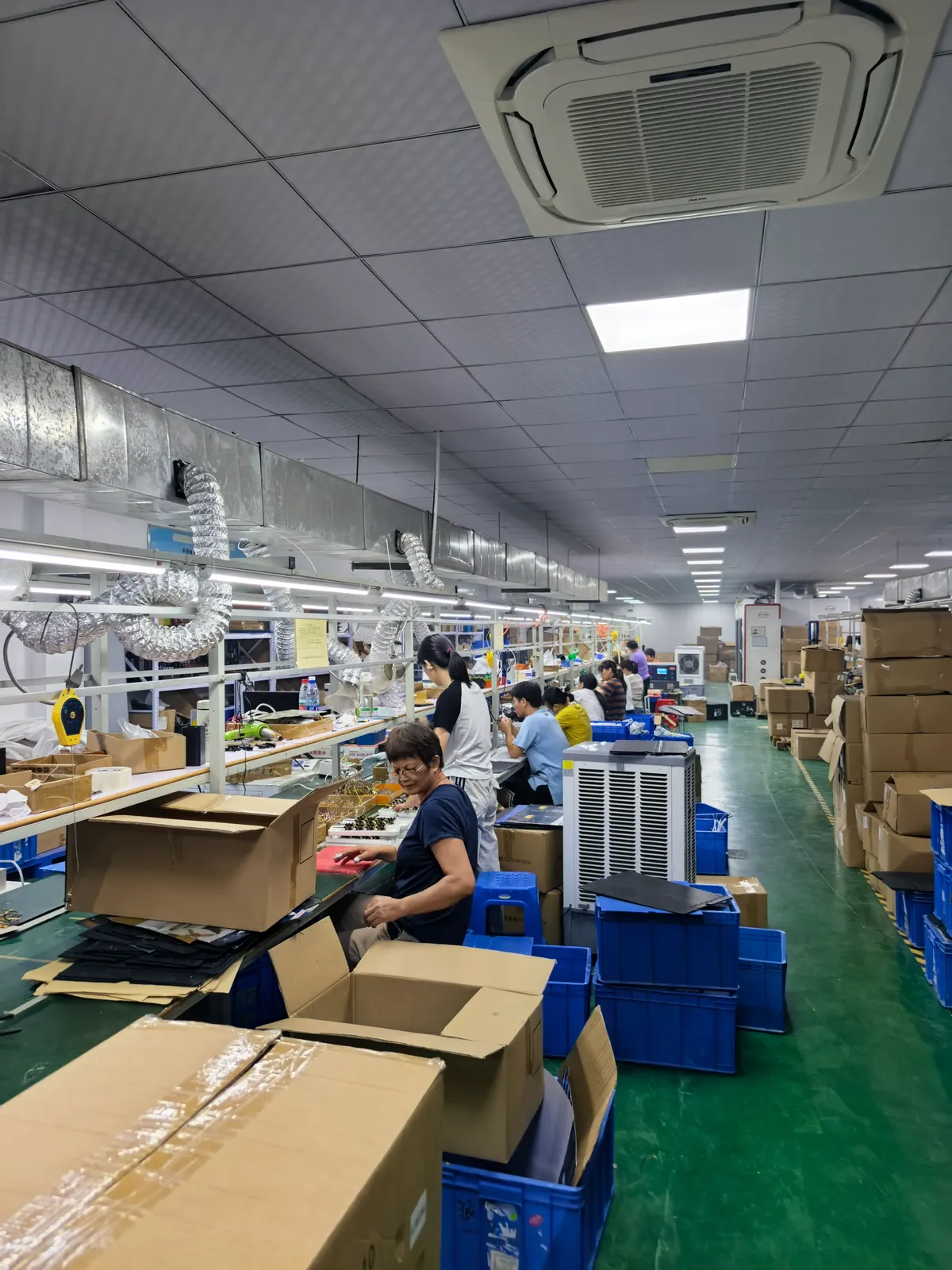
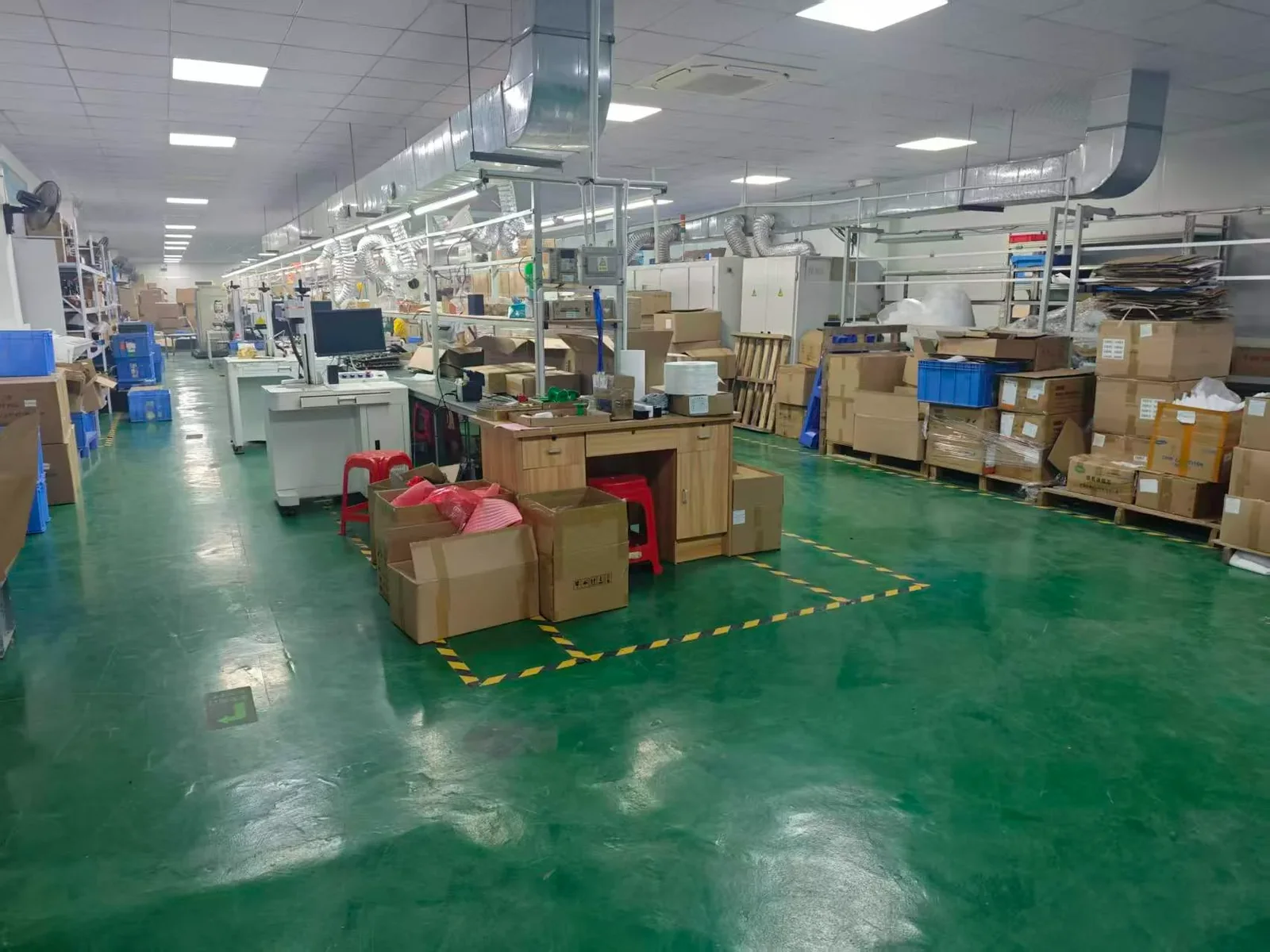
Full custom ODM starts at 500–1,000 pcs because the work is genuinely different: schematic capture, layout, housing tooling and a fresh certification file, all attached to a design that exists nowhere else. Paiyi Power has run engineering out of Shenzhen since 2015 and the Huizhou plant since 2019 — about 50 people across four assembly lines — so an ODM engagement here means senior engineers on the schematic, not a reseller forwarding a datasheet. For a map of the five levels between white label and full ODM, see our white label GaN charger comparison before you pick a tier.
Sampling: 7 days versus 2–4 weeks, and what moves it
Sampling is where a launch schedule is won or lost, and the two paths differ for a structural reason. When your spec lands on a modified standard build, the platform already exists: we re-tune the output profile, swap the connector set, cut a new label, and a sample is on the test bench in about 7 days. When the project is a full custom design, the weeks go into schematic capture, layout, and the first tooling shots of a housing that has never been molded — hence 2–4 weeks.
What moves the number is rarely the bench. A frozen BOM at RFQ, connectors that are in stock rather than on allocation, and one named approver on your side each save days; a spec that drifts mid-sample is what turns a week into three. Ask what the sample price includes and what it does not, because tooling and certification are separate line items, not sample costs.
Judge a sample by its data, not its looks. A serious sample arrives with ATE results — output voltage and current, ripple, regulation, protection-trip behavior — measured against the limits that production will use. Our custom power supply manufacturer guide walks each stage from RFQ to shipment, including what a sample pack should contain.
NRE, tooling and certification: who pays what
Stated plainly: on a modified standard or custom build, development, tooling and certification fees are carried by the buyer, quoted as named line items before you commit. The reason is straightforward — those costs exist the moment a model exists, whether or not it ships in volume, and a factory that hides them inside the unit price has to recover them somewhere. Burying them also locks you to that supplier, because moving the model later would mean paying the same fees again.
The table below shows the fee lines, who carries each, and when it recurs.
| Fee | Typical range | Who pays | When it recurs |
|---|---|---|---|
| Development / NRE | Quoted per project; typically a four-figure sum for a modified standard build | Buyer | Once per model |
| Housing tooling | Varies with size and finish; quoted before sampling starts | Buyer | Once per housing |
| Certification (CB/CE/FCC etc.) | Per scheme and watt class; quoted up front | Buyer, project basis | Per model and per renewal |
| Packaging plates | Modest; quoted per artwork | Buyer | Per artwork revision |
| White label (catalog) | No development or tooling fee | — | — |
White label is the exception: nothing is engineered, so there is no development or tooling fee to carry. When you compare quotes, put the fee lines side by side rather than comparing unit prices — the 12-point manufacturer checklist lists exactly which documents and disclosures to ask for at this stage.
Lead time from PO to shipment: the 5–6 week path
Mass production runs 5–6 weeks from approved sample to shipment, and the window is structural rather than padded. The table below breaks the path into its five stages and shows which dependency sets the pace at each step.
| Stage | Typical duration | Key dependency |
|---|---|---|
| Sample build | ~7 days or 2–4 weeks | Frozen BOM and connector stock |
| Sample approval | Days, driven by you | Your test sign-off and any spec tweaks |
| Material purchase | 1–2 weeks, typically | Long-lead components and housing molding |
| Assembly, 100% test and burn-in | 2–3 weeks, typically | Line scheduling and ATE capacity |
| Packing and shipment | ~1 week | Carton artwork approval and freight booking |
| Total, approval to shipment | 5–6 weeks | Cumulative across all stages |
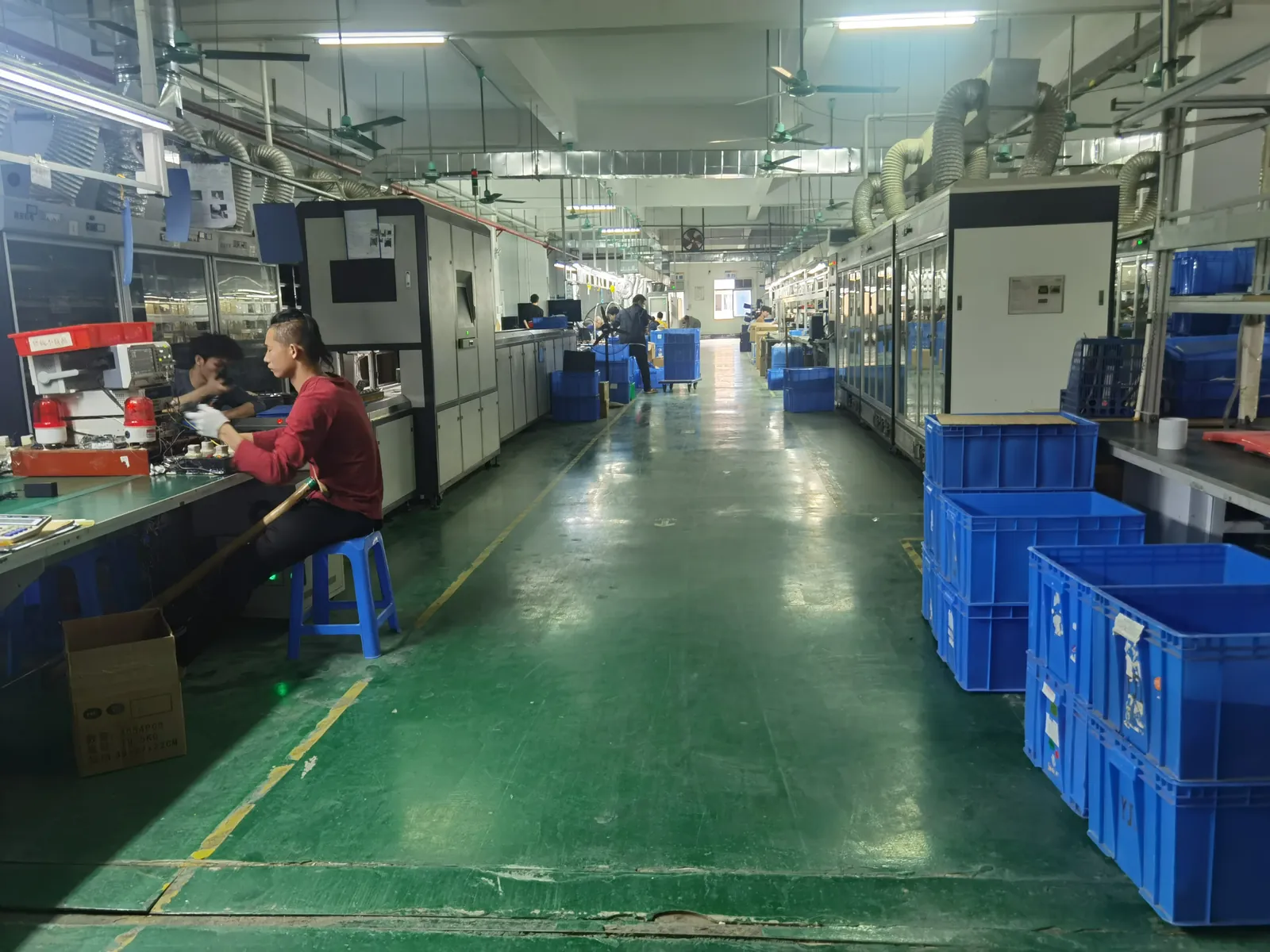
Material purchase dominates the window: long-lead components and housing molding set the earliest date assembly can start. The 100% test gate cannot be compressed either — every unit passes ATE functional test and burn-in at rated load before it is packed, and capacity for that work is finite. PCBAs are placed at the Tier-1 SMT factory Paiyi Power holds a stake in (Fuji NXT / M3S) and return to Huizhou for incoming inspection, assembly, test and burn-in. Across four assembly lines we run up to 150,000 units per month, so the schedule you are quoted reflects line time actually reserved for your batch, not an aspirational average.
What accelerates a project — and what stalls it
Fast projects share four habits. The BOM is frozen at RFQ, so sampling tunes rather than redesigns. One named person on the buyer side approves samples, which removes the committee delay that quietly costs a week per loop. Packaging artwork arrives early, because cartons are a gate, not an afterthought. And certification scoping runs in parallel with sampling, so the paperwork is ready when the pilot is.
The stalls are the mirror image: specs that drift mid-sample, artwork revised after tooling, and a supplier chosen on price alone whose process gets discovered — slowly — after the PO. Running a power supply factory audit before you commit is the cheapest schedule insurance available, because it surfaces how a factory really works while changes are still cheap.
Component MOQs and the tail-lot problem
Your model has an MOQ of 200 pcs, but the parts inside it have their own minimums. Controllers, sync devices and connectors arrive in reels and trays sized for volume production, and a low-volume build routinely has to buy a full reel to consume a few hundred pieces. This is the tail-lot problem: the excess inventory that exists because component economics do not scale down as neatly as assembly does.
How it is handled should be stated in the quote, not discovered later. On standard platforms we hold the tail lots for shared components, which is one reason the modified standard tier can run at 200 pcs. For exotic or long-lead parts specific to your model, the buy is yours, and the RFQ flags it before you commit. Ask any supplier you are vetting to name which components drive their minimum — a factory that cannot answer is guessing at its own BOM.
The pilot run: a qualification, not a formality
The pilot run is the bridge between an approved sample and mass production, and it exists to qualify the process, not to celebrate it. A small batch is built on the production line with the production work instructions: kitting, assembly, the full 100% ATE functional test and burn-in at rated load. The pilot is where assembly jigs get adjusted, test limits get frozen at production bands, carton fit gets checked, and labeling gets verified against the artwork.
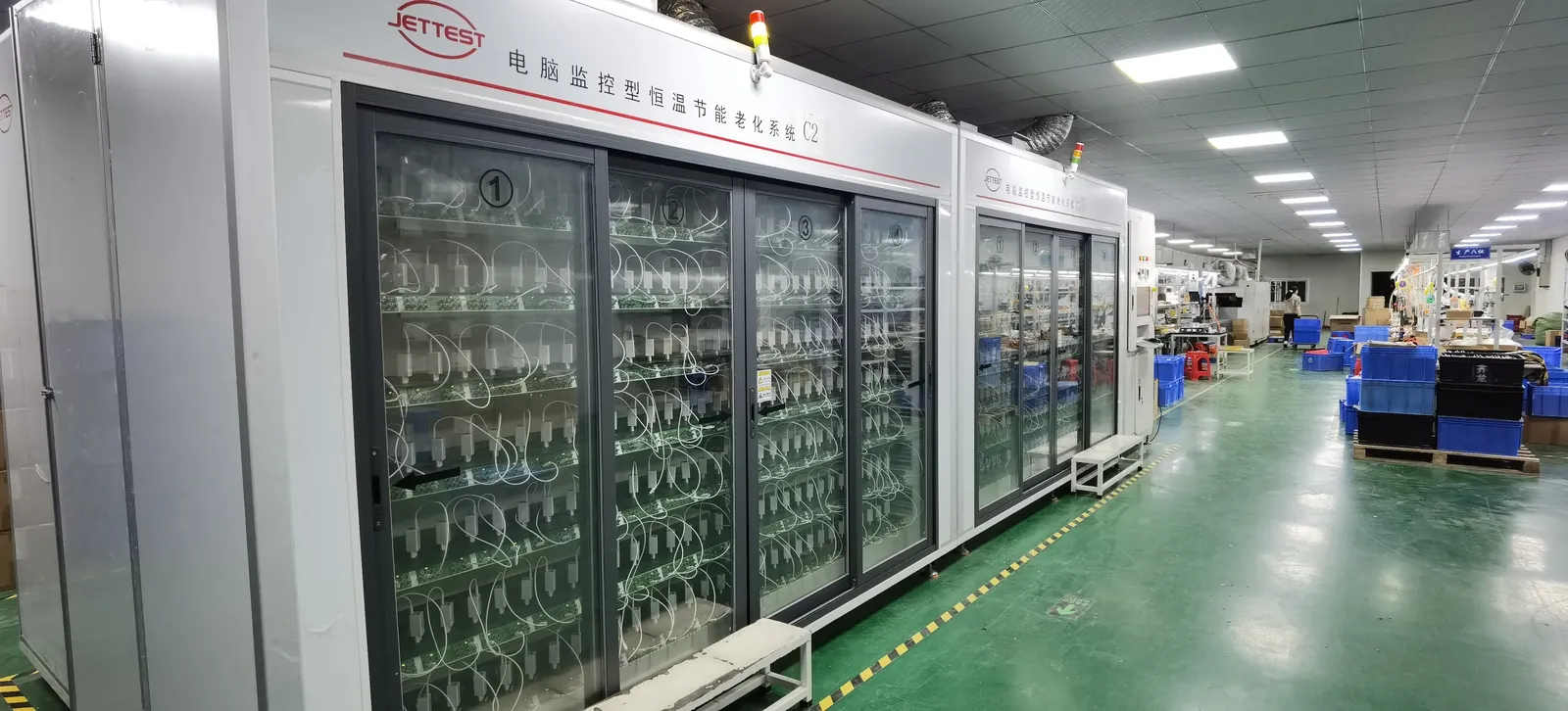
Treat pilot approval as the real green light. Units from the pilot batch should carry the same test data as production units, because the pilot is the first honest rehearsal of every gate your order will pass. A supplier who offers to skip the pilot to save a week is offering to discover your defects at your customers’ expense instead — decline politely and keep the gate.
Reorders: why they are faster and cheaper
A reorder runs on memory. The BOM is frozen, the ATE limits are set, the tooling is paid for and shelved, and the certification file is current — so none of the fixed per-model work repeats. That is why reorders carry no development or tooling fee and why they typically land at the faster end of the same 5–6 week production window: the material buy starts from a known-good list and the line is already qualified for your model.
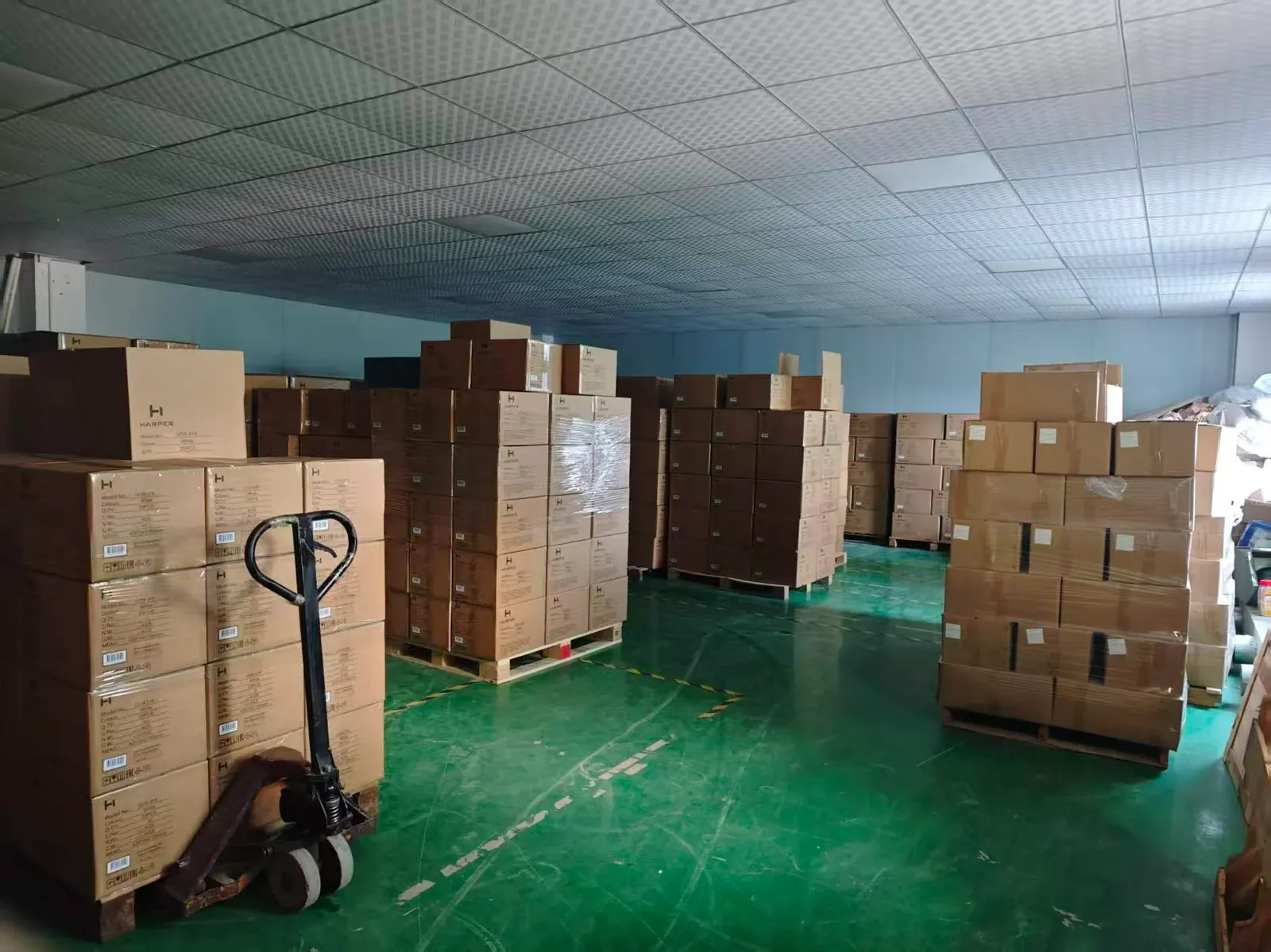
What does not change is the test gate. A reorder gets the same 100% ATE functional test and burn-in as the first order, because the frozen limits are the point of freezing them. If a supplier offers to speed up a reorder by sampling the test, the saving is not real — it is your defect rate being deferred, not removed. Plan reorders against the same 5–6 week window and treat any faster promise as a question, not a feature.
MOQ levers that actually work
Several levers genuinely reduce a minimum order, and they all work by shrinking the fixed work the factory carries per model. Consolidating SKUs so one platform covers several marketing versions is the strongest one. Accepting tail-lot components for model-specific parts removes the excess-buy penalty. A staged delivery schedule — one PO, several releases — lets a factory buy materials once while you receive in tranches. And building several colorways on one electrical design shares the qualification across variants.
What does not work is pushing the number down while changing nothing else. If a supplier instantly agrees to a lower MOQ, ask which gate got removed — inspection, burn-in or the pilot — because the cost did not disappear, it moved. On high-power platforms the fee lines also grow with wattage, and the 100W+ GaN charger OEM selection guide maps which ones move.
What if you need fewer than 200 pcs?
You still have three honest options below the modified standard floor. Catalog white label units carry the lowest minimums because nothing is engineered — your logo and packaging sit on a proven platform. A single PO with staged releases can hold the tier while spreading delivery dates. Or run a pilot first and top up once your channel data confirms demand, which converts MOQ risk into a schedule decision rather than an inventory bet.
Before shrinking an order, price the trade: fixed per-model work spreads over fewer units, so the unit price rises as the batch falls, and shipping economics rarely favor small lots. If you are selling into Brazil, model the full landed cost with our Brazil landed cost calculator before deciding — duties and local costs often change which order size actually wins.
Your MOQ, sampling and lead-time RFQ checklist
Put these points in writing before you sign. MOQ per model, and whether it holds across colorways and plug variants. Sampling window, and what the sample price includes versus the separate tooling and certification lines. Mass production window from approved sample, and the stage that sets it. Who owns tail-lot components. Pilot scope, and whether pilot units pass the same 100% ATE functional test and burn-in as production. Certification scope actually held — CE, CB, FCC, RoHS, ErP and ISO 9001 as standard, with UL/ETL/UKCA funded per project — and the USB PD 3.2 design basis stated as a specification, not a certification.
Reorder terms belong in the same document: the frozen BOM, the test limits and the change-control path, so a substitution can never happen without your approval. A supplier who publishes these numbers before being asked has usually already lived through the failures they prevent. Collect the three numbers — MOQ, sampling, lead time — from every candidate on your list, and the differences will tell you more than any brochure.
Frequently asked questions
These are the OEM charger MOQ, sampling and lead-time questions buyers ask most, answered without the sales gloss.
What is a realistic OEM charger MOQ?
Plan around 200 pcs per model for a modified standard build and 500–1,000 pcs for a full custom ODM design. Catalog white label units carry a lower minimum, typically 100–200 pcs, because nothing is engineered. Any quote dramatically below those floors is not a bargain — it is a signal to ask which gate has been removed, because component reels, changeover and per-model qualification cost the same regardless of batch size.
Why is the OEM charger MOQ 200 pcs per model?
Because 200 is roughly where three fixed cost floors balance out. Component vendors ship in reels and minimum lots sized for volume, a model changeover costs nearly the same whether the batch is 200 or 2,000, and per-model qualification — certification, incoming inspection, frozen BOM, test limits — exists once the model exists. Below that floor, the per-unit share of fixed work distorts the economics, which is why a credible MOQ tracks real cost rather than a round marketing number.
Who pays for tooling, NRE and certification?
The buyer carries development, tooling and certification fees on a modified standard or custom build, quoted as named line items before the order. That is the honest structure: those costs exist the moment a model exists, whether or not it ships in volume. A supplier who folds them into the unit price has to recover them somewhere, and the model becomes hard to move later. White label catalog units are the exception, since nothing is engineered for you.
How long does a sample take?
About 7 days for a modified standard build, because the platform exists and the work is re-tuning — output profile, connectors, housing details. A full custom ODM sample takes 2–4 weeks, since schematic capture, layout and first tooling shots all sit in the path. What moves the number most is rarely the bench: a frozen BOM, in-stock connectors and one named approver on your side each save days, while a drifting spec quietly costs a week per loop.
Why does mass production take 5–6 weeks?
The window is structural. Material purchase — long-lead components and housing molding — sets the earliest assembly date, typically 1–2 weeks. Assembly with 100% ATE functional testing and burn-in at rated load follows, and that gate is finite capacity that cannot be compressed without gambling on field failures. Packing, artwork approval and freight booking close the path. The total from approved sample to shipment is 5–6 weeks, and a materially shorter promise deserves scrutiny, not applause.
Can the OEM charger MOQ be split across colors or plugs?
Colorways on one electrical build can typically share the 200-pc minimum, because the platform, BOM and certification file are common and only cosmetic variants change. Different plug types are a different matter: each plug usually changes the model, the test setup and sometimes the certification scope, so each variant normally meets the OEM charger MOQ on its own. Ask the question per configuration at RFQ, in writing, and get the split rules confirmed before the pilot run.
What is included in the sample price?
The sample build itself, the engineering time to tune it to your spec, and the test data that proves it: ATE results for output voltage and current, ripple, regulation and protection-trip behavior, measured against production limits. What sits outside the sample price is the tooling, the certification scoping and the packaging plates, which are separate line items by design. Ask for that breakdown in writing so the quote compares cleanly across suppliers.
Are reorders faster than the first order?
Yes, and measurably so. A reorder skips development, sampling and tooling entirely because the BOM is frozen, the test limits are set and the tooling is already paid for. It typically lands at the faster end of the same 5–6 week production window, since the material buy starts from a known-good list and the line is already qualified for the model. The 100% test and burn-in gate does not relax, which is exactly why the speed is safe.
How do I keep MOQ low without raising unit cost?
Work the levers that shrink fixed per-model work. Consolidate SKUs so one platform carries several marketing versions. Keep colorways on one electrical design. Accept tail-lot components for model-specific parts. Commit volume across quarters with a staged delivery schedule instead of demanding it all at once. What does not work is pushing the number down while changing nothing else — the cost does not disappear, it moves into the unit price or out of the quality gates.
Sources
- ISO — ISO 9001 (quality management systems)
- IEC — IEC 62368-1 (audio/video/ICT equipment safety)
- IECEE — CB Scheme (global certification for electrical equipment)
- USB Implementers Forum — USB Power Delivery specification
- Energy Star — External Power Supplies program
Related reading
- Custom power supply manufacturer: the complete OEM process guide
- How to vet a GaN charger manufacturer: 12-point checklist
- White label GaN charger vs ODM: 5 levels of customization
- Power supply factory audit: 12-point complete checklist
- 100W+ GaN charger OEM: the complete selection guide
- Brazil landed cost calculator