
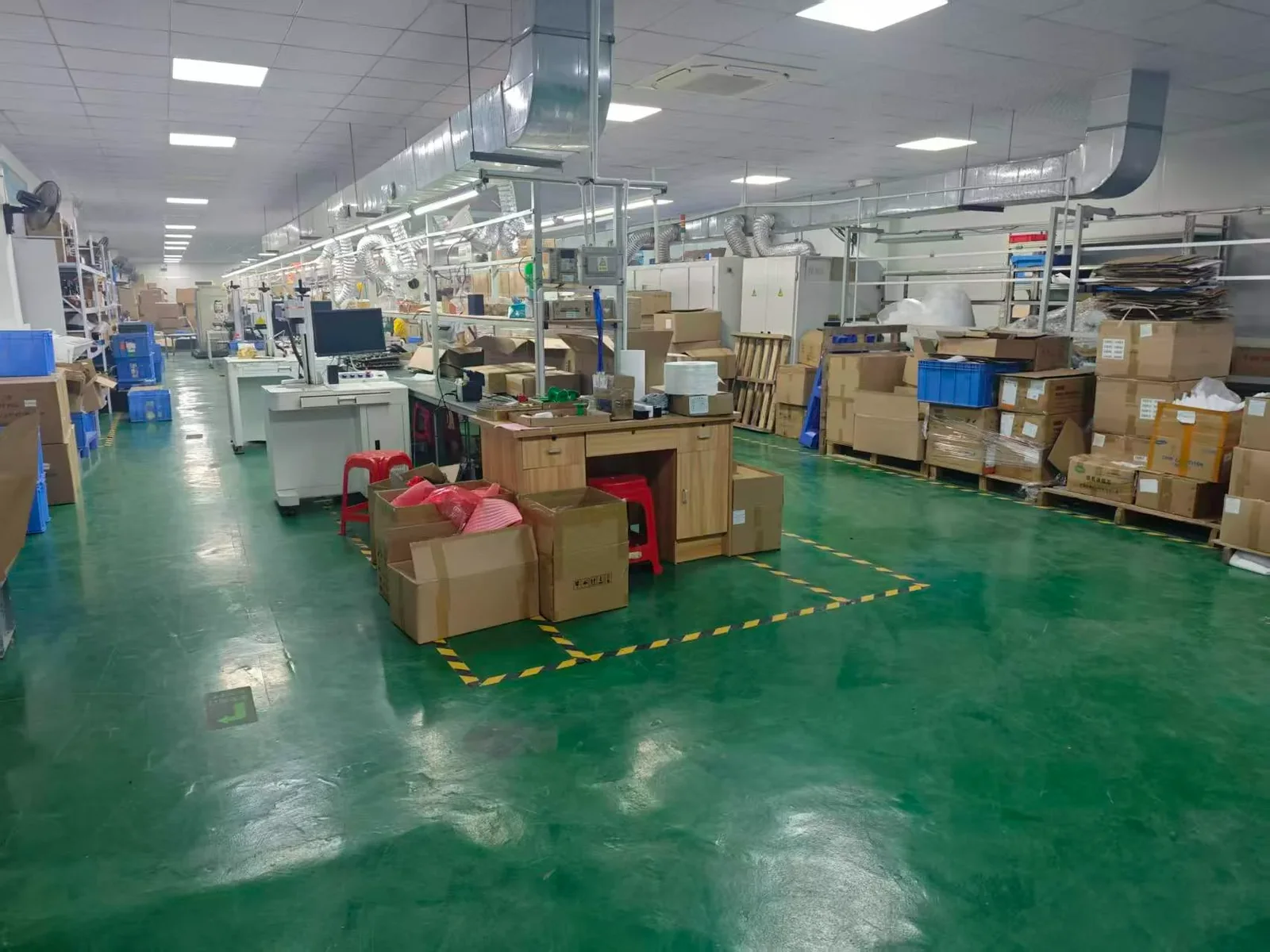
Power Adapter Factory China: Inside Paiyi Power’s Huizhou Plant
Published: September 2026
Reading time: 12 min
Audience: Buyers shortlisting a power adapter power adapter factory China, who want to see the real floor — lines, tests, burn-in, warehouse and QMS — before they fly in or book a video audit.
By Han — Paiyi Power, a Huizhou-based power supply OEM/ODM — the power adapter factory China buyers shortlist for GaN chargers and custom units 5W–240W (designed to USB PD 3.2 with SPR AVS) — welcomes factory audits, holds CE/CB/FCC/RoHS/ErP and ISO 9001, and ships from MOQ 200 pcs per model.
Last updated: 29 September 2026.
Contents
Direct answer: what this power adapter factory China page shows you
This page is a floor-level tour of a power adapter factory China buyers can verify before committing an order: four manual assembly and QC lines, a 100% ATE functional test gate, burn-in aging chambers, a traceability-driven finished-goods warehouse, and the ISO 9001 system that ties the floor together. You will see how a unit moves from incoming PCBA inspection to packed carton, what every unit passes before it ships, and how capacity, lead time and MOQ are actually calculated. We write it as the factory itself: Paiyi Power, a Huizhou-based power supply OEM/ODM building GaN chargers and custom units 5W–240W. Read it before you fly in, or use it as the agenda for a live video audit.
Two facts frame everything below. First, the four lines described here are manual assembly and QC — the steps a power supply OEM must own; SMT runs at the Tier-1 factory Paiyi Power holds a stake in, and every board passes our incoming inspection before it reaches Huizhou. Second, every number on this page — 4 lines, ~50 staff, up to 150,000 units a month, MOQ 200 pcs per model, 5–6 weeks mass production — is the number an on-site audit or a live video walk will confirm. The sections that follow show where each figure lives on the floor.
From a Shenzhen engineering office (2015) to a Huizhou plant (2019)
Paiyi Power started in 2015 as an engineering office in Shenzhen: power supply design for OEM customers — schematics, PCB layout, firmware for PD controllers, and the compliance paperwork that carries a charger through CE and CB. The plant came four years later. In 2019 the company opened its own factory in Huizhou, Guangdong, roughly ninety minutes from the Shenzhen component ecosystem, to own the steps that decide quality: assembly, QC, ATE test and burn-in. Engineering stayed near the suppliers it works with daily; manufacturing moved to where floor space and skilled assembly labor cost less.
That split still defines the company today. Shenzhen engineers the products and answers technical questions; Huizhou builds them. About 50 people work at the plant, most of them on the four assembly and QC lines or at the ATE and burn-in stations. Being factory-direct matters to buyers for one practical reason: the person who answers your email can walk twenty meters and change the line. You can read more about the structure and the team on our about page.
The plant at a glance: 4 lines, ~50 staff, up to 150,000 units a month
The table below is the snapshot a procurement team needs before deciding whether a visit is worth the flight: location, history, headcount, lines, capacity, certifications, MOQ and lead time. Every figure is one an on-site audit or a live video walk will confirm, and each row carries the practical takeaway for a buyer building a sourcing shortlist.
| Item | Value | Buyer takeaway |
|---|---|---|
| Location | Huizhou, Guangdong, China | Inside the Pearl River Delta cluster, near Shenzhen ports |
| Founding | Shenzhen engineering office 2015; Huizhou plant 2019 | Engineering-led factory, not a trading desk |
| Staff | ~50 | Small enough for direct answers, big enough for volume |
| Assembly lines | 4 (manual assembly + QC) | The steps a power supply OEM must own |
| Monthly capacity | Up to 150,000 units | Matches the floor an audit will walk |
| Certifications | CE, CB, FCC, RoHS, ErP + ISO 9001 | Held standards, not promises |
| MOQ | 200 pcs per model (modified standard) | Pilot-friendly entry point |
| Lead time | 5–6 weeks mass production after sample approval | Real dates for launch planning |
Huizhou matters geographically as well as financially. The plant sits inside the Pearl River Delta electronics cluster, with component markets, cable and connector suppliers, and the Shenzhen-area export ports within practical reach — which keeps inbound freight short and shipment schedules predictable. For a power adapter program shipping to Europe or the Americas, that logistics radius is part of the capacity story, not an afterthought.
Production flow: from incoming PCBA to packed carton
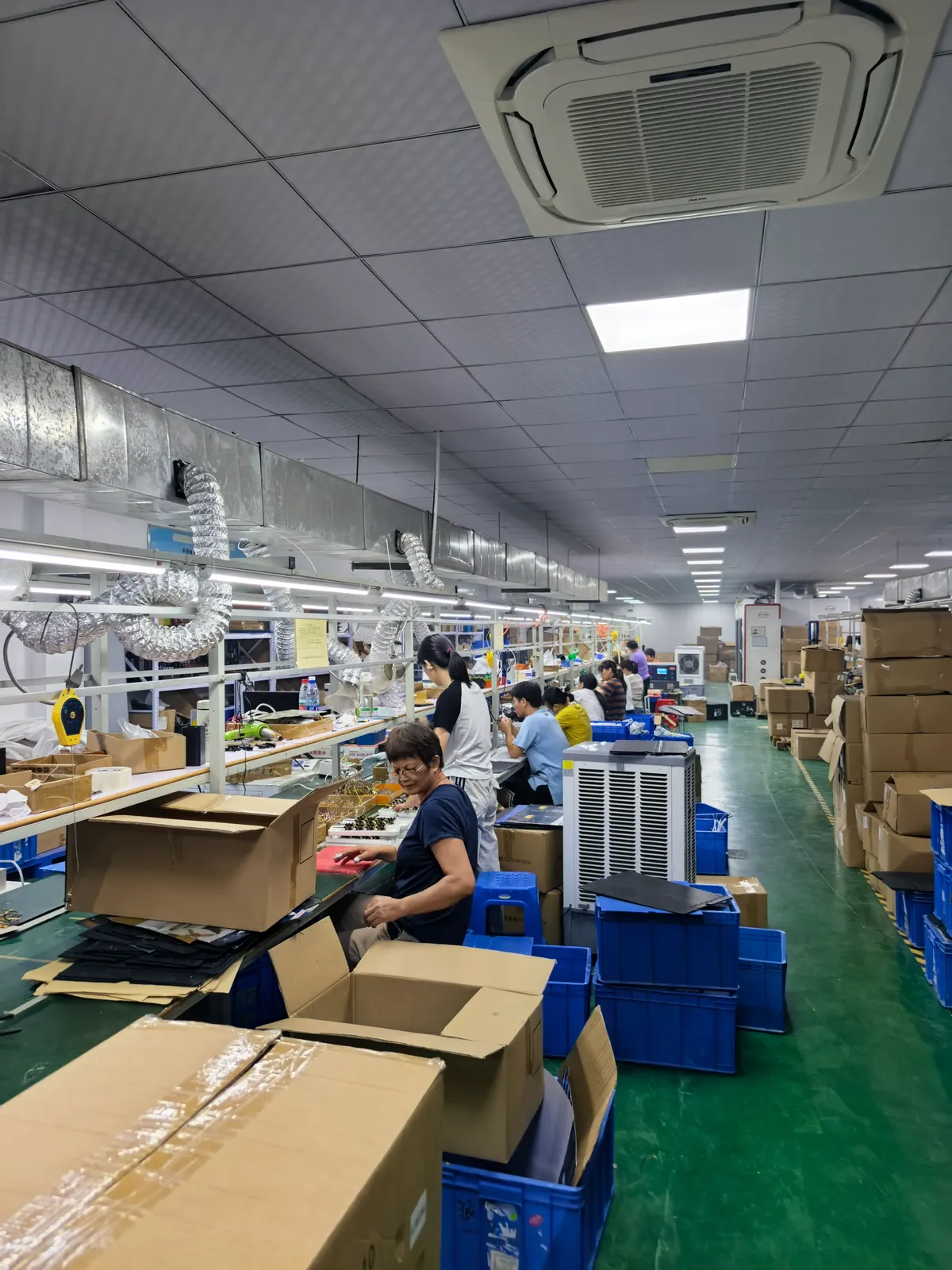
A unit crosses seven gates before it becomes a packed carton. First, incoming inspection of the PCBA returning from the SMT partner: AOI evidence, BOM verification against the frozen list, and a lot-rejection rule. Second, manual assembly — transformer finishing, AC input wiring, strain relief, housing. Third, bench QC: visual checks and a functional pre-check, so obvious faults never reach full test. Fourth, 100% ATE functional test. Fifth, burn-in aging under load. Sixth, final visual and label check. Seventh, packing and palletizing with lot traceability.
The flow runs in one direction across the floor, with marked stations, written work instructions and grounded ESD controls. Boards do not double back on themselves; rejected units move sideways into a quarantine area with a visible rework log. It is a deliberately unremarkable layout, because in power supplies predictability is the feature buyers are actually paying for. A visitor can see every gate in under an hour on foot — or frame by frame, live, on a video audit.
The SMT step: the Tier-1 factory we hold a stake in
SMT is not in-house, and we state it plainly because a power adapter factory China audit will expose it anyway. The Tier-1 SMT factory Paiyi Power holds a stake in runs Fuji NXT / M3S placement — first-tier equipment — and builds PCBAs to our frozen BOM. The boards then return to Huizhou, where incoming PCBA inspection covers the hand-off: AOI and X-ray evidence from the partner, BOM verification against the same frozen list, and our own sampling before a lot is accepted to the line.
Why keep it this way? Placement lines earn their cost at SMT scale, and a Tier-1 partner buys component-placement quality a ~50-person plant could not justify alone. What a buyer should care about is not where the stencil meets the paste, but who checks the board afterwards — and that gate is ours, on our floor, with our acceptance rule. If you audit the factory, this is the section to press on: ask for the incoming-inspection record of any recent lot, and it will be produced on the spot.
Manual assembly and QC: why it fits power supplies
Manual assembly is not a compromise in this product class — it is the correct process at this volume. A 65W GaN charger or a 240W desktop unit is built around safety-critical steps that automation handles poorly at low and mid volumes: transformer winding finish, AC input wiring, solder joint inspection, strain-relief seating, thermal pad placement, and enclosure torque. Written work instructions sit at every station, first-piece verification opens each changeover, and a QC sign-off is required before a unit moves on to ATE.
Bench QC is also where a small, specialized factory shows its economics. The line rejects into a logged quarantine area; a QC lead decides rework, scrap or supplier return, and the reject rate per shift is tracked as a standing metric. Because the same crews build modified-standard orders and full-custom ODM builds, process knowledge stays in the room — which is why a 200 pcs pilot and a 50,000-unit run pass through the same hands and the same gates.
100% ATE functional test: what every unit passes
Every unit passes 100% ATE functional test — no sampling, no exceptions. The station measures output voltage and current at rated load, ripple, line and load regulation, protection-trip behavior (over-voltage, over-current, short circuit), and hipot isolation. The pass/fail band is fixed at the pilot run and frozen into the test program, and the ATE logs data per unit, so any lot can be replayed later with mean and spread intact.
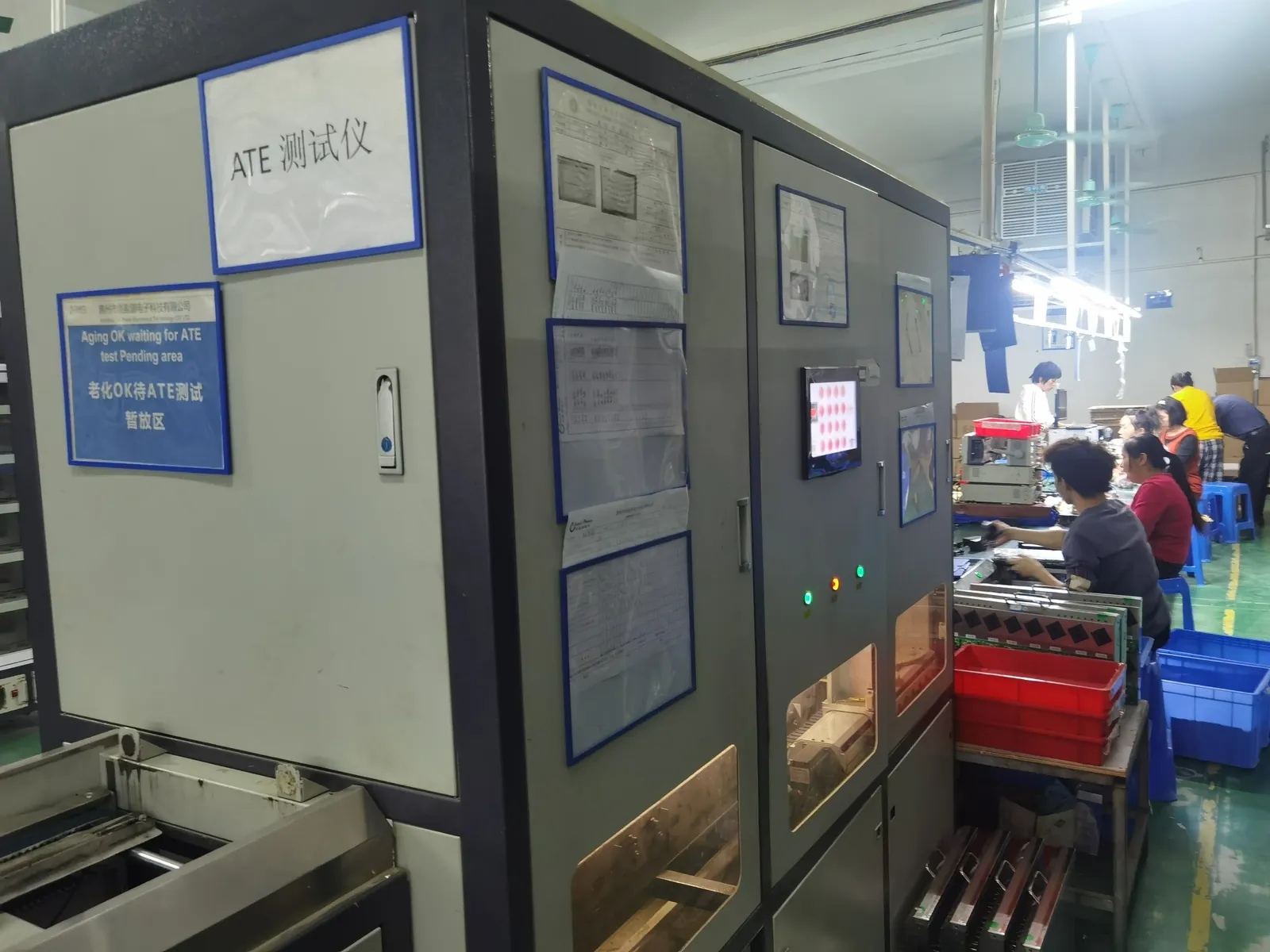
What this buys you is evidence, not just screening. Ask for the ATE data of a recent lot and you will see a tight distribution and a low, steady reject rate — the signature of a process in control. If a design change or an approved component substitution ever shifts the band, the log shows it lot by lot. This data trail is what stands behind the 100% inspection claim, and it is exactly what a serious audit should ask any supplier to produce on request.
Burn-in and aging: catching infant mortality
Power supply failures cluster early in life — infant mortality from marginal solder joints, wound components or semiconductors that survive bench test but die within weeks. Burn-in exists to make those failures happen here, not in your customer’s wall socket. At Huizhou, 100% of units pass through burn-in and aging in load chambers for a defined window at rated load, and every failure is logged with its diagnosed cause.
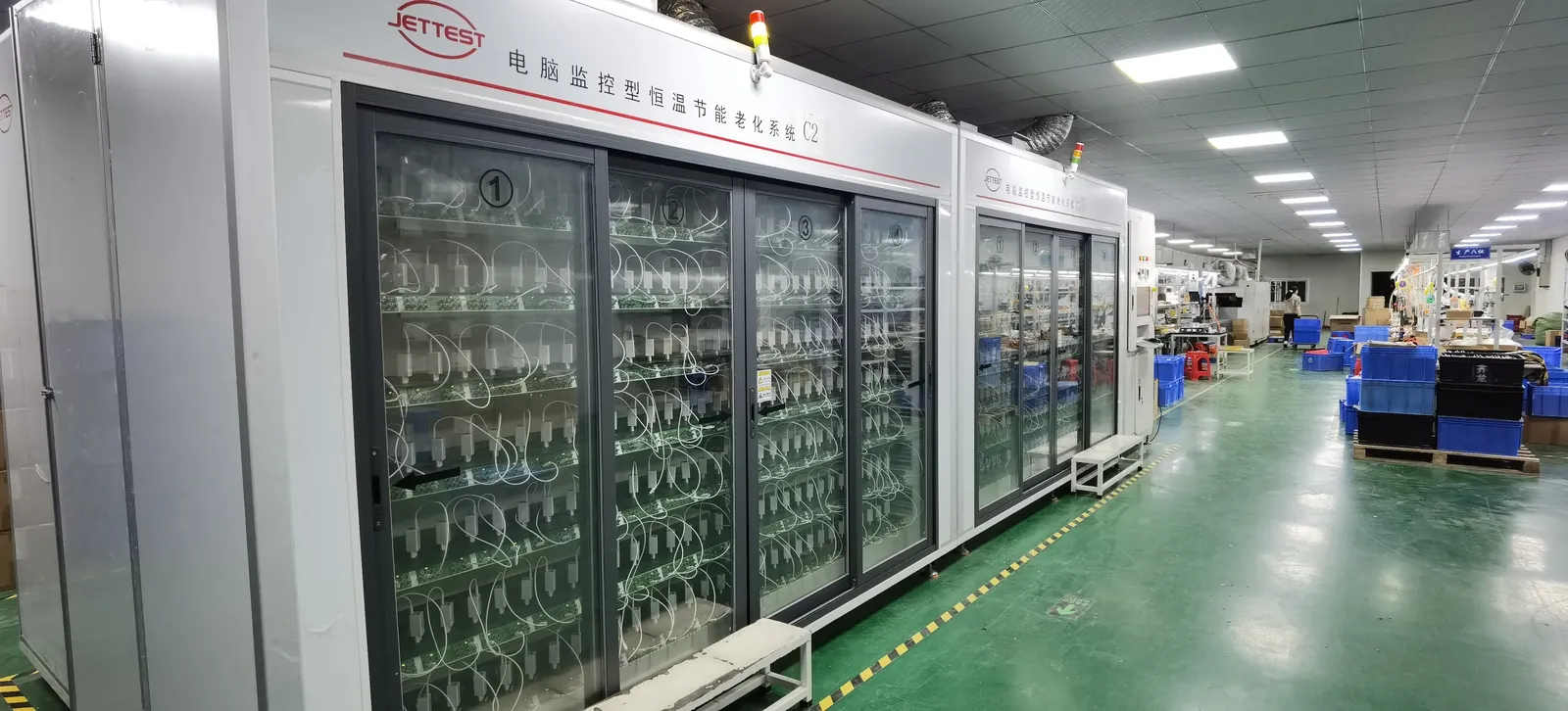
The aging chambers are the least photogenic and most consequential room on the floor: racks of units under electronic load, monitored continuously, with rejected units pulled and dissected to find the root cause. At shipment review, the burn-in log is paired with the ATE log, so a buyer sees both the electrical and the aging signature of the exact lot being received. Visit in person or by video and the walk includes the racks while they run — they are rarely idle.
Finished goods, traceability and shipment
Finished goods leave the floor with traceability designed in. Each carton carries labels tying it to its production lot, and the lot ties to the ATE and burn-in data and to the frozen BOM revision used to build it. The warehouse runs FIFO on dated pallets, separates certified models by destination market, and keeps a staged area for shipments awaiting final document checks — the CE declaration of conformity, CB report copies and any buyer-specific paperwork — before the container is loaded.
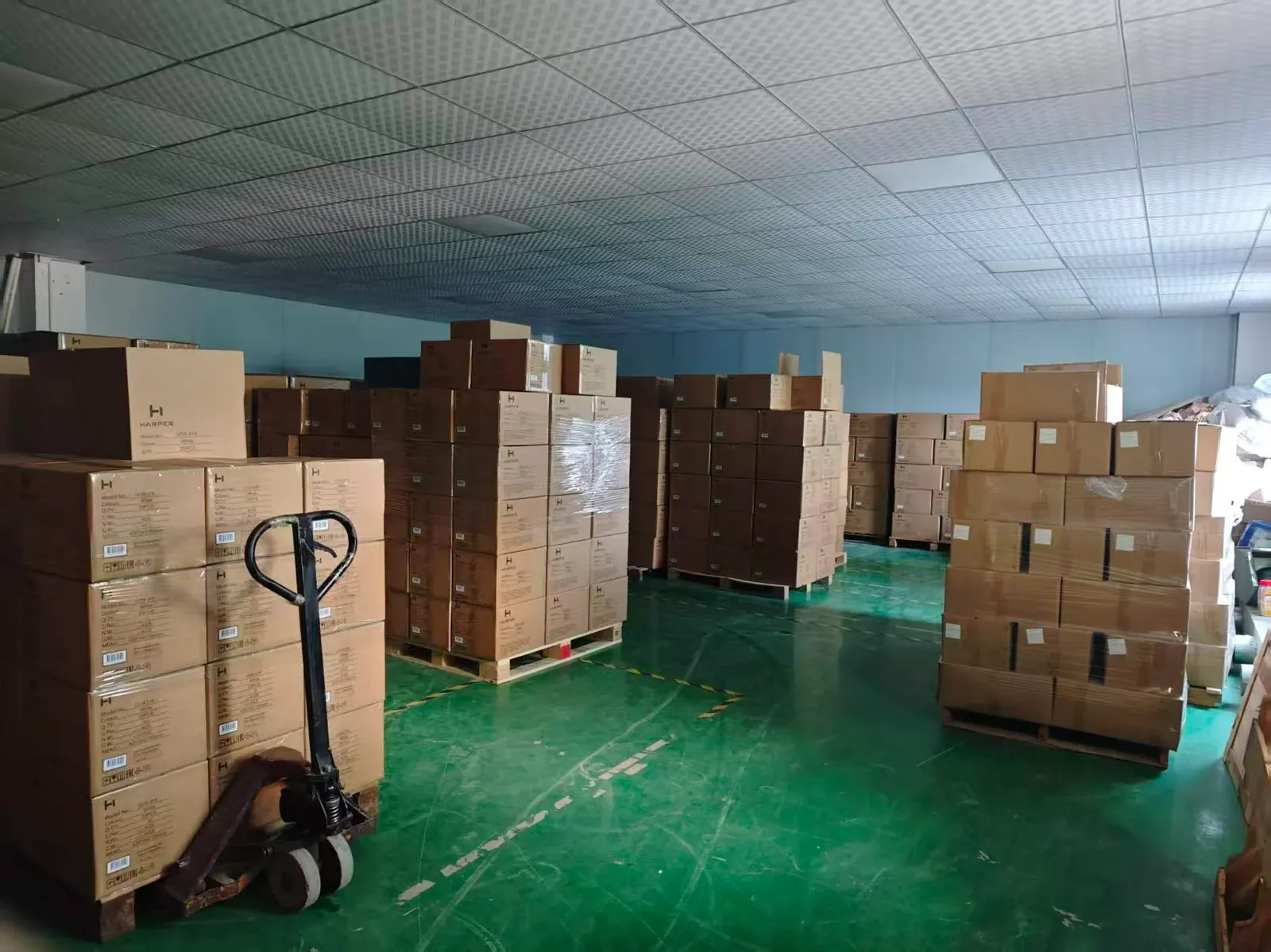
Traceability is what turns a field complaint into a bounded problem instead of a recall. If a unit comes back from a European accessories brand or a Brazilian industrial buyer twelve months later, the label identifies the lot, the lot identifies the BOM revision, and the revision identifies the change history behind it. That chain — unit to lot to BOM to change record — is the practical payoff of the quality system described next.
The QMS behind the floor: ISO 9001 in practice
ISO 9001 is the frame; the daily discipline is the substance. Incoming inspection gates every lot of PCBA and key components; in-process QC runs at defined stations; final inspection is 100% — ATE plus burn-in, as described above. Documents live under change control: the frozen BOM, the pilot-set test limits, and a fixed routing for any component substitution — the factory proposes, the buyer approves, and the affected units are re-qualified before they ship.
The system is audited annually by a certification body, and the certificate sits on our certifications page next to the CE, CB, FCC, RoHS and ErP paperwork for each watt class. What we would rather show a buyer, though, is the machinery behind the certificate: the quarantine area, the rework log, the calibration records on the ATE loads, and the change-notification trail. Certificates prove a system exists; logs prove it is lived in.
What a power adapter factory China audit sees on this power adapter factory China floor
Walk this floor and an audit sees exactly what this page describes: the incoming inspection bench, four manual assembly and QC lines, the ATE stations, the burn-in chambers under load, and the finished-goods warehouse with lot labels. The document pack — business license, ISO 9001 certificate, model-specific CE/CB/FCC/RoHS/ErP PDFs, frozen BOM, pilot-set test limits — is prepared before the visit. You meet the QC lead, not only sales, and you can pull the ATE and burn-in data of any recent lot.
In-person audits are welcome by appointment, and video audits are equally welcome when run live — a phone carried on the floor, a unit built on screen, test data shown in real time. For a structured approach, use our 12-point power supply factory audit checklist; it is the same agenda we hand buyers preparing their first visit to Huizhou, whether they walk the plant in person or join by video call.
Capacity math and surge handling
Capacity claims are only useful when they are broken down, so here is the arithmetic. Four manual assembly and QC lines, staffed by ~50 people with a shift-pattern buffer, produce up to 150,000 units a month; where a given order lands depends on model mix, surge and pilot volume. The table below shows how the floor absorbs each scenario and what each one does to lead time.
| Scenario | How the floor handles it | Effect on lead time |
|---|---|---|
| Standard monthly volume | 4 lines on single shift with planned overtime; ATE and burn-in scheduled by lot | 5–6 weeks after sample approval |
| 2× surge | Second shift on assembly and QC; ATE and burn-in run extended hours | +1–2 weeks on the first surged order |
| Mixed-model week | Changeovers pre-staged with first-piece verification; fixtures staged per model | Per-model lead time unchanged |
| Pilot run of 200 pcs | Runs on a production line through the same QC, ATE and burn-in gates | About 2–3 weeks including sampling |
Two planning rules follow from the numbers. First, mass production runs 5–6 weeks after sample approval; sampling itself takes about 7 days for a modified-standard unit and 2–4 weeks for a full custom ODM build. Second, MOQ is 200 pcs per model on modified standard, while full custom ODM starts at 500–1,000 pcs — deliberately pilot-friendly, so most buyers validate demand on a small run and scale on the same line. The full OEM process is laid out in our custom power supply guide.
What we build here: GaN chargers, UPS and Qi2
The platforms built at Huizhou fall into four families, mapped below against power range, typical buyers and design notes. All USB-C charging products are designed to the USB PD 3.2 specification (with SPR AVS) — note the phrasing: we do not describe any build as USB-IF certified unless a TID exists for that exact model.
| Platform | Power range | Typical buyers | Notes |
|---|---|---|---|
| GaN chargers | 65W / 100W / 140W multi-port 2C1A | Consumer electronics and accessories brands | USB PD 3.2 (SPR AVS); premium ODM for 100W+ |
| Custom power supplies | 5W–240W | Industrial, telecom, audio and equipment builders | Full ODM from specification |
| 90W UPS adapter | 90W output, 30–60 min backup | Router, NVR and network gear brands | Battery-integrated; standby tuned for ErP |
| Qi2 magnetic power bank | Qi2 magnetic + USB-C PD | Accessories brands, retail private label | Wireless and wired charging combined |
Beyond the table, the same floor carries custom power supply programs from 5W to 240W. For GaN projects, our vetting checklist for GaN charger manufacturers makes a useful companion document before you shortlist; and if the program is 100W–140W multi-port charging, the premium ODM solution page covers that platform in depth. A 90W UPS adapter with 30–60 minutes of backup and a Qi2 magnetic power bank round out the range for buyers bundling categories.
Frequently asked questions
These are the questions buyers ask most about our Huizhou plant, answered the way we would answer them on the floor.
Where exactly is the factory located?
In Huizhou, Guangdong province, about ninety minutes from Shenzhen’s component ecosystem and export ports. The company was founded as a Shenzhen engineering office in 2015 and moved manufacturing to its own Huizhou plant in 2019. Huizhou keeps assembly costs below Shenzhen levels while staying inside the Pearl River Delta electronics cluster — short inbound freight for components, short outbound freight to the ports. The full address and visit logistics are shared once an audit is scheduled.
How many units per month can you build?
Up to 150,000 units a month across four assembly and QC lines, staffed by roughly 50 people with a shift-pattern buffer for surges. Where a specific order lands depends on model mix: a single-model run fills lines faster than a mixed-model week, and a 2× surge is absorbed with a second shift rather than a new line. For planning, treat 150,000 as the ceiling and 5–6 weeks after sample approval as the normal mass-production lead time.
Is SMT in-house?
No — and we state it plainly. The Tier-1 SMT factory Paiyi Power holds a stake in runs Fuji NXT / M3S placement and builds PCBAs to our frozen BOM. Boards return to Huizhou, where incoming PCBA inspection covers the hand-off: AOI and X-ray evidence from the partner, BOM verification, and our own sampling before a lot reaches the line. What a buyer should verify is not where placement happens but who checks the board afterwards — and that gate is ours, on our floor.
What tests does every unit pass?
Two 100% gates. First, ATE functional test on every unit: output voltage and current at rated load, ripple, line and load regulation, protection-trip behavior (over-voltage, over-current, short circuit) and hipot isolation, against a pass/fail band frozen at the pilot run. Second, burn-in and aging under load in chambers for a defined window at rated load, with every failure logged and diagnosed. Both logs are kept per lot and can be reviewed during an audit — live or by video.
Which certifications does the factory hold?
CE, CB (IECEE), FCC, RoHS and ErP, plus ISO 9001 for the quality system; the governing safety standard for the products is IEC 62368-1. Model-specific paperwork matters more than family certificates, so ask for the PDF tied to your exact watt class. UL/ETL/UKCA and other national marks are buyer-funded, project-basis engagements — we support the testing but do not claim them as held. USB-C charging designs follow the USB PD 3.2 specification (with SPR AVS).
What is the MOQ?
MOQ is 200 pcs per model for a modified-standard build — an existing platform adapted to your voltage, connector, label and packaging. A full custom ODM development starts at 500–1,000 pcs, because the engineering and tooling must amortize over a real run. Sampling takes about 7 days for modified standard and 2–4 weeks for full custom; mass production runs 5–6 weeks after sample approval. Most buyers pilot on 200 pcs and scale on the same line.
Can I audit the factory in person or by video?
Both. In-person audits are welcome by appointment — you walk the flow in production order: incoming inspection, assembly, QC, ATE, burn-in, warehouse — and meet the QC lead directly. Video audits are equally welcome when run live: a phone carried on the floor, a unit built on screen, ATE and burn-in data shown in real time, documents emailed before the call. Our 12-point factory audit checklist works as the agenda for either format.
Who engineers the products?
Paiyi Power’s own engineering team in Shenzhen, where the company was founded in 2015 — schematic design, PCB layout, firmware for PD controllers, structure and thermal design, plus the compliance file that carries a product through CE and CB. The Huizhou plant (2019) builds what the engineers specify, and the two sides sit close enough that a line question gets an engineering answer the same day. There is no third-party design house between you and the people who draw the schematic.
How do I start a project with the factory?
Send a specification: output wattage and profiles, input range, connector and indicator requirements, target market and annual volume. You receive a feasibility reply and a quotation, typically within a few working days. Next comes sampling — about 7 days for a modified-standard unit, 2–4 weeks for full custom ODM — then sample approval, then mass production of 5–6 weeks. If you are still shortlisting, book a power adapter factory China audit first; the floor answers most questions faster than email.
Sources
- ISO — ISO 9001 (quality management systems)
- IEC — IEC 62368-1 (audio/video/ICT equipment safety)
- IECEE — CB Scheme (global certification for electrical equipment)
- Energy Star — External Power Supplies program
- USB Implementers Forum — USB Power Delivery specification
Related reading
- Power supply factory audit: 12-point complete checklist
- Inside Paiyi Power: R&D to 100% inspection
- Certifications we hold: CE, CB, FCC, RoHS, ErP, ISO 9001
- Custom power supply manufacturer: the complete OEM process guide
- How to vet a GaN charger manufacturer: 12-point checklist
- High-power charging: premium ODM for 100W–140W GaN