Pro Audio Power Supply OEM: Low-Noise Linear vs Switching Supplies, Ground Loops and Pedal Power for Audio Brands
Published: September 2026
Reading time: 10 min
Audience: pro audio and MI brands, pedal and interface manufacturers, studio equipment OEMs and procurement teams sourcing low-noise external supplies
By Han — Paiyi Power, an OEM/ODM power supply manufacturer and pro audio power supply OEM partner building custom and modified-standard supplies from 5W to 240W, from 200 pcs per model.
Last updated: 15 September 2026.
Contents
Direct answer: what power supply does pro audio need?
Pro audio needs a supply whose noise is below the signal you are trying to preserve, which in practice means ripple measured in single-digit millivolts, a properly designed ground scheme, and the right type for the job: a linear supply where the load is small and quiet, and a carefully filtered switching supply where size, weight or multiple rails make linear impractical.
For any team choosing a pro audio power supply OEM partner, the three specifications that decide whether a product is praised or returned are measured ripple and noise, ground and isolation behaviour, and mechanical and thermal noise — not the wattage printed on the case.
Audio is unusual in one respect: a defect that would be invisible in any other product category is immediately audible. Hum, hiss and switching artefacts are not cosmetic. At Paiyi Power we build these from 200 pcs per model, with samples in about a week and first production in 5–6 weeks after approval.
Why audio power is its own discipline
Every other category in this blog powers something that either works or does not. Audio power sits underneath a signal, and any noise it contributes is amplified along with the music. Four consequences follow:
- The listener is a sensitive instrument. The ear resolves detail far below the threshold that matters for a camera or a display, and trained ears notice artefacts that instruments barely register.
- Noise scales with gain. A preamp running 60 dB of gain amplifies supply noise along with the microphone signal; a quiet supply at the source is worth more than any downstream fix.
- Ground is part of the signal path. Two earthed devices connected by an unbalanced cable form a loop, and the resulting hum is a system problem that a better supply alone cannot cure.
- Mechanical noise counts too. Transformer buzz and fan noise are audible in a studio even when the electrical output is perfect.
That is why audio power is specified on noise, not on watts.
Linear vs switching for audio
This debate is older than most of the products involved, and the honest answer is that both can be right.
| Aspect | Linear | Switching (SMPS) |
|---|---|---|
| Noise character | Very low ripple, essentially no high-frequency content | Higher baseline ripple plus switching residue; needs deliberate filtering and layout |
| Size and weight | Heavy; the transformer dominates | Compact and light |
| Efficiency and heat | Low; heat inside the enclosure | High; less heat for the same output |
| Multi-rail and isolation | Separate secondaries give natural isolation | Needs separate converters or windings for true isolation |
| Best fit | Pedal boards, preamps, small analogue outboard | Interfaces, digital gear, tour-grade multi-output units |
The practical rule: choose linear when the load is small, quiet and stationary; choose switching when size, weight, heat or multiple rails matter more than the last few millivolts. A well-executed switching supply beats a badly executed linear one every time.
Ripple and noise: what to specify
“Low noise” is a marketing term, not a specification. Three details turn it into something a supplier can be held to:
- The figure and its units. Ripple and noise is quoted in millivolts, either RMS or peak-to-peak. Millivolts peak-to-peak sounds larger, so suppliers prefer it when the number is small; ask for both.
- The measurement bandwidth. A ripple figure means nothing without a bandwidth. A value quoted from 20 Hz to 20 kHz excludes the switching residue that a 20 MHz measurement would catch.
- The load condition. Noise at full load is not noise at 10% load, and some topologies are worst at light load — which is exactly how a pedal board idles.
Ask for ripple at light load and at full load, at a stated bandwidth, on a stated measurement setup. Anything else is a conversation, not a specification.
Ground loops and hum
Most hum in audio systems is not a supply defect at all — it is a grounding topology problem, and it is worth understanding before blaming the power supply.
- The mechanism. When two earthed devices are joined by an unbalanced signal cable, the small potential difference between their grounds drives a current through the shield, and that current is audible as hum at mains frequency and its harmonics.
- The fixes. Star grounding at one point, balanced connections, isolation transformers or DI boxes, and separating signal and power returns. A ground lift can help but must never remove a safety earth.
- The supply’s contribution. Isolated outputs — separate windings or isolated DC-DC stages — prevent one device’s return current from running through another’s ground.
This is the single most common reason a technically excellent supply still produces a noisy rig.
Pedal power: 9V and isolation
Guitar and bass pedal boards have their own conventions, and importing them wrongly is the fastest way to a returned unit.
- The standard is 9V DC, centre-negative. Almost every other DC product in the world is centre-positive, so this is the specification most often assumed rather than checked.
- Isolated outputs matter once digital pedals appear. A daisy-chain shares a single ground return, and a digital pedal’s switching noise rides that return into every analogue pedal on the chain. Isolated outputs fix it.
- Current per pedal is not uniform. Analogue pedals often draw tens of milliamps; digital and modelling pedals can draw hundreds, and inrush at power-up is higher again.
- Voltages vary. 12V and 18V outputs are common for headroom, and a few legacy products need AC rather than DC — an easy way to destroy a pedal if the labelling is unclear.
A pedal supply is judged by how quiet it is with a full board connected, not on a bench with one pedal.
Phantom power and mic preamps
Phantom power is a small, specific and unforgiving requirement that mixes have to get exactly right.
- 48V nominal, tightly toleranced. The convention is 48V with a defined tolerance and a per-input current limit, delivered through matched resistors so the pair stays balanced.
- Clean, not just present. Because phantom power sits on the same pair as a very low-level microphone signal, noise and crosstalk here are directly audible.
- Current budget. A few milliamps per channel sounds trivial until a console has dozens of channels drawing at once, which makes the supply’s total current and per-rail regulation a real design constraint.
Preamps are the clearest case for a low-noise supply, because everything the supply contributes is amplified by the full gain of the channel.
Interfaces, monitors and mixers
Beyond pedals, three product families dominate external supply demand, and each has a different priority:
- Audio interfaces — compact, cost-sensitive, often 5V or 12V, and increasingly asked to be bus-powered. Where an external supply is used, light-load noise matters because the device idles for hours.
- Studio monitors and active speakers — higher power, and any mechanical noise from the supply is audible in a quiet room. Fanless designs are preferred wherever the thermal budget allows.
- Mixers and multi-channel gear — multiple rails, tight regulation, and a preference for isolation between sections so one channel’s load does not modulate another’s supply.
Asking which of these you ship, and which rail each needs, is what turns a generic adapter quote into a real specification.
Mechanical noise and thermal design
Audio is one of the few categories where a perfectly good electrical design can still fail because of sound.
- Transformer hum. Laminations and windings can buzz audibly at mains frequency, and the effect is worse in a lightweight enclosure. Vacuum varnish or potting reduces it.
- Fan noise. A fan is unacceptable in most studio products; if the thermal budget forces one, it becomes a selling-point problem rather than an engineering one.
- Thermal life. Quiet and cool go together — a cooler-running supply can use higher-temperature capacitors, which is where the real service life is set.
Specifying mechanical noise in the requirements list, in plain language, is a legitimate and often overlooked line item.
Connectors and polarity
Three connector decisions cause most field faults in audio power:
- Centre-negative for pedals. Mark it on the product and on the label; reversed polarity destroys pedals immediately and is not a warranty case.
- Barrel size. 2.1 mm and 2.5 mm inner pins look identical and mate with the wrong jack, causing intermittent contact and heat. Print the exact size on the drawing.
- Locking for stage use. Installed and touring gear wants locking barrels or screw terminals, plus strain relief, because cables get pulled during setup and teardown.
A moulded strain relief and a defined bend radius cost cents and remove the most common intermittent fault in the category.
Inrush and breaker coordination
Inrush is invisible on a datasheet that only lists output power, and it is a recurring problem in audio racks.
Toroidal transformers and large input capacitors draw a very high current for a few milliseconds at switch-on. Several units on one power strip can trip a breaker or trip a rack’s sequencing relay even though the running load is modest.
- Ask for the inrush figure — peak current and duration.
- Specify soft start (NTC or active) where several units share a circuit.
- Coordinate with the breaker curve — a B-curve device tolerates far less inrush than a C-curve.
Fixing inrush after a rack is built is far more expensive than specifying it beforehand.
Certifications: what actually applies
Audio supplies are safety and EMC products like any other, with a couple of category notes:
- Safety: IEC/EN 62368-1 has absorbed the older audio and video safety standards, so it is the baseline to ask for. Audio equipment used to be assessed under the 60065 line, which now folds into 62368-1.
- EMC: FCC Part 15 in the US, with Class B for residential and studio use — and emissions matter more here because a noisy supply can be picked up by nearby audio wiring.
- Efficiency: DOE Level VI applies to external power supplies; audio products that are not external supplies fall outside it, and standby consumption becomes the relevant number instead.
- Regional marks: CE and CB for Europe, UL or ETL for North America, plus country schemes for other markets.
We certify per model and per market rather than claiming one certificate covers everything; certification by country explains which schemes transfer and which need local registration.
Pro audio power specification table
| Parameter | Typical for pro audio | Note |
|---|---|---|
| Topology | Linear for small quiet loads; SMPS for size, heat or multi-rail | Implementation matters more than the label |
| Ripple and noise | Single-digit millivolts, stated with bandwidth and at light and full load | A number without a bandwidth is not a spec |
| Isolation | Isolated outputs where digital and analogue share a board | Prevents ground loops and digital hash |
| Pedal output | 9V DC centre-negative; 12V/18V variants; AC only where required | Opposite polarity to almost every other DC product |
| Phantom power | 48V nominal with defined tolerance and current limit | Noise here is amplified by full channel gain |
| Mechanical noise | Varnish or potted transformers; fanless where possible | Audible in a quiet room even when electrical specs pass |
| Inrush | Figure stated; soft start where several units share a circuit | Toroidal transformers are the worst offenders |
| Standards | IEC/EN 62368-1; FCC Part 15 Class B for studio use | Emissions matter because audio wiring picks them up |
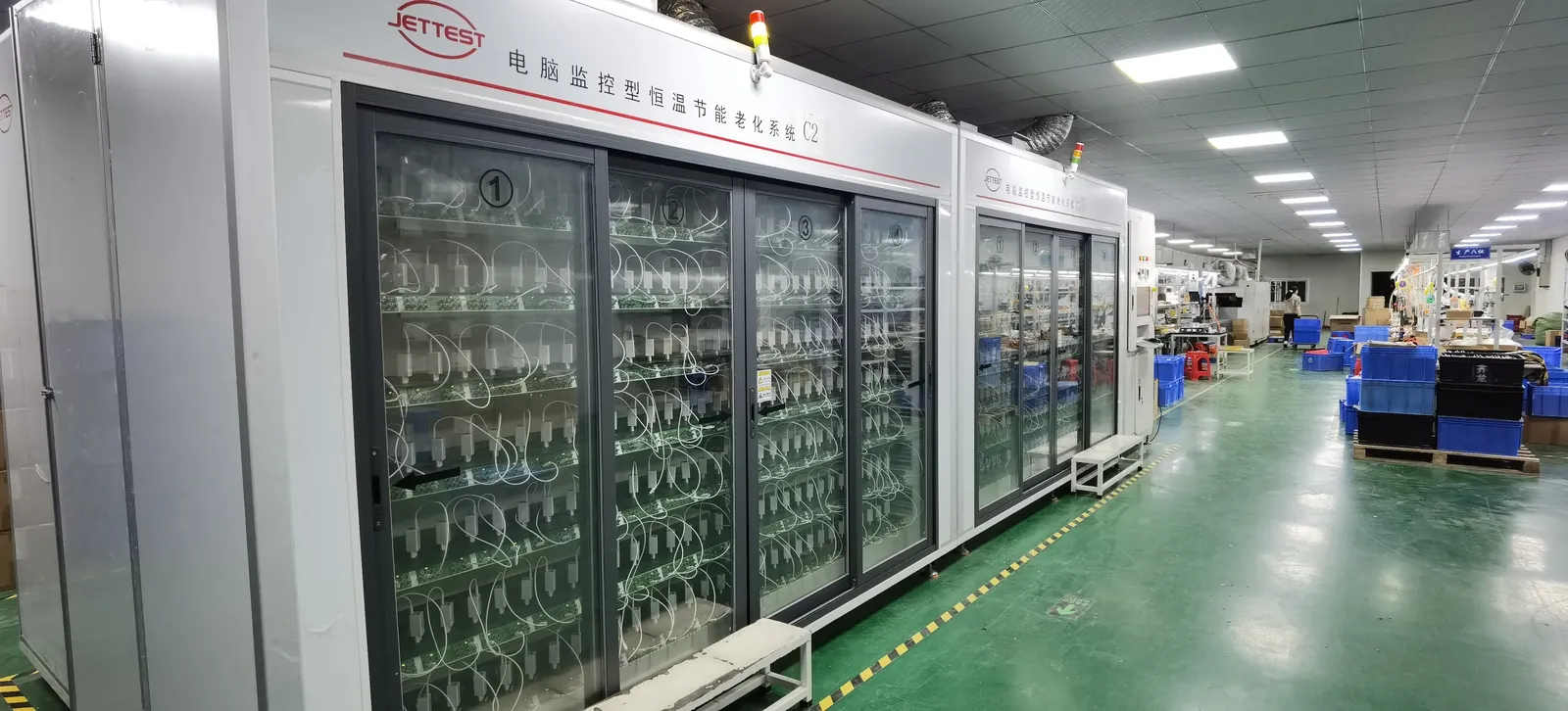
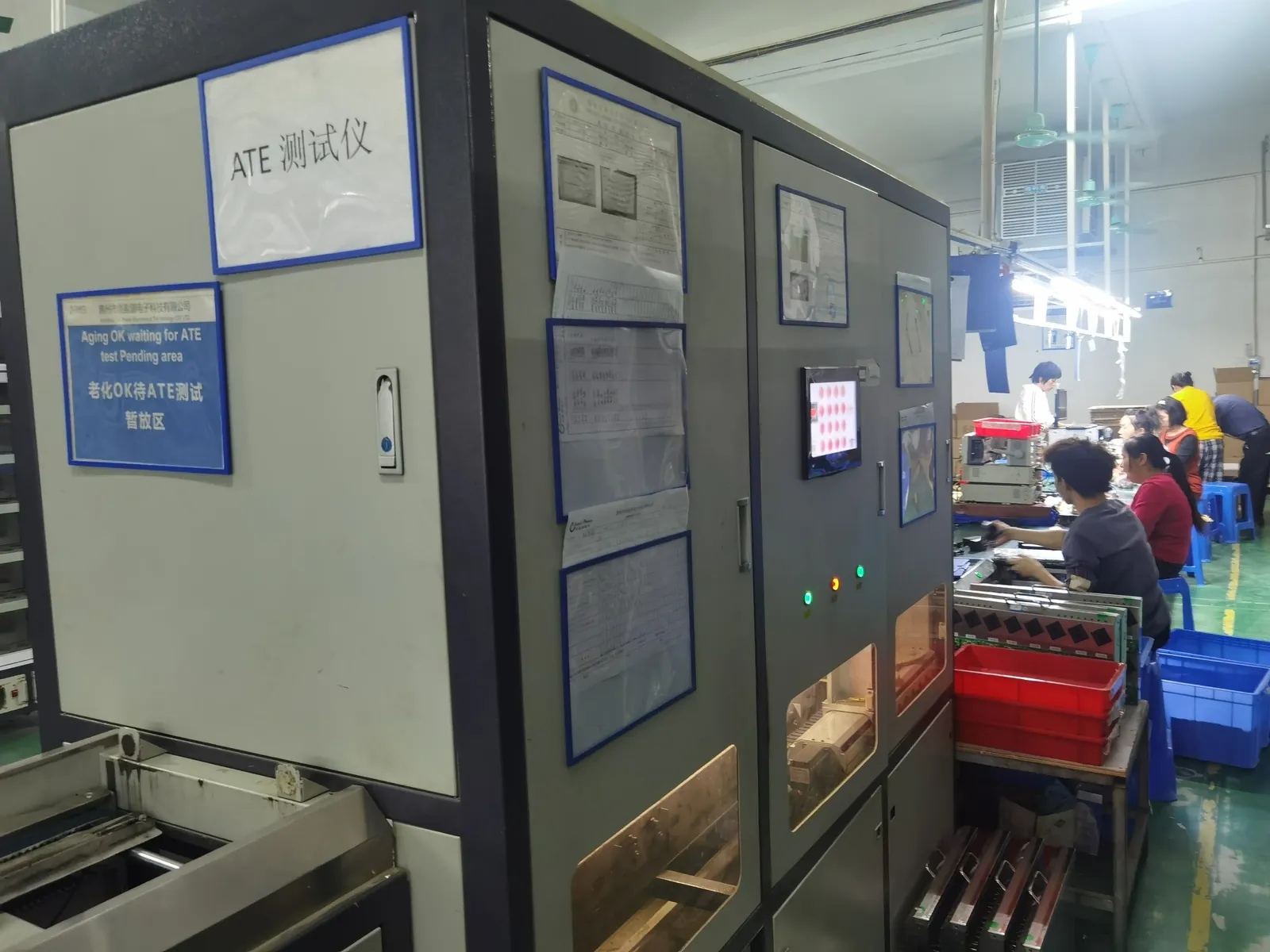
| Reliability | 100% ATE + burn-in; written change control | A silent change can alter the noise floor |

Frequently asked questions
Linear or switching for audio — which is better?
Neither is universally better. Linear wins on ripple and high-frequency noise for small, quiet, stationary loads. Switching wins on size, weight, heat and multiple rails. A well-designed switching supply outperforms a poor linear one, so judge the implementation, not the label.
What ripple and noise specification should I ask for?
A millivolt figure quoted with its measurement bandwidth, at both light and full load. Light load matters because that is where audio gear idles, and a number without a bandwidth hides the switching residue that a wide-band measurement would reveal.
Why do digital pedals need isolated outputs?
Because a daisy-chain shares one ground return, and a digital pedal’s switching noise travels back along it into every analogue pedal on the board. Isolated outputs break that path, which is why quiet boards almost always use them.
What is the standard power polarity for guitar pedals?
9V DC, centre-negative — the opposite of almost every other DC product. It must be marked on the product and the label, because reversed polarity damages pedals instantly and is not covered by warranty.
How much current should each pedal output supply?
Enough for the worst realistic pedal at that output, including inrush at power-up. Analogue pedals draw tens of milliamps while digital and modelling pedals can draw hundreds, so a supply sized on average draw will brown out on a full board.
How do I avoid ground loops and hum?
Use star grounding, balanced connections, isolation transformers or DI boxes, and keep signal and power returns separate. A ground lift can help but must never remove a safety earth. Isolated supply outputs stop one device’s return current from flowing through another’s ground.
What about phantom power for microphones?
48V nominal with a defined tolerance and a per-input current limit, delivered through matched resistors so the pair stays balanced. Because it shares a pair with a very low-level signal, noise and crosstalk here are directly audible at full gain.
Which certifications apply to pro audio power supplies?
IEC/EN 62368-1 for safety (it has absorbed the older audio/video standards) and FCC Part 15 Class B for residential and studio use, plus CE/CB or UL/ETL by region. A pro audio power supply OEM should certify per model and market rather than claim one universal certificate.
What MOQ and lead time apply for custom audio power supplies?
From 200 pcs per model at Paiyi Power, with samples in about a week and first production 5–6 weeks after sample approval. Fix the noise and isolation requirements before tooling; use our sample evaluation checklist and the OEM agreement guide for change control.
Sources
- IEC — 62368-1 safety (audio/video equipment)
- FCC — Part 15 rules (Class A / Class B digital devices)
- UL — safety certification for audio and IT power equipment
- AES — Audio Engineering Society standards and guidance
- U.S. DOE — External Power Supply efficiency (Level VI)
Related on this blog: access control power supply OEM, LED power supply OEM, industrial sensor power supply adapter, why power adapters fail.