Power Adapter OEM Agreement: Tooling Ownership, NDA, Change Control and IP Clauses
Published: September 2026
Reading time: 8 min
Audience: brand owners and procurement teams entering custom or private-label power adapter programs with factories in China
By Han — Paiyi Power, an OEM/ODM power adapter manufacturer that signs tooling-ownership, NDA and change-control terms as standard.
Last updated: 9 September 2026.
Contents
Direct answer: which clauses actually protect you?
Five clauses decide how protected you are in a power adapter OEM agreement: tooling ownership, NDA scope, change control, IP assignment, and a repeat-run / spare-parts commitment. Everything else — price, lead time, warranty — is standard commercial content that any quotation already carries. These five are the ones that decide what happens when the program succeeds (the factory now has your mould and your artwork), when a component goes end-of-life, and when you want to move or add a second source. Get them in writing before the first sample, not after the program is running.
Why email assurances fail
Every factory will say “yes, the tooling is yours” in a chat window. The sentence costs nothing and binds no one. What binds is a named clause with defined consequences: who owns the mould physically and legally, what happens if you stop ordering, what notice you get before a capacitor brand changes, and who owns the PCB layout if the factory’s engineer improved your schematic. A one-page annex covering those five points turns assurances into terms — and a factory’s willingness to sign it is itself useful information about the factory.
Tooling ownership: the clause that decides your freedom
For a custom enclosure, the injection mould is the single largest fixed asset in your program — several thousand dollars and weeks of lead time. The clause should state four things:
- Legal ownership: who owns the mould (typically the buyer who paid for it, on payment completion).
- Possession: the mould remains at the factory for production, but the buyer has the right to take possession or move it to another moulder, and the factory must release it within a defined number of days.
- Buyout: if the factory co-invested, define the buyout price formula up front instead of negotiating during a dispute.
- Maintenance: who pays for mould upkeep and at what production count the mould is refurbished or replaced.
Without this clause, a factory can lawfully treat a mould it holds as leverage. With it, switching suppliers or dual-sourcing becomes a logistics exercise instead of a hostage negotiation.
NDA scope: what is covered and for how long
A useful NDA is bilateral and specific. It should name what is confidential — device specifications, BOM and supplier data, artwork and packaging files, tooling data, pricing and volumes — plus the obvious reverse-use prohibition: the factory will not take your specification and offer a similar unit to other customers. Typical duration is two to five years, surviving termination of the supply relationship. Also define what happens to your files and tooling data when the relationship ends: returned or destroyed on request.
Honesty note: an NDA does not make information un-stealable; it makes unauthorised use actionable and filters out factories that planned to shop your design anyway. Combined with the fact that a serious factory has more program value in keeping clients than in leaking one, it moves the risk to an acceptable level.
Change control: because components move
Component landscapes move — a controller IC goes end-of-life, an electrolytic capacitor brand shifts, a safety resistor is re-sourced. Change control is the clause that turns those events from surprises into notifications: the factory gives written notice before substituting any component, material or process change, and material changes to safety-critical parts trigger re-verification (and, where you have filings, your assessment of whether re-certification is needed — a silent swap can invalidate a submission, as we note in our medical power supply guide).
The practical wording that works: define “material change” (anything touching safety, EMC, ratings or the certified configuration), set the notice period, and require updated test reports for changed safety components. Factories with real quality systems sign this without drama.
IP assignment: who owns the design
There are two design worlds in adapter OEM, and they need different IP language. In a modified-standard program (factory platform, your label and connectors), the platform IP stays with the factory — that is why modified-standard is cheap and fast. In a fully custom program, be explicit about the split: background IP (the factory’s pre-existing platform and know-how) stays with the factory; foreground IP (designs created for your program, paid for by you) is assigned to you or licensed exclusively. If the factory’s engineer improved your schematic, say what happens to the improvement before it happens, not after.
Repeat runs and spare-parts commitment
Devices outlive adapter production cycles. A repeat-run clause commits the factory to keep producing (or supporting) your model for a defined window — commonly 2–5 years — with a last-time-buy notice period before end of production. This matters most for equipment programs with service obligations: a battery or BMS program whose replacement adapters must exist for years, or a medical-adjacent device with long service life. Without the clause, end of production is communicated by a “this model is discontinued” email.
Quality annex and audit rights
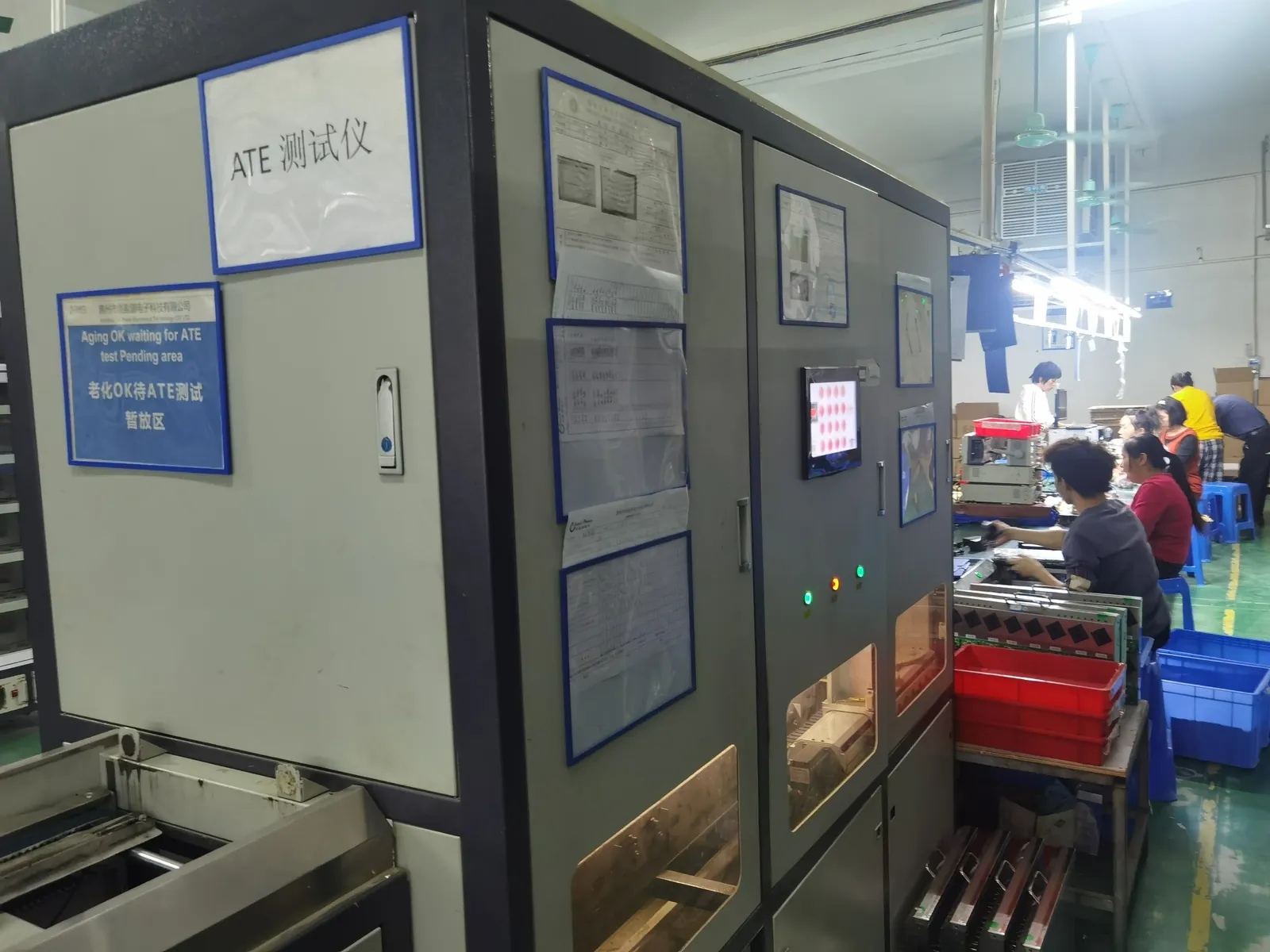
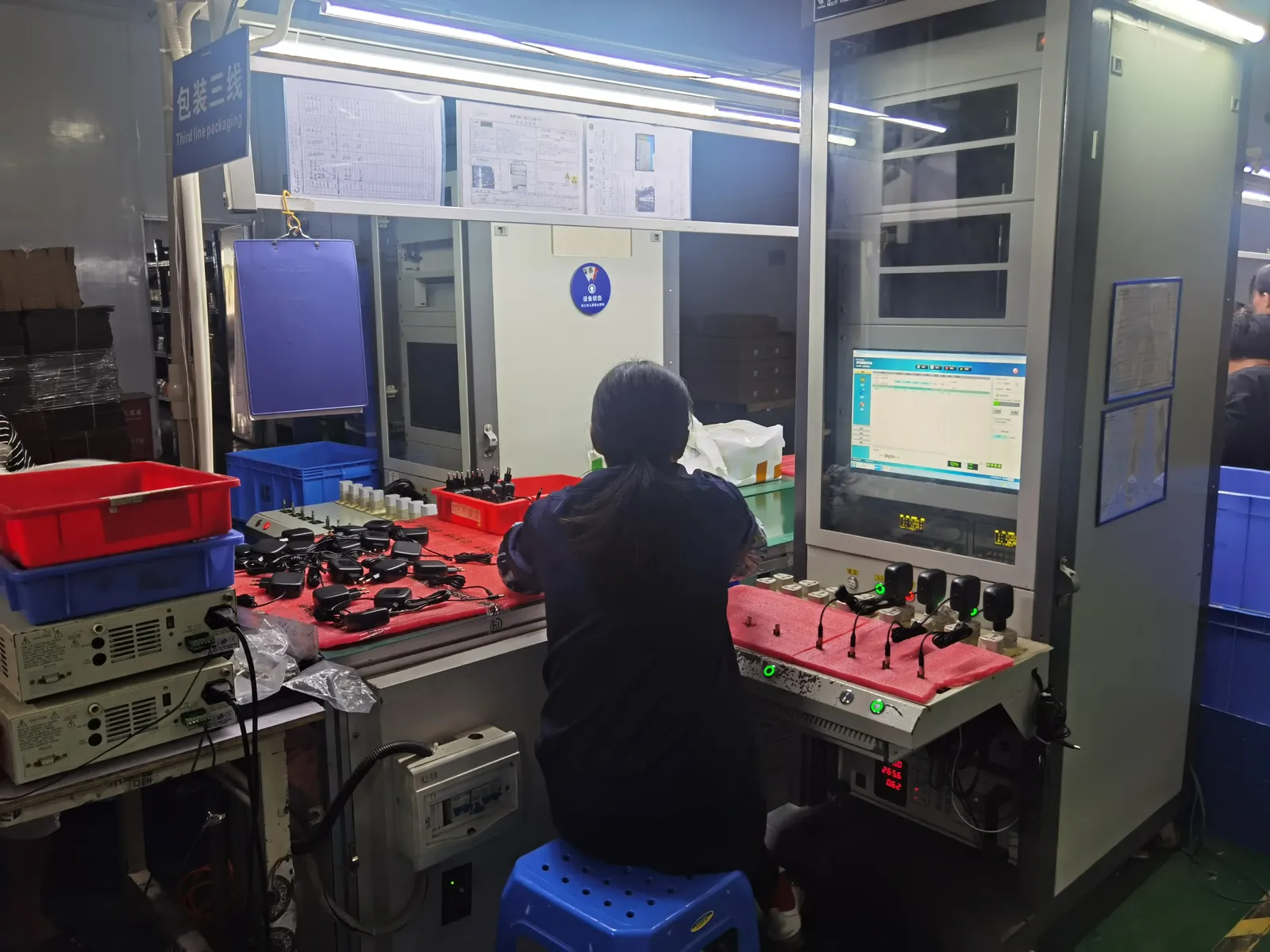
Attach the quality expectations as an annex: ATE test coverage and what is tested (see how to test a power supply), burn-in policy (percentage of units, hours, load), outgoing AQL for the pre-shipment inspection, and a right to audit the production line or join a video walk-through. For programs with regulatory filings, add the documentation commitment: model-specific test reports and certificates you can verify — see certification by country for which documents should exist per market.
Payments, Incoterms and what to leave to terms
Standard Chinese-factory terms are a 30% deposit with the balance before shipment, easing as trust and history build; tooling is usually paid 100% up front (one more reason the ownership clause matters). Incoterms — EXW, FOB, DAP — belong in the same agreement or order terms, because they define where your risk and cost start. Both topics are covered in depth in our low-MOQ sourcing guide; the contract’s job is only to reference them consistently and define what happens on delay (a simple per-week remedy clause is normal and fair in both directions).
Planning for a supplier switch
The strongest contract is the one that lets you leave. Package the switch path while everything is friendly: tooling release terms, a defined handover of drawings, test reports and firmware (if any), and a final-production bridge order so your stock does not gap during transition. Factories that resist all of it are telling you something. And if the program justifies it, a qualified second source for a simplified variant — see manufacturer vs trading company vs big OEM — is the ultimate insurance.
Power adapter OEM agreement: clause summary table
| Clause | What to demand | Why it matters |
|---|---|---|
| Tooling ownership | Buyer owns on payment; factory must release within defined days; buyout formula if co-invested | Your ability to move or dual-source |
| NDA scope | Bilateral; names specs/BOM/artwork/pricing; 2–5 years; survives termination | Keeps your design out of the catalogue |
| Change control | Written notice before material changes; re-verification + updated reports | Protects certifications and field quality |
| IP assignment | Background stays, foreground assigned/exclusive; improvement ownership defined | Decides who owns what your money created |
| Repeat runs / spares | Production availability window + last-time-buy notice | Service obligations outlive the program |
| Quality annex | ATE coverage, burn-in policy, outgoing AQL, audit right, verifiable reports | Turns “quality” into measurable obligations |
Frequently asked questions
Who owns the mould if I paid for it?
You do — if the contract says so. Ownership follows the written clause, not the payment record alone. Pay for tooling only against a signed annex that names the mould, the ownership transfer on payment, and the release mechanics.
Can the factory sell my custom design to other customers?
A signed NDA and IP clause make that a breach, not a business model. It cannot make information unhackable, but it is actionable and it filters factories that intended exactly that. For modified-standard platforms, assume the platform is shared and protect only what is yours.
What is a reasonable NDA duration?
Two to five years is typical, surviving the end of the supply relationship. For products with long service lives, align the NDA duration with the repeat-run window.
Does the contract need to be bilingual?
Yes — Chinese and English, with a stated governing language. A Chinese-only contract you cannot read, or an English-only contract a Chinese court may read differently, both create avoidable risk.
Which jurisdiction should govern disputes?
Chinese courts or arbitration (CIETAC or HKIAC) are the practical choices because enforcement against a Chinese factory happens where the factory’s assets are. A foreign judgment in your favour that cannot be enforced is decoration.
Do I need a lawyer for a one-page annex?
For a first small program, a well-structured annex plus your own review is normal. For full-custom programs with meaningful tooling and filing costs, have counsel look at the IP and tooling clauses once — the same clauses then recycle across suppliers.
What is reasonable tooling buyout pricing?
A formula, agreed before the mould exists — commonly the actual tooling invoice plus a defined markup if the factory co-invested. Negotiating the number during a dispute is negotiating from weakness.
How do I handle price renegotiation on repeat orders?
Tie price to material indices and volumes in the contract, not to goodwill. A renegotiation clause with a defined trigger (index movement, volume change) is fairer and calmer than annual ad-hoc haggling.
Sources
- WIPO — World Intellectual Property Organization
- ICC — Incoterms 2020 rules
- WTO — Trade and contract enforcement context
Related on this blog: how to vet a Chinese power adapter manufacturer, low MOQ power adapter OEM/ODM, manufacturer vs trading company vs big OEM.